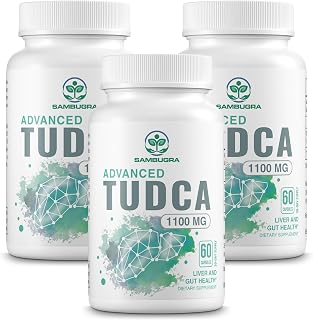
UDCA (ursodeoxycholic acid) carries decades of clinical use and regulatory approval for primary biliary cholangitis and certain gallstone conditions. TUDCA (tauroursodeoxycholic acid) is the taurine-conjugated form of UDCA and has attracted growing supplement interest, with proponents pointing to additional cytoprotective properties beyond those of its parent compound. The two molecules are often discussed interchangeably in wellness circles, but they behave differently in the body in ways that matter for both efficacy and safety.
Both belong to the hydrophilic bile acid family and can blunt the cytotoxic effects of more harmful, hydrophobic bile acids on liver cells. Yet their pharmacokinetics, biliary enrichment, and proposed mechanisms diverge in meaningful ways. This article summarizes what peer-reviewed research actually shows about each compound — and where the evidence still has significant gaps for healthy adults using either as a daily supplement.
Key Takeaways
- UDCA and TUDCA share a core structure but differ meaningfully in absorption, conjugation status, and biliary distribution — TUDCA is the taurine-conjugated form with distinct pharmacokinetics confirmed in clinical research [1].
- UDCA has a larger volume of regulatory-grade clinical trial evidence for cholestatic liver disease; TUDCA has a smaller but positive evidence base from controlled studies, including a double-blind RCT in liver cirrhosis [2].
- A direct comparison study found both compounds produced comparable liver biochemistry improvements in primary biliary cirrhosis, without establishing clear superiority for either [3].
- TUDCA has additional proposed mechanisms — ER stress reduction and mitochondrial apoptosis inhibition — that are under active investigation but not yet validated in large human trials for healthy populations.
- Both compounds are contraindicated in bile duct obstruction, carry interaction risks with bile acid sequestrants and cyclosporine, and lack robust large-scale RCT data supporting preventive supplementation in healthy adults.
What UDCA and TUDCA Are
UDCA is a naturally occurring secondary bile acid found in small quantities in human bile. It is synthesized commercially and has served as a first-line treatment for primary biliary cholangitis (PBC) for decades. Its hydrophilic character means it does not disrupt cell membranes the way more lipophilic bile acids such as chenodeoxycholic acid do, and it displaces cytotoxic bile acids from the bile pool through a choleretic mechanism that promotes bile flow.
TUDCA is the taurine conjugate of UDCA — the same core molecule with a taurine group attached at the C-24 carboxyl position. This conjugation increases water solubility further and alters how the compound is handled in the gastrointestinal tract and liver. TUDCA occurs naturally in bear bile, which features in traditional Asian medicine, though supplemental TUDCA is now produced synthetically. Importantly, UDCA holds approved indications in most major regulatory markets for specific liver and biliary conditions; TUDCA does not carry equivalent regulatory approval in most jurisdictions and is primarily sold as a supplement.
How Absorption and Metabolism Differ Between the Two Compounds
A key pharmacokinetic difference lies in how each compound is absorbed from the gut and distributed to the liver. Research comparing intestinal absorption and biliary secretion found that taurine-conjugated UDCA displays distinct absorption kinetics compared with unconjugated UDCA, with conjugation status influencing both the extent of ileal uptake and subsequent biliary enrichment [1]. This distinction matters because the therapeutic goal in cholestatic conditions is to enrich the bile acid pool with hydrophilic species, progressively displacing more harmful ones.
Studies in patients with primary biliary cirrhosis have documented meaningful metabolic differences between the two forms after oral administration. Unconjugated UDCA undergoes first-pass conjugation in the liver — primarily with glycine and taurine — before entering bile. TUDCA, already taurine-conjugated, bypasses part of this hepatic processing step. Research in PBC patients confirmed measurable differences in how the two compounds distribute across bile and serum compartments, with implications for which form may be more efficiently enriched at target tissues [4].

Clinical Evidence in Liver and Biliary Disease
A controlled study comparing TUDCA directly to UDCA in primary biliary cirrhosis found that both compounds improved liver biochemistry markers, with TUDCA showing results at least comparable to UDCA over the study period [3]. The study was limited in size and duration, making definitive superiority conclusions premature, but it established that TUDCA is biologically active at the liver level and not merely a prodrug that simply converts to UDCA in vivo.
For TUDCA specifically in liver cirrhosis, a double-blind randomized controlled trial evaluated its efficacy and safety in cirrhotic patients and found that TUDCA improved liver function indicators while being well tolerated over the treatment period [2]. RCT-level evidence for TUDCA in liver disease remains less extensive than the trial database supporting approved UDCA indications, but this study represents meaningful controlled human data.

Taken together, available controlled data suggest TUDCA performs comparably to UDCA in the hepatic contexts studied and may offer overlapping hepatoprotective effects. Neither compound, however, has been evaluated in large-scale trials in healthy adults supplementing preventively — the population that now forms the primary supplement consumer base for both.
TUDCA's Additional Proposed Mechanisms Beyond Bile Pool Modification
Beyond the cholestatic and choleretic effects shared with UDCA, TUDCA has attracted research interest for mechanisms less well characterized for its parent compound. Chief among these is reduction of endoplasmic reticulum (ER) stress. ER stress arises when misfolded proteins accumulate in the ER lumen and trigger the unfolded protein response; chronic ER stress is implicated in conditions from neurodegeneration to type 2 diabetes and non-alcoholic fatty liver disease. TUDCA has been studied in preclinical models as a chemical chaperone that assists protein folding and thereby attenuates this stress pathway.
TUDCA has also been investigated for inhibition of the intrinsic (mitochondrial) apoptosis pathway — the route by which cells under severe stress initiate programmed cell death. Early-phase clinical investigations are underway or have been completed in conditions including ALS, retinal degeneration, and insulin resistance. However, the majority of this mechanism-level evidence derives from cell culture and animal studies. Translation to demonstrated clinical benefit in humans, particularly in healthy populations, has not yet been established, and buyers of TUDCA supplements should be aware that marketed claims often run well ahead of the current human trial data.
Which Compound Has the Stronger Evidence Overall?
For liver-specific indications — particularly cholestatic liver disease — UDCA holds the stronger evidence base by volume. It has been studied in large randomized controlled trials, carries regulatory approval in multiple countries for PBC, and has decades of post-marketing safety data. The mechanisms by which it protects hepatocytes, stabilizes bile ducts, and promotes choleretic flow are well characterized at both the bench and clinical level.
TUDCA’s evidence is concentrated in smaller studies and earlier-phase research, though what exists is broadly positive. The pharmacokinetic data confirm that TUDCA reaches the liver and enriches the bile acid pool after oral dosing [4], which underpins its biological plausibility. For individuals who cannot access prescription UDCA or who are exploring supplement options, the available data suggest TUDCA is a scientifically credible alternative with a distinct pharmacological profile rather than simply an inferior copy.

For applications beyond liver disease — ER stress, neurological conditions, metabolic health — TUDCA currently has a more differentiated (if far less mature) evidence profile than UDCA. UDCA has not been as extensively studied in these areas. Whether this translates into meaningful clinical benefit for otherwise healthy adults using either compound preventively is a question the current evidence base cannot yet answer.
Safety, Contraindications, and Drug Interaction Considerations
Both compounds are generally well tolerated in the populations studied, with gastrointestinal side effects — most commonly diarrhea and nausea — being the most frequently reported. TUDCA demonstrated an acceptable safety profile over the treatment period in the cirrhosis trial reviewed here [2]. Despite this, both UDCA and TUDCA are contraindicated in bile duct obstruction, where stimulating bile flow could worsen the clinical picture. Medical supervision is warranted for individuals with gallbladder disease, cholangitis, or severe hepatic impairment before using either compound.
Potential drug interactions require particular attention. Bile acid sequestrants such as cholestyramine or colestipol can bind UDCA and TUDCA in the gut and reduce absorption significantly — these agents should not be taken simultaneously. Cyclosporine levels may be affected by changes in bile acid handling. Bile acids also interact with hepatic enzyme pathways; research linking bile acid biomarkers to CYP3A enzyme activity underscores that bile acid metabolism is intertwined with a major drug-metabolizing system governing the clearance of many common prescription medications [5]. Patients on any CYP3A-metabolized drugs — a broad category that includes statins, certain immunosuppressants, and many antifungals — should discuss supplementation with a qualified healthcare provider before starting either compound.
🛒 Where to Buy TUDCA
- BulkSupplements.com TUDCA CapsulesLab-tested / studied
capsules, 500 mg per capsule, 90 capsules — Third-party tested and made in a cGMP facility; one capsule per serving; higher per-capsule dose suits users targeting 500–1000 mg/day protocols - Nutricost TUDCA 250mg
capsules, 250 mg per capsule, 60 capsules — High-volume seller; non-GMO and gluten-free labeling; no third-party purity COA publicly posted, but consistent community reputation for accurate dosing - Double Wood Supplements TUDCA Bile Salts 500mg
capsules, 500 mg per capsule, 60 capsules — USA-manufactured; publishes basic COA on request; popular among biohacker community for reliable potency at accessible price point - Nutricost TUDCA Powder
powder, 25 g tub — Best cost-per-gram option for daily high-dose users; gluten-free, same material as their capsule line; requires a milligram-accurate scale for precise dosing
As an Amazon Associate we earn from qualifying purchases. TUDCA quality varies widely — always choose a product that publishes a third-party purity test (COA) confirming 98%+ tauroursodeoxycholic acid before buying.
A Note on the Evidence
The evidence reviewed here derives primarily from patients with diagnosed liver and biliary conditions; neither UDCA nor TUDCA has been validated in large-scale randomized trials for healthy adults using them as preventive supplements, and the safety and efficacy data cannot be straightforwardly extrapolated to that population. Both compounds are contraindicated in certain conditions and carry drug interaction risks — consult a qualified healthcare provider before use, particularly if you have any liver, gallbladder, or biliary diagnosis or take prescription medications. This article is informational only and does not constitute medical advice.
Frequently Asked Questions
Is TUDCA simply a better version of UDCA?
Not necessarily. TUDCA is the taurine conjugate of UDCA, which changes how it is absorbed and handled by the liver, but whether it is ‘better’ depends on the context. A controlled comparison in primary biliary cirrhosis found comparable biochemical improvements with both compounds [3], while pharmacokinetic research confirmed meaningful differences in biliary distribution between the two forms [4]. UDCA has a larger regulatory-grade evidence base; TUDCA has additional proposed mechanisms under investigation. Neither is universally superior.
Does TUDCA absorb differently than UDCA?
Yes. Being pre-conjugated with taurine, TUDCA bypasses part of the hepatic conjugation step that unconjugated UDCA undergoes after ingestion. Research directly comparing intestinal absorption and biliary secretion found distinct pharmacokinetic profiles for UDCA versus its taurine conjugate, with differences in ileal uptake and biliary enrichment [1]. Whether this difference consistently translates to superior clinical outcomes has not been established in large head-to-head trials.
Has TUDCA been tested in a clinical trial?
Yes, though the number of trials is limited compared with UDCA. A double-blind randomized controlled trial evaluated TUDCA in patients with liver cirrhosis and found improvements in liver function markers alongside acceptable tolerability over the study period [2]. Additional trials are ongoing or have been conducted in ALS and retinal conditions, but robust large-scale RCT data in otherwise healthy adults supplementing preventively do not currently exist.
Can TUDCA or UDCA interact with medications?
Both compounds carry meaningful interaction potential. Bile acid sequestrants can substantially reduce absorption of either compound if taken at the same time. Cyclosporine handling may also be affected. More broadly, bile acid metabolism intersects with CYP3A enzyme activity, a major drug-metabolizing pathway, as highlighted in research using bile acid biomarkers to assess drug-drug interaction potential [5]. Anyone on prescription medications — particularly immunosuppressants, certain statins, or antifungals — should consult a pharmacist or physician before supplementing with either compound.
Who should avoid TUDCA or UDCA?
Both are contraindicated in bile duct obstruction, where promoting bile flow can worsen the clinical situation. Medical supervision is strongly recommended for individuals with existing gallbladder disease, cholangitis, or severe hepatic impairment. Safety data in pregnancy and breastfeeding are limited, and neither compound should be used without medical guidance in those populations. Anyone with a diagnosed liver or biliary condition should not self-manage with either compound.
Is there human evidence for TUDCA outside of liver disease?
Early-phase human investigations exist in conditions such as ALS, retinal degeneration, and insulin resistance, based on TUDCA’s proposed ability to reduce ER stress and inhibit the mitochondrial apoptosis pathway. However, these applications remain investigational and the evidence base is far less mature than for liver disease indications. Supplement marketing claims about neurological or metabolic benefits in healthy individuals meaningfully exceed what current human trial data can support, and consumers should weigh this gap carefully.

References
- Rudolph G et al. Intestinal absorption and biliary secretion of ursodeoxycholic acid and its taurine conjugate. European journal of clinical investigation (2002). PMID 12190957
- Pan XL et al. Efficacy and safety of tauroursodeoxycholic acid in the treatment of liver cirrhosis: a double-blind randomized controlled trial. Journal of Huazhong University of Science and Technology. Medical sciences = Hua zhong ke ji da xue xue bao. Yi xue Ying De wen ban = Huazhong keji daxue xuebao. Yixue Yingdewen ban (2013). PMID 23592128
- Ferri F et al. [Taurodeoxycholic acid in the treatment of primary biliary cirrhosis. A controlled study in comparison to ursodeoxycholic acid]. La Clinica terapeutica (1993). PMID 8258267
- Invernizzi P et al. Differences in the metabolism and disposition of ursodeoxycholic acid and of its taurine-conjugated species in patients with primary biliary cirrhosis. Hepatology (Baltimore, Md.) (1999). PMID 9918905
- Xue Y et al. 1β-Hydroxydeoxycholic Acid as an Endogenous Biomarker in Human Plasma for Assessment of CYP3A Clinical Drug-Drug Interaction Potential. Drug metabolism and disposition: the biological fate of chemicals (2024). PMID 38991779
These statements have not been evaluated by the Food and Drug Administration. This information is not intended to diagnose, treat, cure, or prevent any disease. Content is for informational purposes only and is not medical advice; consult a qualified healthcare provider before starting any supplement. As an Amazon Associate we earn from qualifying purchases.