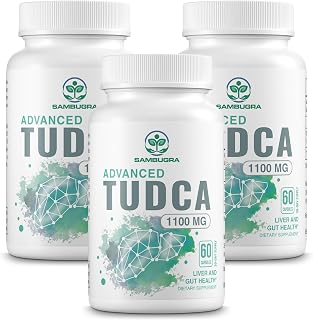
UDCA (ursodeoxycholic acid) and TUDCA (tauroursodeoxycholic acid) are two closely related bile acids that often appear together in supplement discussions and clinical literature. Both are hydrophilic — meaning they do not damage cell membranes the way toxic hydrophobic bile acids can — and both have a long history of use in liver and gallbladder medicine. At a glance, they can seem interchangeable, but the differences in their chemistry translate into meaningful differences in how the body processes them and what they may do.
This article breaks down the structural relationship between the two compounds, explains their proposed mechanisms of action, summarizes where each has established clinical use versus where research is still preliminary, and addresses the practical questions people commonly ask when choosing between them. Where human trial data exist they are cited in the references below; where a statement reflects established biochemical and pharmacological understanding of these compounds rather than a specific trial, it is described that way in the text. This is informational content, not medical advice.
Key Takeaways
- TUDCA is the taurine-conjugated form of UDCA — they share the same bile acid core but differ in how the body absorbs and distributes them.
- UDCA has more extensive clinical evidence and regulatory approvals, particularly for primary biliary cholangitis and cholesterol gallstone dissolution.
- TUDCA has additional proposed mechanisms — ER stress reduction and mitochondrial apoptosis inhibition — that make it interesting for neurological and metabolic research, but large-scale human RCT data are still limited.
- Both compounds enrich the bile acid pool with a hydrophilic species, reducing the damaging effects of toxic hydrophobic bile acids on liver and bile duct cells.
- Neither compound should be used without medical guidance by individuals with bile duct obstruction, active gallbladder disease, cholangitis, or severe liver impairment.
The Chemistry: How TUDCA and UDCA Are Related
UDCA is a secondary bile acid that occurs naturally in small amounts in human bile. Its name derives from bear bile (ursus = bear), where it was first isolated in significant concentrations. Chemically it is a hydroxylated sterol with a specific stereochemistry that makes it far less membrane-disruptive than the primary bile acids produced in larger quantities by the liver.
TUDCA is the taurine conjugate of UDCA. The liver naturally conjugates bile acids — attaching either the amino acid taurine or glycine — before secreting them into bile. When UDCA undergoes taurine conjugation, the result is TUDCA. This is not a foreign modification; small amounts of TUDCA are present in normal human bile as part of the body’s routine bile acid pool. The taurine group adds a sulfonic acid moiety that makes TUDCA more hydrophilic than unconjugated UDCA and keeps it ionized across a wider pH range.
In practical terms, this means TUDCA behaves somewhat differently from UDCA in the gut and liver even though the two share the same core sterol backbone. The conjugated form is more water-soluble, more stable in acidic environments such as the stomach, and may be absorbed and transported differently across intestinal and hepatic membranes.
Absorption and Bioavailability
Unconjugated UDCA taken orally undergoes significant first-pass metabolism. Gut bacteria can de-conjugate bile acids, and the liver re-conjugates them, so after an oral dose of UDCA the compound circulating in bile and plasma is a mixture of conjugated forms — including TUDCA and GUDCA (the glycine conjugate). The proportion of each depends on an individual’s gut microbiome composition and hepatic conjugation activity.
TUDCA taken orally enters the enterohepatic circulation largely as the intact conjugate, although intestinal bacteria with bile salt hydrolase activity can cleave the taurine group, releasing free UDCA. Some researchers argue that TUDCA’s greater intrinsic hydrophilicity and ionization stability give it a marginal absorption advantage, particularly in individuals with altered gut environments, though head-to-head pharmacokinetic comparisons in healthy humans are limited in the published literature.
What is not disputed is that both compounds ultimately enrich the bile acid pool with a hydrophilic species, reducing the proportion of cytotoxic hydrophobic bile acids (such as deoxycholic acid and lithocholic acid) that can damage hepatocyte and cholangiocyte membranes.

Mechanisms of Action: Where They Overlap and Where They Diverge
Both UDCA and TUDCA share a core set of hepatoprotective mechanisms. Both reduce membrane incorporation of toxic hydrophobic bile acids, both have choleretic effects (stimulating bile flow), and both exert anti-apoptotic effects in liver cells under stress conditions. These overlapping actions form the basis for their shared use in cholestatic liver diseases.
TUDCA is distinguished by additional or more pronounced activity at several cellular targets. It is a well-characterized inhibitor of endoplasmic reticulum (ER) stress — specifically, it attenuates the unfolded protein response (UPR), which is activated when misfolded proteins accumulate in the ER. Chronic ER stress is implicated in a broad range of diseases including neurodegeneration, metabolic syndrome, and retinal cell death. TUDCA also more directly inhibits the mitochondrial apoptosis pathway, reducing cytochrome c release and downstream caspase activation in stressed cells.
These additional mechanisms explain why TUDCA — rather than UDCA — is the compound generating more interest in disease areas beyond the liver, including amyotrophic lateral sclerosis (ALS), retinal degeneration, Parkinson’s disease, and insulin resistance. Whether these mechanistic advantages in cell-culture and animal studies translate into meaningful clinical benefits in humans at supplemental doses remains an active area of investigation.
Established Clinical Uses
UDCA has the longer and more established regulatory track record. It is approved by the FDA and equivalent agencies in most countries for two primary indications: primary biliary cholangitis (PBC), a chronic autoimmune cholestatic liver disease, and dissolution of cholesterol gallstones in patients who are poor surgical candidates. At standard clinical doses (typically 13–15 mg/kg/day for PBC), UDCA slows disease progression as measured by liver biochemistry and, in long-term observational data, reduces the need for liver transplantation in PBC patients.
TUDCA holds regulatory approval in some European countries as a treatment for cholestasis and is used clinically in Italy and other markets. In the United States it is available as a dietary supplement rather than an approved drug. Clinical trials have examined TUDCA in liver conditions, ALS, and retinal disease, but the evidence base is considerably smaller than for UDCA. Several ALS trials showed TUDCA was safe and well-tolerated, with some signals of benefit in slowing functional decline, though the trials were modest in size and results have not yet been definitive.[1] The largest programme in this area tested TUDCA combined with sodium phenylbutyrate rather than TUDCA alone, and its phase 3 trial found no change in the ALS Functional Rating Scale at 48 weeks, after which the sponsor began withdrawing the product from the US and Canadian markets.[2]

For cholestasis specifically, both compounds are effective at enriching the bile acid pool with a hydrophilic species and improving liver enzymes. Some clinicians use TUDCA when UDCA response is incomplete, though this is not a universally standardized practice. The comparative evidence in humans is thin but not absent: a multicentre randomised double-blind trial assigned 199 primary biliary cholangitis patients to either TUDCA or UDCA at 250 mg three times daily for 24 weeks, and the two performed equivalently on the primary endpoint, with 75.97 percent of the TUDCA group and 80.88 percent of the UDCA group achieving a fall in alkaline phosphatase of more than 25 percent.[3] One difference did emerge: the proportion of patients reporting itch rose from 1.43 percent to 10.00 percent in the UDCA arm while remaining unchanged in the TUDCA arm.[3] A much smaller double-blind trial in liver cirrhosis, 18 patients analysed, also found both compounds were well tolerated over six months.[4]
Supplement Use: What to Reasonably Expect
Outside clinical populations with documented liver disease, both UDCA and TUDCA are taken by otherwise healthy individuals for purposes ranging from liver support during alcohol consumption or steroid cycles, to general mitochondrial health or neuroprotection. The rationale in each case draws on the mechanistic literature, but it is important to be honest: the mechanistic evidence — much of which comes from cell cultures and animal models — does not automatically translate to meaningful effects in healthy humans at the doses available in typical supplements.

TUDCA supplements are commonly dosed between 250 mg and 1,000 mg per day, often in divided doses. UDCA supplements exist at similar dose ranges, though prescription UDCA is used at much higher weight-based doses for clinical indications. Neither compound has been rigorously studied in large randomized controlled trials among healthy adults for the wellness endpoints that supplement marketing often implies.
TUDCA is typically more expensive than UDCA as a supplement, reflecting both the additional synthesis step required and market positioning. Whether the additional cost is justified for any given individual depends on why they are considering the compound in the first place — and that is a question best discussed with a healthcare provider familiar with their situation.
Safety Profile and Interactions
Both compounds have favorable safety profiles at doses used in clinical trials, with gastrointestinal discomfort (loose stools, nausea) being the most commonly reported side effect. TUDCA and UDCA are both contraindicated in bile duct obstruction, as stimulating bile flow when the duct is blocked can worsen outcomes. Caution is also warranted in patients with active cholangitis, gallbladder disease, or severe hepatic impairment.
Drug interactions deserve attention. Bile acid sequestrants (cholestyramine, colestipol) can bind both UDCA and TUDCA in the gut, reducing their absorption. Cyclosporine metabolism may be affected. Some lipid-lowering agents interact with bile acid pathways and concurrent use should be discussed with a prescriber. Women who are pregnant or breastfeeding should avoid these compounds in the absence of specific medical guidance, as data in these populations are limited.
Because TUDCA influences ER stress pathways and apoptotic signaling, theoretical interactions with medications that work through overlapping mechanisms exist, though clinically significant interactions of this type have not been well characterized in humans.

🛒 Where to Buy TUDCA
- BulkSupplements.com TUDCA CapsulesLab-tested / studied
capsules, 500 mg per capsule, 90 capsules — Third-party tested and made in a cGMP facility; one capsule per serving; higher per-capsule dose suits users targeting 500–1000 mg/day protocols - Nutricost TUDCA 250mg
capsules, 250 mg per capsule, 60 capsules — High-volume seller; non-GMO and gluten-free labeling; no third-party purity COA publicly posted, but consistent community reputation for accurate dosing - Double Wood Supplements TUDCA Bile Salts 500mg
capsules, 500 mg per capsule, 60 capsules — USA-manufactured; publishes basic COA on request; popular among biohacker community for reliable potency at accessible price point - Nutricost TUDCA Powder
powder, 25 g tub — Best cost-per-gram option for daily high-dose users; gluten-free, same material as their capsule line; requires a milligram-accurate scale for precise dosing
As an Amazon Associate we earn from qualifying purchases. TUDCA quality varies widely — always choose a product that publishes a third-party purity test (COA) confirming 98%+ tauroursodeoxycholic acid before buying.

A Note on the Evidence
Large-scale randomized controlled trial data supporting TUDCA or UDCA for general wellness in healthy adults are limited; most robust evidence comes from patients with specific liver conditions. Both compounds are contraindicated in bile duct obstruction and should be used only under medical supervision by anyone with gallbladder disease, cholangitis, or significant hepatic impairment. This article is informational and does not constitute medical advice.
Frequently Asked Questions
Is TUDCA just a better version of UDCA?
Not exactly. TUDCA is the taurine conjugate of UDCA and has some additional mechanistic properties, including more potent ER stress inhibition. However, UDCA has a far more established clinical evidence base and regulatory approval history. Whether TUDCA’s extra mechanisms translate to better outcomes for any specific individual depends on the condition being addressed and has not been conclusively demonstrated in large human trials.
Can TUDCA and UDCA be taken together?
In clinical and research settings the two are not typically combined because UDCA is already converted in part to TUDCA by the body’s normal conjugation processes. Taking both simultaneously is unlikely to be harmful at supplement doses, but there is no strong evidence it provides additive benefit over an adequate dose of either compound alone. A healthcare provider should weigh in before combining them.
Which is better for liver support?
UDCA has the stronger evidence base for established liver conditions such as primary biliary cholangitis and cholestasis. TUDCA is increasingly studied in liver contexts as well. For general supplemental liver support in healthy people, the honest answer is that neither compound has robust large-scale RCT evidence demonstrating benefit in the absence of underlying liver disease.
Why do some people take TUDCA after a cycle of oral steroids?
Certain oral anabolic steroids are hepatotoxic, partly through mechanisms involving bile acid toxicity and cellular stress pathways. TUDCA is used in this context based on its known hepatoprotective mechanisms and its ability to reduce ER stress and apoptosis in liver cells. This application is not supported by dedicated clinical trials and represents extrapolation from mechanistic and liver disease research.
Is TUDCA approved by the FDA?
TUDCA is not FDA-approved as a drug in the United States and is sold as a dietary supplement. UDCA is FDA-approved for primary biliary cholangitis and cholesterol gallstone dissolution under prescription brand names. In some European countries TUDCA holds approval for specific cholestatic indications.
What are the main side effects of TUDCA and UDCA?
The most commonly reported side effects of both compounds are gastrointestinal: loose stools, mild diarrhea, and occasional nausea, particularly at higher doses. Serious adverse effects are uncommon at clinically studied doses. Both are contraindicated in bile duct obstruction. Anyone with existing liver, gallbladder, or bile duct conditions should consult a physician before use.
References
- Elia AE et al. Tauroursodeoxycholic acid in the treatment of patients with amyotrophic lateral sclerosis. Eur J Neurol (2016). PMID 25664595
- Ketabforoush A et al. Sodium Phenylbutyrate and Tauroursodeoxycholic Acid: A Story of Hope Turned to Disappointment in Amyotrophic Lateral Sclerosis Treatment. Clin Drug Investig (2024). PMID 38909349
- Ma H et al. A multicenter, randomized, double-blind trial comparing the efficacy and safety of TUDCA and UDCA in Chinese patients with primary biliary cholangitis. Medicine (Baltimore) (2016). PMID 27893675
- Pan XL et al. Efficacy and safety of tauroursodeoxycholic acid in the treatment of liver cirrhosis: a double-blind randomized controlled trial. J Huazhong Univ Sci Technolog Med Sci (2013). PMID 23592128
These statements have not been evaluated by the Food and Drug Administration. This information is not intended to diagnose, treat, cure, or prevent any disease. Content is for informational purposes only and is not medical advice; consult a qualified healthcare provider before starting any supplement. As an Amazon Associate we earn from qualifying purchases.