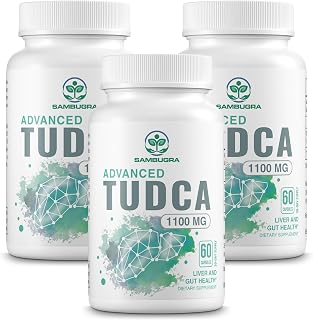
TUDCA (tauroursodeoxycholic acid) is a hydrophilic, taurine-conjugated bile acid that has attracted growing interest for its effects on endoplasmic reticulum stress, mitochondrial protection, and bile flow. It is used medically in some cholestatic liver conditions and is increasingly available as an over-the-counter supplement marketed for liver support and metabolic health. That dual status—both a pharmaceutical agent and a freely purchased supplement—creates a real risk: people who should not take it may do so without realizing the potential for harm.
Unlike many supplements where the worst-case scenario is wasted money, bile acids are pharmacologically active compounds that participate in hepatic signaling, enterohepatic circulation, and gut microbiome regulation. When underlying anatomy or metabolism is compromised, adding exogenous bile acid can worsen rather than help the situation. This article outlines the known contraindications, high-caution populations, and potential drug interactions, drawing only on the available clinical and research literature. It is informational, not medical advice, and nothing here substitutes for a conversation with a qualified clinician.
Key Takeaways
- Bile duct obstruction (mechanical blockage) is the primary absolute contraindication to TUDCA; adding a choleretic bile acid when drainage is impaired can cause hepatic harm rather than protection [1].
- Severe or decompensated liver disease, acute cholangitis, and conditions like intestinal failure-associated liver disease require specialist management of bile acids, not unsupervised supplementation [2].
- Rare inherited disorders affecting bile acid synthesis (3β-HSD deficiency, citrin deficiency) and conditions such as cystic fibrosis with biliary involvement demand clinician-directed bile acid management [3][4][5].
- TUDCA may interact with bile acid sequestrants, cyclosporine, and lipid-lowering agents, and may alter gut microbiome-mediated drug metabolism in ways that are difficult to predict without medical assessment [6][7].
- Neonates, pregnant individuals, and those with gallbladder disease or parenteral nutrition-associated liver disease should not take TUDCA outside of clinical supervision [8][9].
Bile Duct Obstruction: The Single Most Important Contraindication
The most clearly established contraindication to any bile acid therapy—including TUDCA—is mechanical obstruction of the bile duct. When the duct is physically blocked (by a gallstone, tumor, stricture, or other structural lesion), bile cannot flow into the duodenum. Administering a bile acid in this setting increases the bile acid load in the liver and biliary tree with nowhere for it to go, creating the conditions for hepatocellular injury rather than protection.
A case report examining ursodeoxycholic acid (UDCA, the parent compound from which TUDCA is conjugated) in malignant biliary obstruction found that the drug appeared detrimental precisely because impaired drainage prevented the choleretic mechanism from functioning safely [1]. TUDCA shares this fundamental pharmacology: its choleretic effect depends on an intact biliary drainage route. Anyone with known or suspected bile duct obstruction—including from gallstones lodged in the common bile duct, cholangiocarcinoma, pancreatic head tumors, or post-surgical strictures—should not take TUDCA without direct medical supervision and imaging confirmation that drainage is adequate.
Acute cholangitis, an infection of the biliary tract often arising from obstruction, represents a related contraindication. The priority in acute cholangitis is drainage and antibiotic therapy; adding a bile acid that further stimulates bile secretion into an infected, poorly draining system is not appropriate.
Severe and Decompensated Liver Disease
TUDCA is sometimes discussed in the context of liver protection, which can create a misconception that more liver disease means more benefit. The opposite may be true at the severe end of the spectrum. In decompensated cirrhosis, the liver’s ability to conjugate, secrete, and respond to bile acids is substantially impaired, and systemic bile acid levels are already elevated. Introducing additional exogenous bile acid in this setting may increase the burden on already-failing hepatocytes.
Intestinal failure-associated liver disease (IFALD) illustrates how complex bile acid physiology becomes when both the liver and gut are compromised. In patients with intestinal failure, disrupted enterohepatic circulation alters bile acid pool composition and can drive cholestasis; management requires careful medical oversight rather than empiric supplementation [2]. The research literature on bile acid metabolism in severe liver disease consistently emphasizes individualized, clinician-guided approaches rather than unsupervised supplementation.

Patients with primary biliary cholangitis (PBC) may already be prescribed UDCA or TUDCA under medical supervision. Even in that well-studied population, a subset of patients shows an incomplete response to bile acid therapy, and the mechanisms behind treatment failure remain under investigation [10]. This underscores that bile acid therapy in established liver disease is a specialist-managed intervention, not a supplement decision.
Inherited Metabolic and Bile Acid Synthesis Disorders
Several rare inherited metabolic conditions alter bile acid synthesis, conjugation, or transport in ways that make unsupervised TUDCA use potentially harmful. Deficiency of 3β-hydroxy-Δ5-C27-steroid dehydrogenase (3β-HSD), an enzyme in the primary bile acid synthesis pathway, results in accumulation of atypical bile acids and progressive liver disease. Management involves replacing normal bile acids under specialist guidance, and the addition of unconjugated or conjugated bile acids without understanding a patient’s specific defect could disrupt fragile metabolic balance [3].
Citrin deficiency, a urea cycle and malate-aspartate shuttle disorder caused by mutations in SLC25A13, affects both amino acid metabolism and bile acid homeostasis. Management protocols for citrin deficiency are carefully structured, and introduction of a taurine-conjugated compound—TUDCA contains a taurine moiety—without specialist oversight could interact unpredictably with taurine availability and nitrogen handling [4]. Taurine itself is recognized as conditionally essential in certain metabolic states, and its conjugation into TUDCA means this supplement is not metabolically inert [11].
Patients with cystic fibrosis may develop biliary complications including inspissated bile, focal biliary cirrhosis, and multilobular cirrhosis. Clinical management guidelines for cystic fibrosis-associated liver disease are formalized and specialist-directed [5]; TUDCA supplementation outside this framework is not appropriate for individuals with CF-related hepatobiliary disease.
Drug Interactions: What TUDCA May Affect
Because TUDCA participates in enterohepatic circulation and affects bile acid signaling through nuclear receptors including FXR and TGR5, it has the potential to interact with several pharmaceutical classes. Bile acid sequestrants (cholestyramine, colestipol, colesevelam) bind bile acids in the intestine to reduce their reabsorption. Taking TUDCA alongside a sequestrant could result in the sequestrant binding TUDCA before it is absorbed, substantially reducing its efficacy and possibly unpredictably shifting bile acid pool composition.
Cyclosporine, an immunosuppressant used in organ transplant recipients and autoimmune conditions, shares hepatobiliary excretion pathways with bile acids, and their interaction has been noted in clinical contexts where bile acid therapy is prescribed. Lipid-lowering therapy in patients with conditions like primary biliary cholangitis is itself a complex clinical decision, given the atypical lipid profiles these patients develop [6]; adding an unsupervised bile acid supplement in someone on statins, fibrates, or other lipid agents adds a variable that warrants medical review.
The relationship between gut microbiota, bile acid metabolism, and drug-induced liver injury is an emerging area of research. Alterations in secondary bile acid production by the gut microbiome can influence both drug toxicity and hepatic drug metabolism [7]. This means that TUDCA, by altering the bile acid pool that gut bacteria process, may have downstream effects on how other drugs are metabolized—a category of interaction difficult to predict without clinical assessment.
Special Populations Requiring Extra Caution
Neonates and young infants should not receive TUDCA supplementation outside a clinical protocol. The gut-liver axis and bile acid signaling pathways undergo substantial developmental regulation in the first months of life, with FGF19 and CYP7A1 activity following distinct neonatal patterns that differ meaningfully from adults [8]. Introducing exogenous bile acid into this developmentally dynamic system carries unpredictable risks, and neonatal cholestatic liver disease is managed by pediatric hepatology specialists, not supplementation [12].

Pregnant and breastfeeding individuals should avoid TUDCA supplementation in the absence of clinical indication. Intrahepatic cholestasis of pregnancy is a recognized condition sometimes managed with UDCA under obstetric supervision, but self-directed TUDCA use during pregnancy is not supported by evidence and introduces unnecessary pharmacological exposure to a developing fetus.
Individuals with known gallbladder disease—including gallstones (cholelithiasis), gallbladder polyps, or a history of acute cholecystitis—warrant medical evaluation before taking TUDCA. While bile acid therapy is sometimes used in specific gallstone scenarios, the appropriateness depends on stone composition, duct anatomy, and gallbladder function, none of which can be assessed without imaging and clinical review. Patients on parenteral nutrition who have developed associated liver disease represent another clinical population where bile acid management requires specialist oversight rather than supplementation [9].
What the Evidence Does and Does Not Say
It is important to be honest about the state of the evidence. Most clinical research on TUDCA and its parent compound UDCA has been conducted in patients with established hepatobiliary disease—primary biliary cholangitis, neonatal cholestasis, cystic fibrosis-associated liver disease, and related conditions. Robust large-scale randomized controlled trial data in healthy adults taking TUDCA as a general supplement are limited. The contraindications described in this article are grounded in pharmacological mechanism and clinical case experience with bile acid therapy broadly, applied to TUDCA because it shares the same biological pathways.

This means two things: first, the absence of a large safety database in healthy supplement users does not mean TUDCA is safe for everyone—it means the evidence has not been gathered. Second, it means the risk profile described here is not speculative; it follows directly from how bile acids behave in the body. Anyone considering TUDCA supplementation—particularly those with any liver, gallbladder, biliary, or metabolic condition, or anyone taking prescription medications metabolized hepatically—should discuss it with a clinician before starting.
🛒 Where to Buy TUDCA
- BulkSupplements.com TUDCA CapsulesLab-tested / studied
capsules, 500 mg per capsule, 90 capsules — Third-party tested and made in a cGMP facility; one capsule per serving; higher per-capsule dose suits users targeting 500–1000 mg/day protocols - Nutricost TUDCA 250mg
capsules, 250 mg per capsule, 60 capsules — High-volume seller; non-GMO and gluten-free labeling; no third-party purity COA publicly posted, but consistent community reputation for accurate dosing - Double Wood Supplements TUDCA Bile Salts 500mg
capsules, 500 mg per capsule, 60 capsules — USA-manufactured; publishes basic COA on request; popular among biohacker community for reliable potency at accessible price point - Nutricost TUDCA Powder
powder, 25 g tub — Best cost-per-gram option for daily high-dose users; gluten-free, same material as their capsule line; requires a milligram-accurate scale for precise dosing
As an Amazon Associate we earn from qualifying purchases. TUDCA quality varies widely — always choose a product that publishes a third-party purity test (COA) confirming 98%+ tauroursodeoxycholic acid before buying.
A Note on the Evidence
The evidence base for TUDCA in healthy adult supplementation contexts is limited; most clinical data come from patients with established hepatobiliary disease, and large-scale randomized trials in healthy humans are lacking. Anyone with liver disease, gallbladder disease, a bile duct condition, an inherited metabolic disorder, or who takes prescription medications that are hepatically metabolized should consult a qualified clinician before taking TUDCA. This article is informational only and does not constitute medical advice.

TUDCA Contraindications: The Short Version
Because TUDCA is a pharmacologically active bile acid, not an inert supplement, people with certain biliary or gut conditions (such as bile duct obstruction) should not take it without medical supervision, since adding exogenous bile acid can worsen an underlying problem rather than help it. See the full breakdown above of who specifically should avoid TUDCA or use it only under a doctor’s guidance.
Frequently Asked Questions
Can I take TUDCA if I have gallstones?
It depends on the type of gallstones, their location, and whether your bile duct is clear. If a gallstone is lodged in the common bile duct, TUDCA is contraindicated because it cannot drain properly and may worsen liver injury [1]. Some types of gallbladder stones are managed with bile acid therapy under medical supervision, but this requires imaging and clinical evaluation—not a self-directed supplement decision. Consult a gastroenterologist or hepatologist before taking TUDCA if you have known gallstones.
Is TUDCA safe for people with fatty liver disease (NAFLD/MASLD)?
TUDCA is being investigated for metabolic liver conditions, but robust large-scale trial data in humans with fatty liver disease remain limited. The more relevant caution is severity: mild fatty liver in an otherwise healthy individual is a different situation from decompensated cirrhosis. Anyone with documented liver disease of any cause should discuss TUDCA with their physician before taking it, as the appropriateness depends on their specific diagnosis and disease stage.
Can TUDCA interact with my cholesterol medication?
Potentially, yes. TUDCA participates in bile acid signaling pathways that overlap with lipid metabolism, and the management of hypercholesterolemia in patients with liver disease is already complex [6]. If you are taking a statin, fibrate, bile acid sequestrant, or other lipid-lowering agent, the interaction with an exogenous bile acid supplement warrants a conversation with your prescribing physician. Bile acid sequestrants in particular could bind TUDCA in the gut and reduce its absorption.
Why is TUDCA contraindicated in bile duct obstruction specifically?
TUDCA works in part by stimulating bile secretion and flow (a choleretic effect). If the duct through which bile drains is mechanically blocked, that increased bile production has nowhere to go. The resulting backup increases pressure within the biliary system and exposes liver cells to higher bile acid concentrations, which is hepatotoxic rather than hepatoprotective. Clinical evidence with the structurally related compound UDCA supports this concern in obstructive cholestasis [1].
Should children or infants take TUDCA?
No, not without formal clinical indication and specialist oversight. The gut-liver axis in neonates and infants is developmentally distinct from adults, with bile acid signaling playing a critical regulatory role during early life [8]. Neonatal cholestatic conditions are managed by pediatric hepatology teams under carefully monitored protocols [12]. TUDCA supplementation in children outside a clinical setting is not supported and carries undefined risk.
Does having a taurine sensitivity affect TUDCA use?
TUDCA is the taurine conjugate of UDCA, and hydrolysis in the gut releases the taurine moiety. Taurine is recognized as conditionally essential in certain metabolic states, and its systemic availability has biological effects [11]. In inherited metabolic disorders affecting amino acid or nitrogen handling—such as citrin deficiency—the additional taurine load from TUDCA supplementation could be relevant and warrants specialist review [4]. For most healthy adults, dietary taurine intake is generally well-tolerated, but anyone with a known amino acid metabolism disorder should flag TUDCA’s taurine component to their physician.
References
- Bessone F et al. Is ursodeoxycholic acid detrimental in obstructive cholestasis? A propos of a case of malignant biliary obstruction. Annals of hepatology (2016). PMID 27049500
- Abi-Aad SJ et al. Pathogenesis and Management of Intestinal Failure-Associated Liver Disease. Seminars in liver disease (2025). PMID 40015320
- Yamato Y et al. 3beta-hydroxy-delta5 -C27-steroid dehydrogenase deficiency: diagnosis and treatment. Journal of paediatrics and child health (2001). PMID 11885722
- Okano Y et al. Current treatment for citrin deficiency during NICCD and adaptation/compensation stages: Strategy to prevent CTLN2. Molecular genetics and metabolism (2019). PMID 31255436
- Chinese Experts Cystic Fibrosis Consensus Committee et al. [Chinese experts consensus statement: diagnosis and treatment of cystic fibrosis (2023)]. Zhonghua jie he he hu xi za zhi = Zhonghua jiehe he huxi zazhi = Chinese journal of tuberculosis and respiratory diseases (2023). PMID 36990700
- Balmer ML et al. Treatment of hypercholesterolemia in patients with primary biliary cirrhosis might be more beneficial than indicated. Swiss medical weekly (2008). PMID 18654866
- Mao X et al. Gut microbiota-metabolite interactions in drug-induced liver injury: mechanisms, biomarkers, and therapeutic perspectives. Frontiers in cellular and infection microbiology (2025). PMID 41473771
- Memon N et al. Developmental regulation of the gut-liver (FGF19-CYP7A1) axis in neonates. The journal of maternal-fetal & neonatal medicine : the official journal of the European Association of Perinatal Medicine, the Federation of Asia and Oceania Perinatal Societies, the International Society of Perinatal Obstetricians (2020). PMID 30122083
- Lloyd DA et al. Managing liver dysfunction in parenteral nutrition. The Proceedings of the Nutrition Society (2007). PMID 17961274
- Huang LX et al. Incomplete response to ursodeoxycholic acid in primary biliary cholangitis: criteria, epidemiology, and possible mechanisms. Expert review of gastroenterology & hepatology (2022). PMID 36469627
- Lourenço R et al. Taurine: a conditionally essential amino acid in humans? An overview in health and disease. Nutricion hospitalaria (2002). PMID 12514918
- Muto M et al. Supplemental Parenteral Vitamin E Into Conventional Soybean Lipid Emulsion Does Not Prevent Parenteral Nutrition-Associated Liver Disease in Full-Term Neonatal Piglets. JPEN. Journal of parenteral and enteral nutrition (2017). PMID 26471989
These statements have not been evaluated by the Food and Drug Administration. This information is not intended to diagnose, treat, cure, or prevent any disease. Content is for informational purposes only and is not medical advice; consult a qualified healthcare provider before starting any supplement. As an Amazon Associate we earn from qualifying purchases.