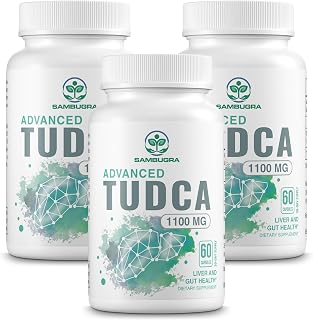
TUDCA (tauroursodeoxycholic acid) is a hydrophilic, taurine-conjugated bile acid that occurs naturally in small amounts in human bile and in higher concentrations in bear bile, which has a long history in traditional East Asian medicine. Synthetic and semi-synthetic TUDCA supplements are now widely marketed for liver support, and researchers are actively investigating its roles in reducing endoplasmic reticulum stress, inhibiting mitochondrial apoptosis pathways, promoting bile flow, and protecting neurons and retinal cells. Given these mechanisms and the range of doses used in clinical research, many users reasonably ask whether the timing of each dose relative to meals actually matters.
The honest starting point is that no large, randomized controlled trial has specifically studied TUDCA meal timing or dosing frequency in healthy adults. Most clinical research has examined efficacy for defined conditions—cholestatic liver disease, ALS, non-alcoholic fatty liver disease, and insulin resistance—rather than optimal scheduling for general supplemental use. What follows draws on TUDCA’s pharmacology as a bile acid, its behavior in the gastrointestinal tract, and the available clinical literature to offer practical, evidence-informed guidance while being transparent about the limits of current evidence.
Key Takeaways
- Take TUDCA with a fat-containing meal to activate bile acid transporters and improve both absorption consistency and tolerability.
- Split doses above roughly 500 mg per day across two meals to align with continuous enterohepatic recirculation and reduce GI burden.
- Individual gut microbiota variability meaningfully influences how bile acids including TUDCA are processed in the intestine [1], so two people on identical schedules may experience different effective exposure.
- Clinical doses studied in disease states (250 mg to 1750 mg/day) are reference points, not recommendations for healthy adults; the optimal dose and timing for general use remain unestablished.
- TUDCA is contraindicated in bile duct obstruction and should be timed away from bile acid sequestrants by at least two hours to prevent binding in the gut.
How TUDCA Behaves as a Bile Acid: The Pharmacological Case for Timing
To understand why meal timing could matter, it helps to understand what TUDCA is at a biochemical level. Bile acids are synthesized in the liver from cholesterol, conjugated with taurine or glycine, stored in the gallbladder, and released into the small intestine in response to dietary fat. Their primary physiological role is to emulsify lipids so that digestive enzymes can access them. TUDCA is taurine-conjugated and highly hydrophilic, meaning it is more water-soluble than many of its counterparts and generally considered less damaging to cell membranes than hydrophobic bile acids.
After oral ingestion, TUDCA is absorbed in the small intestine, enters portal circulation, and undergoes enterohepatic recirculation—a cycle in which the liver reabsorbs, reconjugates, and re-secretes bile acids back into bile. This recycling loop means a dose of TUDCA does not simply pass through once; it circulates between the gut and liver repeatedly. Gut microbiota play a meaningful role in modifying bile acids during this cycle through deconjugation and further bacterial transformation [1], which is relevant when considering whether the microbial environment of the intestine—shaped partly by meal composition—could influence how much active TUDCA ultimately reaches target tissues.
With Food or on an Empty Stomach? What the Mechanism Suggests
No published randomized trial has directly compared the bioavailability of TUDCA taken with versus without food in healthy adults. However, several mechanistic considerations point toward taking it with a meal, particularly one that contains at least a modest amount of dietary fat.
Dietary fat is the primary physiological trigger for cholecystokinin release, which in turn stimulates gallbladder contraction and endogenous bile secretion. When TUDCA is taken alongside a fat-containing meal, the gut lumen is already primed with active bile acid transporters—specifically the apical sodium-dependent bile acid transporter (ASBT) in the terminal ileum—to absorb bile acids efficiently. A supplemental bile acid arriving in this environment may be captured more reliably than one arriving in a fasted gut where that uptake machinery is comparatively quiet.
Taking TUDCA with food may also reduce the risk of gastrointestinal discomfort. Because TUDCA is a surface-active compound, high luminal concentrations in the absence of dietary fat substrate could, in theory, cause mild mucosal irritation or loose stools, though this is a considerably smaller concern with TUDCA than with more hydrophobic bile acids. Most clinical practitioners and supplement manufacturers recommend food co-administration for both tolerability and consistency of absorption.

Dosing Frequency: Once Daily vs. Split Doses
Clinical studies of TUDCA and its parent compound UDCA for cholestatic liver disease have typically distributed the daily dose across two or three separate administrations rather than delivering the full amount at once. This convention has a clear pharmacological rationale: the enterohepatic cycle operates continuously throughout the day, and multiple smaller doses may sustain steadier concentrations of TUDCA in portal blood and liver tissue than a single large dose that could transiently saturate or overwhelm the ASBT transporter.

For individuals using TUDCA at lower doses in the 250–500 mg per day range—common for general hepatoprotective or ER stress-reducing intent—once-daily dosing with a meal is practical and likely adequate, as the transporter system is not overwhelmed at these amounts. At higher doses, specifically 750 mg per day and above as used in some ALS and liver disease research, splitting across two meals better matches the physiology of the enterohepatic cycle and is generally preferred to minimize digestive side effects.
Individual variation in gut microbiota composition is also relevant here. Certain bacterial species deconjugate bile acids and alter their metabolic fate in ways that differ substantially between individuals [1]. This means two people taking the same TUDCA dose on the same schedule may experience meaningfully different effective exposure—a source of variability that no fixed dosing frequency rule can fully account for.
Dose Ranges Used in Clinical Research
Supplemental dose decisions are better made with reference to what researchers have actually studied. For ursodeoxycholic acid (UDCA), the unconjugated parent compound of TUDCA, established clinical use in primary biliary cholangitis calls for 13–15 mg/kg/day, translating to roughly 900–1050 mg per day for an average adult. TUDCA itself has been studied across a wide range: from 250 mg twice daily in some hepatic investigations to approximately 1750 mg per day in insulin resistance research. ALS trials have used 1000–1500 mg per day in divided doses.

A critical caveat: these doses were selected for specific pathological conditions, not calibrated for healthy adults pursuing general wellness or preventive liver support. The minimum effective dose for a healthy individual—and the optimal timing for that dose—has not been determined in rigorous clinical trials. Published clinical doses are useful reference points, not direct recommendations, and the decision to use higher doses warrants discussion with a physician who can weigh individual health status, concurrent medications, and the still-limited evidence base for TUDCA in healthy populations.
Practical Timing Guidance Based on Available Evidence
Given the pharmacological rationale and conventional clinical practice, the most defensible approach is to take TUDCA with a meal containing at least some dietary fat. For doses up to approximately 500 mg per day, a single dose taken with the largest or most fat-containing meal of the day—commonly lunch or dinner—is practical and consistent with how bile acid transporter activity is naturally organized around meals. For doses exceeding 500 mg, dividing the total into two equal portions taken with two separate meals better mirrors the continuous enterohepatic cycle and distributes absorption demand across the day.
Consistency of timing matters more than adherence to a specific clock hour. Because TUDCA participates in enterohepatic recirculation, the most functionally important variable is whether bile acid transporter mechanisms are active when the dose reaches the ileum—and a fat-containing meal reliably provides that activation. Erratic dosing or repeated administration on an empty stomach may produce more variable absorption, though this remains speculative in the absence of direct pharmacokinetic studies in healthy humans.

There is no established mechanistic or clinical reason to prefer morning over evening dosing. Some users choose to take TUDCA with a post-exercise meal, reasoning that physical activity transiently influences bile acid metabolism, though this is a plausible hypothesis rather than an evidence-supported recommendation. Choose the meal at which adherence is easiest to sustain long-term.
Interactions, Contraindications, and Who Should Be Cautious
Timing and dose decisions must be considered alongside safety constraints. TUDCA is contraindicated in bile duct obstruction: by promoting bile flow, it can increase intraductal pressure in a blocked system and worsen the underlying pathology. Individuals with cholangitis, severe hepatic impairment, or pre-existing gallbladder disease should consult a physician before use, as TUDCA directly influences bile dynamics that are already disrupted in these conditions.
Drug interactions are also timing-relevant in practice. Bile acid sequestrants—cholestyramine and colestipol, used to lower LDL cholesterol—bind bile acids in the gut and block their absorption, including any supplemental TUDCA. If both are used, TUDCA should be taken at least two hours before or four to six hours after the sequestrant. Cyclosporine interacts with bile acid transporters and may alter TUDCA’s pharmacokinetics, making concurrent use a matter for clinical oversight rather than self-management. Certain lipid-lowering agents may also interact; anyone on these medications should review the combination with a pharmacist or physician before proceeding.

🛒 Where to Buy TUDCA
- BulkSupplements.com TUDCA CapsulesLab-tested / studied
capsules, 500 mg per capsule, 90 capsules — Third-party tested and made in a cGMP facility; one capsule per serving; higher per-capsule dose suits users targeting 500–1000 mg/day protocols - Nutricost TUDCA 250mg
capsules, 250 mg per capsule, 60 capsules — High-volume seller; non-GMO and gluten-free labeling; no third-party purity COA publicly posted, but consistent community reputation for accurate dosing - Double Wood Supplements TUDCA Bile Salts 500mg
capsules, 500 mg per capsule, 60 capsules — USA-manufactured; publishes basic COA on request; popular among biohacker community for reliable potency at accessible price point - Nutricost TUDCA Powder
powder, 25 g tub — Best cost-per-gram option for daily high-dose users; gluten-free, same material as their capsule line; requires a milligram-accurate scale for precise dosing
As an Amazon Associate we earn from qualifying purchases. TUDCA quality varies widely — always choose a product that publishes a third-party purity test (COA) confirming 98%+ tauroursodeoxycholic acid before buying.
A Note on the Evidence
Evidence specifically examining TUDCA meal timing and dosing frequency in healthy adults remains limited; most clinical data comes from studies in defined disease states, and robust large-scale RCT data outside cholestasis indications are lacking. TUDCA is contraindicated in bile duct obstruction and requires medical supervision in people with gallbladder disease, cholangitis, severe hepatic impairment, or those taking bile acid sequestrants or cyclosporine. This article is informational only and does not constitute medical advice; consult a qualified healthcare provider before adding TUDCA to your regimen.
Frequently Asked Questions
Should I take TUDCA with food or on an empty stomach?
The pharmacological rationale favors taking TUDCA with a meal that contains dietary fat, because fat stimulates bile acid transporter activity in the small intestine and may improve both absorption and gastrointestinal tolerability. No published human bioavailability study has directly compared fed versus fasted administration, so this recommendation is based on bile acid physiology rather than a head-to-head clinical trial.
How many times a day should I take TUDCA?
For doses up to about 500 mg per day, once-daily dosing with a meal is practical and consistent with bile acid transporter capacity. For doses of 750 mg per day and above—as used in some ALS and liver disease investigations—splitting across two meals better supports the continuous enterohepatic recirculation cycle and is generally preferred to reduce the chance of digestive side effects. A clinician familiar with your health status can help determine an appropriate frequency.
Does the time of day matter—morning, noon, or evening?
No clinical evidence distinguishes morning from evening dosing for TUDCA. The more functionally relevant variable is co-administration with food rather than the specific clock hour. Choose whichever meal is most reliably fat-containing and easiest to remember, as long-term adherence to a consistent schedule is more important than any particular time of day.
Can my gut bacteria affect how TUDCA works in my body?
Yes. Gut microbiota actively deconjugate and chemically transform bile acids—including TUDCA—during enterohepatic recirculation, and intestinal motility influences how long those microbes have contact with bile acids [1]. This means that individual differences in gut microbial composition can produce meaningfully different metabolic outcomes even when two people take identical TUDCA doses on the same schedule.
What doses of TUDCA have been used in clinical research?
Studies have ranged from 250 mg twice daily in some hepatic disease trials to 1750 mg per day in insulin resistance research, with ALS investigations generally using 1000–1500 mg per day in divided doses. These amounts were selected for specific disease contexts, and the minimum effective or optimal dose for a healthy adult pursuing general liver or stress-reduction support has not been established in rigorous clinical trials.
Are there medications I should not combine with TUDCA?
Bile acid sequestrants such as cholestyramine and colestipol bind TUDCA in the gut and prevent absorption; separate any TUDCA dose from sequestrants by at least two hours. Cyclosporine interacts with bile acid transport proteins and may alter TUDCA pharmacokinetics, requiring clinical oversight. TUDCA should be avoided entirely in bile duct obstruction, and anyone with gallbladder disease, cholangitis, or severe hepatic impairment should use it only under a physician’s supervision.
References
- Bai X et al. The interplay of gut microbiota and intestinal motility in gastrointestinal function. Journal of smooth muscle research = Nihon Heikatsukin Gakkai kikanshi (2025). PMID 40619214
These statements have not been evaluated by the Food and Drug Administration. This information is not intended to diagnose, treat, cure, or prevent any disease. Content is for informational purposes only and is not medical advice; consult a qualified healthcare provider before starting any supplement. As an Amazon Associate we earn from qualifying purchases.