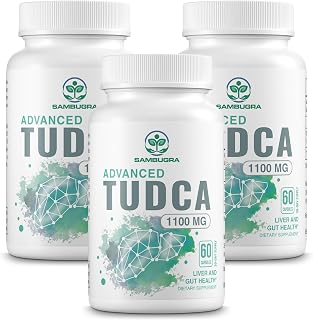
Walk into any supplement store or browse a longevity forum and you will find TUDCA and ox bile products sitting on adjacent shelves, sometimes marketed interchangeably. They are not interchangeable. Both involve bile chemistry, but their mechanisms, clinical rationales, and target users differ substantially. Understanding those differences matters, both for getting the outcome you are looking for and for avoiding potential harm.
This article explains what each compound is, what it is proposed to do at a biological level, where genuine evidence exists, and where honest uncertainty remains. Neither product is a cure for anything, robust large-scale human trial data outside of specific medical indications are limited, and anyone with a diagnosed hepatic or biliary condition should consult a physician before adding either to their regimen.
Key Takeaways
- Ox bile supplements work in the gut lumen to aid fat digestion and are most evidence-backed in people who have had their gallbladder removed.
- TUDCA is a specific hydrophilic bile acid that acts systemically to reduce ER stress, inhibit mitochondrial apoptosis, and promote bile flow — mechanisms distinct from those of ox bile.
- The two supplements are not interchangeable; one is a digestive aid, the other is a proposed cytoprotective and hepatoprotective agent with a different target audience.
- TUDCA has documented contraindications — including bile duct obstruction — and relevant drug interactions with cyclosporine, bile acid sequestrants, and certain lipid-lowering agents.
- Large-scale RCT evidence in healthy humans for TUDCA remains limited outside of cholestasis indications; approach wellness applications with calibrated expectations.
What Is TUDCA?
TUDCA stands for tauroursodeoxycholic acid, a hydrophilic bile acid that forms when ursodeoxycholic acid (UDCA) is conjugated with the amino acid taurine. Small amounts occur naturally in human bile, but it is far more abundant in bear bile, which has been used in East Asian traditional medicine for centuries. Modern TUDCA supplements are produced synthetically or through microbial synthesis and are not derived from bears.
TUDCA is studied primarily for three proposed mechanisms. First, it reduces endoplasmic reticulum (ER) stress, the cellular condition that occurs when proteins misfold or accumulate inside the ER faster than the cell can clear them. ER stress is implicated in a wide range of pathological processes, from non-alcoholic fatty liver disease to neurodegenerative conditions. Second, TUDCA inhibits the intrinsic mitochondrial apoptosis pathway, meaning it may slow certain forms of programmed cell death that are triggered from within the cell. Third, it promotes choleretic bile flow, meaning it increases the volume of bile secreted by the liver, which helps clear potentially toxic compounds from hepatic tissue. The regulation of bile flow involves multiple hormonal and neural signals [1], and TUDCA appears to act partly by stimulating hepatocyte bile acid transport.
Clinical investigation of TUDCA covers hepatoprotection, ALS, retinal degeneration, and insulin resistance, among other areas. Evidence ranges from robust for specific cholestatic liver disease indications to preliminary for neuroprotection and metabolic applications in healthy individuals.
What Is Ox Bile?
Ox bile supplements are exactly what the name implies: dried, desiccated bile extracted from cattle. The product contains a mixture of bile salts and bile acids — primarily taurocholic, glycocholic, taurodeoxycholic, and glycodeoxycholic acids — along with bile pigments like bilirubin, cholesterol, and phospholipids. This mixture reflects the natural composition of bovine bile and is meaningfully different from a purified single-molecule compound like TUDCA.
The primary, well-established rationale for ox bile supplementation is digestive support in people who produce insufficient bile. The most common clinical scenario is cholecystectomy, the surgical removal of the gallbladder. After this surgery, the liver continues producing bile but the reservoir that concentrated and released it in timed boluses in response to fatty meals is gone. Bile trickles continuously into the small intestine rather than being released in a controlled surge, which can impair fat digestion and fat-soluble vitamin absorption, particularly in meals with higher fat content. Ox bile supplements are intended to compensate for this deficit at mealtime.

Ox bile is not designed to reduce ER stress, modulate apoptosis, or provide neuroprotection. Its role is mechanical and digestive: providing exogenous bile acids to emulsify dietary fat when the body’s own supply is inadequate at the moment of need.
How the Mechanisms Differ
The contrast between these two products becomes clearest when you look at mechanism. Ox bile works in the gut lumen. It arrives in the small intestine, helps break fat globules into smaller droplets that lipase enzymes can act upon, facilitates absorption of fatty acids and fat-soluble vitamins, and is then largely reabsorbed at the terminal ileum and recycled through the enterohepatic circulation. Its benefits are localized to digestive physiology.

TUDCA, by contrast, is absorbed from the gut, enters systemic circulation, and reaches the liver and other tissues. Its proposed benefits — ER stress reduction, anti-apoptotic signaling, choleresis — occur intracellularly and at the level of hepatic bile secretion [1], not in the intestinal lumen. This means TUDCA is categorically a different kind of intervention. It is acting on cellular stress pathways in a way that a mixed bile extract sitting in the gut simply does not.
Another key difference is specificity. Ox bile contains a broad mixture of bile salts with varying degrees of hydrophilicity and hydrophobicity. Some of those bile acids, particularly more hydrophobic ones like deoxycholic acid, can be mildly irritating to gut and liver tissue at high doses. TUDCA is among the most hydrophilic bile acids known, which contributes to its favorable tolerability profile in the liver and its cytoprotective rather than cytotoxic character. Taking ox bile is not the same as taking TUDCA, and the two should not be conflated.
Who Might Reasonably Consider Each
Ox bile is most clearly useful for individuals who have had their gallbladder removed and experience digestive symptoms — bloating, loose stool, poor tolerance of fatty meals, floating stools — that are consistent with fat malabsorption. It is taken with meals, not as a general wellness compound, and dose is typically titrated to symptom resolution. People with intact gallbladders and healthy bile production have less obvious rationale for ox bile unless a practitioner has identified bile insufficiency through testing.
TUDCA’s potential users are more varied but also carry more uncertainty. Liver health is the most evidence-backed domain: UDCA (the unconjugated parent compound) is an approved pharmaceutical for primary biliary cholangitis, and TUDCA shares and may enhance some of those hepatoprotective properties. Individuals with non-alcoholic fatty liver disease, those using compounds known to place stress on the liver, or those with elevated liver enzymes sometimes consider TUDCA under medical guidance. The neuroprotection and insulin-sensitization applications are biologically plausible based on mechanism but remain investigational in healthy populations. Treating TUDCA as a general wellness supplement is getting ahead of the current evidence.
It is worth noting that some people combine both products, particularly post-cholecystectomy individuals who want both digestive support at meals and systemic liver support. This combination is not inherently irrational but also has not been studied directly. Dosing, timing, and appropriateness should be discussed with a healthcare provider.

Safety Considerations and Drug Interactions
TUDCA carries specific contraindications that ox bile does not share to the same degree. It is contraindicated in bile duct obstruction because increasing bile flow into a blocked system can worsen the obstruction and cause serious harm. It requires medical supervision in patients with existing gallbladder disease, cholangitis, or severe hepatic impairment. These are not theoretical risks; they reflect real physiological consequences of altering bile dynamics in an already compromised biliary system.
On the drug interaction side, TUDCA may affect the absorption and activity of bile acid sequestrants (such as cholestyramine or colestipol), which bind bile acids in the gut to lower cholesterol. If taken together, the sequestrant may bind TUDCA and reduce its availability. TUDCA may also interact with cyclosporine, an immunosuppressant whose absorption is partly bile-dependent, and with certain lipid-lowering medications. Anyone on these classes of drugs should not add TUDCA without physician review.
Ox bile at typical supplement doses is generally well tolerated in cholecystectomy patients but can cause loose stool or diarrhea if the dose is too high. In individuals with intact gallbladders, excess exogenous bile acids could theoretically contribute to bile acid diarrhea or irritate the gut lining over time. Neither product should be treated as risk-free simply because it is sold without a prescription.
Honest Assessment of the Evidence
For ox bile, the mechanistic rationale is straightforward and the product fills a clearly identified gap in post-cholecystectomy digestion. The evidence base here is largely physiological and clinical experience rather than large RCTs, but the logic is sound: if you lack a gallbladder, providing bile salts at mealtimes can restore fat emulsification capacity.
For TUDCA, the situation is more nuanced. The hepatoprotective effects of UDCA in cholestatic liver disease are well-established in clinical medicine, and TUDCA shares this biological lineage. The cellular mechanisms — ER stress reduction, mitochondrial pathway inhibition, choleresis — are real phenomena demonstrated in laboratory and animal research. However, translating this to benefits in healthy adults or for off-label applications such as neuroprotection or body composition remains speculative without robust large-scale human trial data. The supplement industry is significantly ahead of the clinical evidence on many of TUDCA’s proposed uses. Honest consumers should recognize this gap.
🛒 Where to Buy TUDCA
- BulkSupplements.com TUDCA CapsulesLab-tested / studied
capsules, 500 mg per capsule, 90 capsules — Third-party tested and made in a cGMP facility; one capsule per serving; higher per-capsule dose suits users targeting 500–1000 mg/day protocols - Nutricost TUDCA 250mg
capsules, 250 mg per capsule, 60 capsules — High-volume seller; non-GMO and gluten-free labeling; no third-party purity COA publicly posted, but consistent community reputation for accurate dosing - Double Wood Supplements TUDCA Bile Salts 500mg
capsules, 500 mg per capsule, 60 capsules — USA-manufactured; publishes basic COA on request; popular among biohacker community for reliable potency at accessible price point - Nutricost TUDCA Powder
powder, 25 g tub — Best cost-per-gram option for daily high-dose users; gluten-free, same material as their capsule line; requires a milligram-accurate scale for precise dosing
As an Amazon Associate we earn from qualifying purchases. TUDCA quality varies widely — always choose a product that publishes a third-party purity test (COA) confirming 98%+ tauroursodeoxycholic acid before buying.
A Note on the Evidence
The evidence base for TUDCA in healthy adults outside of cholestatic liver conditions is limited, and most mechanistic findings come from laboratory, animal, or small clinical studies; do not assume investigational findings translate directly to benefit for you. TUDCA is contraindicated in bile duct obstruction, requires medical supervision in patients with gallbladder disease, cholangitis, or severe hepatic impairment, and may interact with cyclosporine, bile acid sequestrants, and lipid-lowering medications — consult a qualified healthcare provider before use, especially if you take any prescription medications or have a diagnosed hepatic or biliary condition.
Frequently Asked Questions
Can I take ox bile and TUDCA together?
Some individuals, particularly those without a gallbladder, do use both: ox bile at mealtimes for fat digestion and TUDCA for systemic liver support. This combination has not been directly studied in clinical trials, so there is no formal guidance on ideal dosing or interactions. A physician or registered dietitian familiar with bile acid physiology is the appropriate person to advise on combined use.
Does TUDCA actually increase bile flow?
TUDCA is classified as a choleretic agent, meaning it promotes the secretion of bile from the liver. Bile flow is regulated by multiple hormonal and neural signals [1], and TUDCA appears to stimulate hepatocyte bile acid transporters in ways that increase secretory output. This is one mechanism by which it may help clear potentially hepatotoxic compounds.
Is ox bile useful if I still have my gallbladder?
If your gallbladder is functioning normally, you are already producing and releasing bile in response to meals, which means the primary use case for ox bile does not apply to you. Some practitioners suggest it for people with documented bile insufficiency even with an intact gallbladder, but this should be confirmed by appropriate testing rather than assumed.
What dose of TUDCA is typically used?
Doses in published research and clinical use vary considerably depending on the indication, ranging from roughly 250 mg to 1,750 mg per day in divided doses. Supplement products commonly offer 250–500 mg per serving. There is no universally established optimal dose for healthy adults using it off-label, and higher doses are not necessarily better or safer.
Is TUDCA safe for the liver, or can it cause liver damage?
TUDCA is among the most hydrophilic bile acids, which means it is not inherently hepatotoxic the way that more hydrophobic bile acids can be. In hepatology, it is studied as a hepatoprotective agent, not a hepatotoxic one. However, it is contraindicated in bile duct obstruction and should be used with medical supervision in patients with severe liver disease, since altering bile dynamics in an already impaired liver carries real risks.
How do I know which supplement is right for me?
If your primary concern is fat digestion after gallbladder removal or fat malabsorption, ox bile taken with fatty meals is the more targeted choice. If your concern is liver health, cellular stress, or a specific condition your physician has identified as potentially responsive to TUDCA, that is when TUDCA becomes relevant to consider under medical guidance. Using either product without a clear rationale tied to your actual situation is getting ahead of the evidence.
References
- Lewis MH et al. Effect of somatostatin on determinants of bile flow in unanesthetized dogs. Annals of surgery (1982). PMID 6119961
These statements have not been evaluated by the Food and Drug Administration. This information is not intended to diagnose, treat, cure, or prevent any disease. Content is for informational purposes only and is not medical advice; consult a qualified healthcare provider before starting any supplement. As an Amazon Associate we earn from qualifying purchases.