Every cell in your body contains a compartment called the endoplasmic reticulum (ER), a network of membranes responsible for folding newly made proteins into the precise three-dimensional shapes they need to function. When the ER becomes overwhelmed — whether by nutrient excess, oxidative damage, viral infection, or genetic error — misfolded proteins accumulate and trigger a coordinated emergency response called the unfolded protein response (UPR). In the short term the UPR is protective, but when ER stress is chronic, the same pathways that began as a rescue signal can push cells toward dysfunction and death.
TUDCA (tauroursodeoxycholic acid) is a hydrophilic bile acid and a taurine conjugate of ursodeoxycholic acid that has attracted research attention partly because of its apparent ability to reduce ER stress load and moderate the UPR. This article explains what ER stress is, how TUDCA is proposed to intervene, what published research has found in specific disease models, and where the evidence currently stops. Nothing here constitutes medical advice, and most of the findings discussed are from cell cultures or animal studies unless otherwise noted.
Key Takeaways
- ER stress occurs when the endoplasmic reticulum cannot fold proteins fast enough, triggering the unfolded protein response (UPR), which becomes harmful when chronic.
- TUDCA is a hydrophilic bile acid studied as a chemical chaperone that may reduce the ER’s unfolded-protein burden upstream of the UPR sensors, rather than blocking a single sensor directly.
- Preclinical evidence for TUDCA’s ER-stress effects spans neurological (axonal degeneration, retinal disease), metabolic (insulin resistance, cardiac remodeling), and cellular-aging models — but most findings are from animals or cell cultures.
- Viruses including influenza A and EV71 appear to exploit ER stress pathways; TUDCA has shown inhibitory effects on EV71 replication in cell culture, though no clinical antiviral claim is supported.
- Robust human clinical trial data for TUDCA’s ER-stress effects outside established cholestasis indications are limited; caution and medical supervision are warranted.
What Is Endoplasmic Reticulum Stress and the UPR?
The ER relies on a carefully balanced environment — correct calcium levels, adequate energy supply, and sufficient folding chaperones — to process the roughly one-third of human proteins that pass through it. When that balance breaks down, unfolded or misfolded proteins accumulate in the ER lumen, a state collectively called ER stress. The UPR is the cell’s response: three ER-resident sensor proteins (IRE1, PERK, and ATF6) detect the accumulation and activate downstream signaling to reduce protein synthesis, increase chaperone production, and accelerate clearance of damaged proteins through a process called ER-associated degradation [1].
The UPR is not inherently harmful. In cells with high secretory demand — pancreatic beta cells producing insulin, liver cells processing lipids — it operates at a low background level as a routine quality-control mechanism [2]. Problems arise when stressors are severe enough or persistent enough that the adaptive phase of the UPR fails and the pro-apoptotic arms of the response dominate. At that point, the same sensors that tried to protect the cell begin driving inflammatory signaling and programmed cell death [3].
A growing body of research implicates chronic ER stress in conditions as varied as metabolic syndrome, neurodegeneration, retinal disease, and cardiac remodeling [3]. Understanding how to pharmacologically moderate — rather than simply suppress — the UPR is therefore an active area of drug development, and TUDCA is one of several chemical chaperones being studied in this context.
What Is a Chemical Chaperone, and Where Does TUDCA Fit?
Molecular chaperones are proteins inside the ER — most famously the binding immunoglobulin protein BiP (also called GRP78) — that physically assist other proteins in reaching their correct folded state. Accumulated misfolded proteins effectively ‘sequester’ BiP away from the three UPR sensors, which is one reason BiP levels are used as a marker of ER stress [4]. Chemical chaperones are small molecules that can partially substitute for or support these endogenous chaperones by stabilizing protein conformations or altering the ER’s physical environment.

TUDCA is classified as a hydrophilic bile acid chemical chaperone. Unlike many pharmacological ER-stress inhibitors that block a specific sensor (such as IRE1), TUDCA is generally described as acting upstream: by improving the overall folding environment in the ER, it reduces the accumulating burden of misfolded proteins before the UPR sensors need to fire at damaging levels [1]. This broad upstream action is one reason it has been studied across multiple disease contexts, though it also means the precise molecular targets remain incompletely defined.
TUDCA in Neurological Models: Axonal Degeneration and Retinal Disease
Some of the most detailed mechanistic work on TUDCA and ER stress has come from neurological disease models. In X-linked adrenoleukodystrophy (X-ALD), a rare inherited disorder causing axonal degeneration, researchers demonstrated that TUDCA arrested axonal loss by inhibiting the UPR [5]. The study linked accumulation of very-long-chain fatty acids to ER stress activation in neurons and showed that TUDCA’s interference with this process had a protective effect on axon integrity in the experimental model.

Retinal degenerative conditions represent another active area of inquiry. The UPR has been characterized as a central driver of photoreceptor death in diseases including retinitis pigmentosa and geographic atrophy, with all three UPR branches (IRE1, PERK, ATF6) showing activation in degenerating retinal tissue [6]. Reducing pathological UPR activation without abolishing its physiological function is proposed as a target for slowing retinal cell death, and chemical chaperones including TUDCA appear in this discussion [6].
ER homeostasis also intersects with autophagy — the cell’s system for recycling damaged organelles. Research on WDR45, a gene whose mutations cause a childhood-onset neurodegeneration, found that impaired ER homeostasis and disrupted autophagic flux act together in driving neuronal death [7]. This suggests that in some neurodegenerative contexts, addressing ER stress may need to be paired with support for downstream clearance pathways, a nuance relevant to interpreting single-compound studies.
Metabolic Disease and the Cardiac Connection
ER stress is prominently implicated in metabolic disease. In states of nutrient overload — excess lipid or glucose — the ER’s folding capacity in liver and adipose cells can become overwhelmed, activating the UPR and contributing to insulin resistance and inflammation [3]. Preclinical research has explored whether restoring ER proteostasis in these settings could improve metabolic outcomes, and TUDCA has appeared in several of these investigations as a tool compound.
One study examined TUDCA’s effects in an obesity model, finding that inhibition of ER stress with TUDCA rescued obesity-induced cardiac remodeling and contractile abnormalities [8]. The proposed mechanism included regulation of ferroptosis — an iron-dependent form of regulated cell death — suggesting that TUDCA’s protective effects in cardiac tissue may extend beyond direct UPR modulation to downstream cell-death pathways. This work was conducted in animal models, and direct translation to human cardiac physiology requires further study.
Glucocorticoid-producing cells in the adrenal gland also appear sensitive to ER stress, with evidence that UPR signaling influences hormone synthesis capacity [2]. Whether TUDCA’s ER-stress modulation has any practical bearing on adrenal or stress-hormone physiology in humans is not established by current evidence.

Cellular Senescence and Reproductive Tissue
ER stress has been linked to accelerated cellular senescence — the state in which cells permanently stop dividing and begin secreting inflammatory signals. In an animal study on mouse ovarian surface epithelium, TUDCA treatment was found to delay senescence, with the effect attributed to alleviation of ER stress [9]. The work is notable for connecting TUDCA’s chemical-chaperone activity to a downstream outcome (cellular aging markers) rather than simply measuring UPR sensor activation, though the relevance to human reproductive aging is speculative.
Infectious Disease: TUDCA, ER Stress, and Viral Replication
Several viruses have been found to exploit or trigger ER stress pathways to facilitate their own replication. The UPR sensor IRE1 appears to be required for efficient influenza A replication; pharmacological inhibition of the IRE1 pathway blocked viral growth in cell culture [10]. Separately, TUDCA was shown to inhibit enterovirus 71 (EV71) replication by regulating ER stress signaling and suppressing autophagy in infected cells [11]. These findings are early-stage and do not establish any clinical antiviral role for TUDCA, but they illustrate how broadly ER stress pathways intersect with cell biology.
The UPR has also been implicated in inflammatory lung conditions. Research into bronchopulmonary dysplasia — a neonatal lung injury — identified UPR activation as a contributor to pathological remodeling and proposed ER stress modulation as a potential therapeutic avenue [12]. TUDCA was among the agents discussed in this context, though direct clinical evidence is absent.
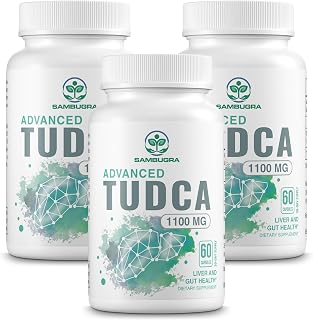
🛒 Where to Buy TUDCA
- BulkSupplements.com TUDCA CapsulesLab-tested / studied
capsules, 500 mg per capsule, 90 capsules — Third-party tested and made in a cGMP facility; one capsule per serving; higher per-capsule dose suits users targeting 500–1000 mg/day protocols - Nutricost TUDCA 250mg
capsules, 250 mg per capsule, 60 capsules — High-volume seller; non-GMO and gluten-free labeling; no third-party purity COA publicly posted, but consistent community reputation for accurate dosing - Double Wood Supplements TUDCA Bile Salts 500mg
capsules, 500 mg per capsule, 60 capsules — USA-manufactured; publishes basic COA on request; popular among biohacker community for reliable potency at accessible price point - Nutricost TUDCA Powder
powder, 25 g tub — Best cost-per-gram option for daily high-dose users; gluten-free, same material as their capsule line; requires a milligram-accurate scale for precise dosing
As an Amazon Associate we earn from qualifying purchases. TUDCA quality varies widely — always choose a product that publishes a third-party purity test (COA) confirming 98%+ tauroursodeoxycholic acid before buying.
A Note on the Evidence
The research discussed here is largely preclinical — drawn from cell culture and animal models — and should not be interpreted as evidence that TUDCA treats, prevents, or cures any human disease. TUDCA is contraindicated in bile duct obstruction, and anyone with liver disease, gallbladder disease, or who takes cyclosporine, bile acid sequestrants, or lipid-lowering medications should consult a qualified healthcare provider before use. This article is informational only and is not a substitute for professional medical advice.
Frequently Asked Questions
What exactly is the unfolded protein response (UPR)?
The UPR is a set of signaling pathways activated when misfolded proteins accumulate in the endoplasmic reticulum. Three sensor proteins — IRE1, PERK, and ATF6 — detect the problem and coordinate responses including reduced protein synthesis and increased production of folding chaperones [1]. If ER stress is resolved, the UPR switches off; if it persists, pro-apoptotic signaling can dominate [3].
How is TUDCA different from a UPR inhibitor?
Most targeted UPR inhibitors block a specific sensor protein such as IRE1. TUDCA is described as a chemical chaperone that acts more broadly — stabilizing the folding environment in the ER so that fewer misfolded proteins accumulate in the first place [1]. This upstream action may reduce pathological UPR activation without completely blocking the adaptive responses the cell still needs.
What neurological conditions has TUDCA been studied in relation to ER stress?
Preclinical research has examined TUDCA in X-linked adrenoleukodystrophy, where it arrested axonal degeneration by inhibiting the UPR in a disease model [5]. The UPR has also been proposed as a therapeutic target in retinal degenerative diseases, with chemical chaperones including TUDCA appearing in the discussion [6]. These are experimental findings, not established treatments.
Is there evidence for TUDCA's effects on the heart?
An animal study found that TUDCA inhibited ER stress and rescued cardiac remodeling and contractile dysfunction caused by obesity, with proposed involvement of ferroptosis regulation [8]. This is a preclinical finding; no large human trials on TUDCA’s cardiac effects are available.
Can TUDCA fight viruses by reducing ER stress?
Cell culture studies have shown that inhibiting the IRE1 UPR sensor blocks influenza A replication [10], and TUDCA specifically inhibited EV71 (enterovirus 71) replication by modulating ER stress and autophagy pathways [11]. These are early laboratory findings and do not support any claim that TUDCA prevents or treats viral infections in humans.
Who should be cautious about using TUDCA?
TUDCA is contraindicated in bile duct obstruction. People with existing gallbladder disease, cholangitis, or severe liver impairment should only use it under medical supervision. It may interact with bile acid sequestrants, cyclosporine, and certain lipid-lowering drugs. Most research on its ER-stress effects is preclinical, so the risk-benefit profile in healthy people remains poorly defined.
References
- Vega H et al. The rise of proteostasis promoters. IUBMB life (2016). PMID 27797166
- Yap KN et al. The Role of Endoplasmic Reticulum Stress and Unfolded Protein Response in Glucocorticoid Production. Journal of experimental zoology. Part A, Ecological and integrative physiology (2026). PMID 41502077
- Alotaibi G et al. Pharmacological landscape of endoplasmic reticulum stress: Uncovering therapeutic avenues for metabolic diseases. European journal of pharmacology (2025). PMID 40089262
- Xu H et al. The ER luminal binding protein (BiP) alleviates Cd(2+)-induced programmed cell death through endoplasmic reticulum stress-cell death signaling pathway in tobacco cells. Journal of plant physiology (2013). PMID 23867017
- Launay N et al. Tauroursodeoxycholic bile acid arrests axonal degeneration by inhibiting the unfolded protein response in X-linked adrenoleukodystrophy. Acta neuropathologica (2017). PMID 28004277
- Zhang H et al. Unfolded protein response in endoplasmic reticulum stress associated with retinal degenerative diseases: A promising therapeutic target. Neural regeneration research (2026). PMID 40537005
- Wan H et al. WDR45 contributes to neurodegeneration through regulation of ER homeostasis and neuronal death. Autophagy (2020). PMID 31204559
- Li FJ et al. Inhibition of ER stress using tauroursodeoxycholic acid rescues obesity-evoked cardiac remodeling and contractile anomalies through regulation of ferroptosis. Chemico-biological interactions (2024). PMID 38906502
- Vašíčková K et al. Alleviation of endoplasmic reticulum stress by tauroursodeoxycholic acid delays senescence of mouse ovarian surface epithelium. Cell and tissue research (2018). PMID 30066106
- Hassan IH et al. Influenza A viral replication is blocked by inhibition of the inositol-requiring enzyme 1 (IRE1) stress pathway. The Journal of biological chemistry (2012). PMID 22194594
- Wang S et al. TUDCA inhibits EV71 replication by regulating ER stress signaling pathway and suppressing autophagy. Diagnostic microbiology and infectious disease (2024). PMID 39213902
- Yu H et al. Unfolded protein response in bronchopulmonary dysplasia: mechanisms, pathways, and therapeutic implications. Frontiers in cell and developmental biology (2026). PMID 42124863
These statements have not been evaluated by the Food and Drug Administration. This information is not intended to diagnose, treat, cure, or prevent any disease. Content is for informational purposes only and is not medical advice; consult a qualified healthcare provider before starting any supplement. As an Amazon Associate we earn from qualifying purchases.