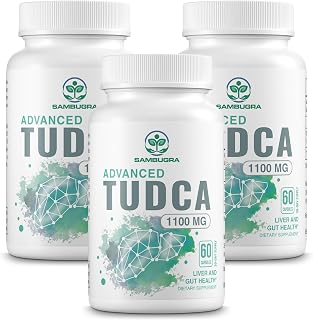
TUDCA Dosage & Cost Calculator
Based on the labeled dose options for Sambugra TUDCA Liver Supplement 550mg and the published 60-count bottle at $55.96.
Open the full dosage & cost calculator →
Estimate only – based on the current listed price of the 60-count Sambugra TUDCA Liver Supplement 550mg bottle. Actual Amazon price can change; check the live price before buying.
Why no height/weight input? Unlike per-kg supplements (creatine, protein), TUDCA has no published bodyweight-adjusted dosing in the research behind it. This calculator doesn't fabricate a per-kg formula that doesn't exist in the literature.
Get Sambugra TUDCA Liver Supplement 550mg on Amazon(paid link) As an Amazon Associate we earn from qualifying purchases.
TUDCA: Mechanisms Relevant to Dosage
TUDCA is an endogenous bile acid, a taurine conjugate of ursodeoxycholic acid (UDCA), naturally produced in small quantities in the human body. Its therapeutic potential stems from its diverse cellular mechanisms. TUDCA functions as a chemical chaperone, assisting in protein folding and reducing endoplasmic reticulum (ER) stress, a key pathological feature in many diseases. Beyond ER stress modulation, TUDCA exhibits anti-apoptotic, anti-inflammatory, and antioxidant properties. It stabilizes mitochondrial membranes, improves cellular energy metabolism, and modulates specific signaling pathways relevant to cell survival and proliferation. Understanding these mechanisms helps contextualize the varying dosages employed in different research settings.
General Dosing Principles and Bioavailability
Unlike many supplements, TUDCA’s optimal dosage is not a one-size-fits-all recommendation. It depends heavily on the specific condition being addressed and the individual’s baseline health. TUDCA is generally well-absorbed orally, with peak plasma concentrations typically observed within 1-3 hours post-administration. The half-life of TUDCA in humans is not extensively characterized but is generally considered to be several hours, necessitating multiple daily doses in some therapeutic regimens to maintain stable plasma levels. Food intake can influence TUDCA absorption, with some studies suggesting improved bioavailability when taken with meals, particularly those containing fats, due to its role as a bile acid.TUDCA Dosage for Liver Support and Cholestatic Conditions
The most robust clinical evidence for TUDCA’s efficacy and dosage comes from its application in liver health, particularly for cholestatic liver diseases. These conditions involve impaired bile flow, leading to the accumulation of toxic bile acids and liver damage. TUDCA works by displacing hydrophobic bile acids, improving bile flow, and protecting hepatocytes from apoptosis.Primary Biliary Cholangitis (PBC) and Intrahepatic Cholestasis
For conditions like PBC, TUDCA has been studied as an adjunct therapy, often in patients who respond inadequately to ursodeoxycholic acid (UDCA). Clinical trials have typically employed TUDCA dosages ranging from 500 mg to 1500 mg per day, divided into two or three doses[1][2]. A common starting point in some research protocols has been 250 mg twice daily, escalating as needed and tolerated[3]. These dosages are often determined by body weight or liver function parameters, aiming to achieve therapeutic levels that improve liver enzyme markers (e.g., alkaline phosphatase, ALT, AST) and reduce pruritus. It is imperative that such use occurs under strict medical supervision due to the complexity of these conditions and potential drug interactions.TUDCA for Bodybuilders and PED Users
Oral anabolic androgenic steroids (AAS) are known to induce hepatotoxicity, primarily through cholestasis and direct hepatocellular damage. Bodybuilders and PED users frequently employ TUDCA as a prophylactic or therapeutic agent to mitigate this liver strain. While specific clinical trials on TUDCA in this population are limited, the mechanistic rationale for liver protection is strong. Anecdotal reports and community consensus among PED users suggest daily dosages ranging from 250 mg to 750 mg, often split into two doses. Some individuals on highly hepatotoxic cycles might transiently increase this to 1000 mg or 1200 mg per day, though this higher range lacks extensive safety data in healthy individuals or those with pre-existing liver conditions not related to cholestasis. It is generally advised to commence TUDCA before and continue throughout the oral steroid cycle. Regular liver enzyme monitoring is crucial for individuals using TUDCA for this purpose.TUDCA Dosage for Neuroprotection and Metabolic Health
TUDCA’s neuroprotective properties, primarily through ER stress reduction and anti-apoptotic effects, have garnered significant research interest in neurodegenerative diseases like Amyotrophic Lateral Sclerosis (ALS) and Huntington’s disease. Its role in metabolic health, particularly insulin sensitivity and obesity, is also being explored.Neurodegenerative Conditions
In early-phase clinical trials for ALS, TUDCA dosages have been substantial, typically in the range of 1000 mg to 2000 mg per day, often administered as two divided doses[4][5]. These studies aim to slow disease progression and improve neuronal survival. The rationale for higher dosages in these contexts is to achieve sufficient central nervous system penetration and therapeutic concentrations at the cellular level. It is critical to note that these are investigational dosages for severe medical conditions, and self-administering TUDCA at these levels without medical guidance is strongly discouraged. The long-term safety and efficacy profile in humans for neurodegenerative applications are still under investigation[6].Metabolic Syndrome and Insulin Sensitivity
Preclinical studies and limited human data suggest TUDCA may improve insulin sensitivity and reduce ER stress in metabolic tissues. Dosages in human trials investigating TUDCA for insulin resistance have typically ranged from 500 mg to 1750 mg per day. For example, one study investigating TUDCA’s effect on insulin sensitivity in obese individuals used 1750 mg daily for four weeks[7]; in that trial hepatic and muscle insulin sensitivity improved by roughly 30%, while adipose tissue insulin sensitivity did not change[7]. These studies are often small and exploratory, and definitive dosage recommendations for metabolic health are not yet established. Individuals interested in TUDCA for these applications should consult a healthcare professional.Timing of TUDCA Administration
The optimal timing for TUDCA administration can depend on the desired effect. For liver support, particularly in the context of oral steroid cycles, splitting the daily dose into two or three administrations (e.g., morning and evening) helps maintain more consistent plasma levels throughout the day, providing continuous protection. Taking TUDCA with meals is generally recommended. As a bile acid, its absorption and physiological function are intertwined with the digestive process, and the presence of food, especially fats, may enhance its bioavailability and reduce the likelihood of gastrointestinal upset.Safety Profile and Potential Side Effects
TUDCA is generally considered safe and well-tolerated at commonly studied dosages. The most frequently reported side effects are gastrointestinal in nature. These include diarrhea, nausea, and abdominal discomfort, which are often mild and transient; in the six-month PBC dose-response study diarrhea was the only side effect reported[1], and a 500 mg/day crossover trial recorded no side effects at all[3]. Higher dosages, particularly those exceeding 1500 mg per day, may increase the incidence and severity of gastrointestinal side effects. There are also theoretical concerns about potential alterations in the gut microbiome with long-term, high-dose bile acid supplementation, though this is not well-established for TUDCA in humans.Contraindications and Precautions
TUDCA should be used with caution in individuals with complete biliary obstruction, as this could exacerbate cholestasis. Pregnant or breastfeeding women, and individuals with a history of bile duct issues, should avoid TUDCA unless specifically advised and monitored by a physician. Potential interactions with other medications, particularly those metabolized by the liver or affecting bile acid synthesis and transport, should be considered. Always consult with a healthcare professional before starting TUDCA, especially if you are on prescription medications or have underlying health conditions.
TUDCA vs. UDCA: A Brief Comparison
TUDCA is a taurine conjugate of UDCA. While both are hydrophilic bile acids used in liver conditions, TUDCA generally exhibits superior water solubility and potentially greater efficacy in specific contexts due to its taurine conjugation; a head-to-head crossover study in PBC found tauroursodeoxycholate was better absorbed than ursodeoxycholate and underwent less conversion to hydrophobic metabolites[8]. This conjugation enhances its chemical chaperone properties and stability.| Feature | TUDCA (Tauroursodeoxycholic Acid) | UDCA (Ursodeoxycholic Acid) |
|---|---|---|
| Solubility | Highly water-soluble | Water-soluble |
| Endogenous Production | Minor human endogenous production (conjugate of UDCA) | Minor human endogenous production |
| Primary Mechanism | ER stress reduction, chemical chaperone, anti-apoptotic, anti-inflammatory | Displacement of toxic bile acids, cytoprotection, immunomodulation |
| Clinical Use | Investigational for neurodegeneration, metabolic disorders; adjunctive in cholestasis, off-label for PED liver support | Established for Primary Biliary Cholangitis (PBC), gallstone dissolution |
| Bioavailability | Good oral absorption | Good oral absorption |
Selecting a TUDCA Supplement: What to Look For
When purchasing TUDCA, quality and purity are paramount. Given the unregulated nature of many supplements, it is essential to choose products from reputable manufacturers. Look for supplements that are third-party tested for purity and potency. Consumers should search for “TUDCA 250mg capsules” or “TUDCA 500mg powder” to find suitable options. Another important aspect is to verify that the product label clearly states “tauroursodeoxycholic acid” and not just “ursodeoxycholic acid” (UDCA), as they are distinct compounds. Opt for products with minimal excipients and transparent labeling regarding ingredient sourcing and manufacturing practices. For those sensitive to capsules, “TUDCA bulk powder” might be an alternative, allowing for more precise dose titration, though proper measurement tools are necessary.
Conclusion
TUDCA presents a compelling profile as a multifaceted therapeutic agent, particularly for liver health, neuroprotection, and metabolic regulation. Dosage recommendations vary significantly based on the intended application, ranging from 250 mg to 1750 mg per day in divided doses. While generally well-tolerated, gastrointestinal side effects can occur, especially at higher dosages. It is crucial for users to approach TUDCA supplementation with an informed perspective, adhering to evidence-based guidelines and prioritizing safety. Consultation with a qualified healthcare professional is always recommended before initiating TUDCA, particularly for individuals with pre-existing conditions or those on other medications.Frequently Asked Questions (FAQ)
What is the recommended starting TUDCA dosage for liver support in healthy individuals or bodybuilders?
Can I take TUDCA on an empty stomach?
Are there any specific times of day that are better for taking TUDCA?
What are the main side effects of TUDCA?
How long does it take for TUDCA to start working for liver support?
Is TUDCA safe for long-term use?
References
- Crosignani A et al. Tauroursodeoxycholic acid for treatment of primary biliary cirrhosis. A dose-response study. Digestive diseases and sciences (1996). PMID 8674405
- Setchell KD et al. Metabolism of orally administered tauroursodeoxycholic acid in patients with primary biliary cirrhosis. Gut (1996). PMID 8675100
- Larghi A et al. Ursodeoxycholic and tauro-ursodeoxycholic acids for the treatment of primary biliary cirrhosis: a pilot crossover study. Alimentary pharmacology & therapeutics (1997). PMID 9146783
- Elia AE et al. Tauroursodeoxycholic acid in the treatment of patients with amyotrophic lateral sclerosis. European journal of neurology (2016). PMID 25664595
- Sun Y et al. An evaluation of the combination of sodium phenylbutyrate and taurursodiol for the treatment of amyotrophic lateral sclerosis. Expert review of neurotherapeutics (2023). PMID 36705941
- Lombardo FL et al. A randomized double-blind clinical trial on safety and efficacy of tauroursodeoxycholic acid (TUDCA) as add-on treatment in patients affected by amyotrophic lateral sclerosis (ALS): the statistical analysis plan of TUDCA-ALS trial. Trials (2023). PMID 38053196
- Kars M et al. Tauroursodeoxycholic Acid may improve liver and muscle but not adipose tissue insulin sensitivity in obese men and women. Diabetes (2010). PMID 20522594
- Invernizzi P et al. Differences in the metabolism and disposition of ursodeoxycholic acid and of its taurine-conjugated species in patients with primary biliary cirrhosis. Hepatology (1999). PMID 9918905
These statements have not been evaluated by the Food and Drug Administration. This information is not intended to diagnose, treat, cure, or prevent any disease. Content is for informational purposes only and is not medical advice; consult a qualified healthcare provider before starting any supplement. As an Amazon Associate we earn from qualifying purchases.