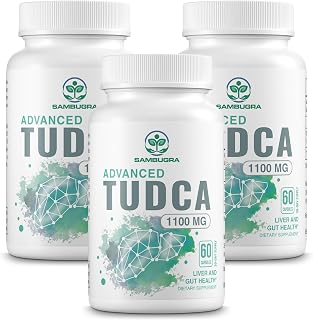
Tauroursodeoxycholic acid (TUDCA) is a hydrophilic bile acid that has drawn significant scientific interest for its ability to reduce endoplasmic reticulum stress, support liver function, and protect neurons and retinal cells. It is sold as a dietary supplement and studied clinically for conditions ranging from amyotrophic lateral sclerosis (ALS) to cholestatic liver disease. As with any bioactive compound, understanding its adverse reaction profile matters before deciding to use it.
Most safety evidence for TUDCA derives from studies of its parent compound, ursodeoxycholic acid (UDCA), supplemented by a smaller number of clinical trials examining TUDCA directly. This article reviews the adverse reactions reported across that evidence base and is honest about where data is robust and where gaps remain. Nothing here constitutes medical advice; consult a qualified healthcare provider before starting TUDCA.
Key Takeaways
- Gastrointestinal side effects — diarrhea, nausea, and abdominal discomfort — are the most commonly reported adverse reactions, based primarily on the UDCA literature; they tend to be dose-dependent and mild in clinical settings.
- Direct TUDCA safety data from ALS trials found no serious treatment-related adverse events over periods up to 54 weeks, but these populations were clinically supervised and may not fully represent healthy supplement users.
- TUDCA is absolutely contraindicated in bile duct obstruction and requires medical supervision in patients with gallbladder disease, cholangitis, or severe hepatic impairment.
- Clinically significant drug interactions exist with bile acid sequestrants (reduced TUDCA absorption), cyclosporine (elevated drug levels and toxicity risk), and aluminum-containing antacids.
- Large-scale randomized controlled trial data on TUDCA safety in healthy humans is lacking; most evidence is extrapolated from UDCA studies or from small, disease-specific TUDCA trials.
Gastrointestinal Side Effects: The Most Common Adverse Reactions
Gastrointestinal symptoms are the most frequently reported adverse effects of bile acid therapy. A 2003 systematic review of ursodeoxycholic acid — the structural parent of TUDCA — identified diarrhea as the most common GI complaint, with nausea, abdominal discomfort, and, less frequently, constipation also appearing in the literature [1]. Because TUDCA is a taurine conjugate of UDCA and shares its core bile acid scaffold, these GI effects are considered relevant to TUDCA use, though direct comparative side effect studies between the two molecules in humans are limited.
The mechanism behind GI upset is partly pharmacological. Bile acids are potent regulators of intestinal motility and fluid secretion. At supplemental or therapeutic doses, TUDCA increases bile flow through its choleretic action and may alter stool consistency or bowel frequency in sensitive individuals. Diarrhea appears to be dose-dependent in the UDCA literature and often improves with dose reduction or splitting daily intake across two or three administrations. Taking TUDCA alongside food is frequently recommended to reduce stomach discomfort, though this specific practice has not been evaluated in controlled TUDCA trials.
Importantly, GI tolerability in clinical settings has been acceptable. The systematic review examining UDCA in intrahepatic cholestasis of pregnancy found that GI side effects were mild and rarely led to treatment discontinuation [2]. UDCA was similarly well-tolerated in neonates treated for parenteral nutrition-associated cholestasis, with no serious GI events identified across reviewed trials [3]. These data are reassuring for GI safety of the bile acid class, though they were not conducted with TUDCA specifically.
TUDCA-Specific Safety Data From Clinical Trials
Direct evidence on TUDCA’s adverse effect profile is more limited than that for UDCA but is growing. A 2016 open-label trial administering TUDCA to patients with ALS over 54 weeks found the compound to be generally well-tolerated, with no serious adverse events attributed to TUDCA and no treatment discontinuations due to adverse effects [4]. Dose escalation was conducted in that study, and tolerability held across the escalation schedule.

A larger retrospective population-based cohort study published in 2023 added further evidence. Examining real-world TUDCA use among ALS patients, the authors found no increased signal for serious adverse events in TUDCA users relative to non-users, supporting a favorable short-to-medium-term safety profile in that monitored population [5]. A 2025 study investigating bile acid supplementation in people with progressive multiple sclerosis similarly concluded that supplementation was safe in participants with established neurological disease [6].
These findings are encouraging but carry an important caveat. ALS and MS trial participants are monitored closely, receive defined doses for defined durations, and differ meaningfully from healthy adults taking TUDCA as a general supplement. Extrapolating tolerability data from chronically ill, clinically supervised populations to unsupervised supplement users should be done with caution.

Liver and Biliary Adverse Effects
TUDCA is widely promoted for hepatoprotection, yet the liver and biliary system are also where its most clinically significant risks lie. In patients with complete bile duct obstruction, any bile acid — including TUDCA — is absolutely contraindicated. When bile cannot drain, increasing bile acid load worsens biliary pressure and can accelerate liver damage. This is a hard contraindication, not a precautionary one.
The 2003 systematic review of UDCA noted rare instances of transaminase elevations in some patient subgroups, underscoring that even hydrophilic bile acids are not risk-free at the hepatic level [1]. For patients with existing gallbladder disease, cholangitis, or severe hepatic impairment, TUDCA should only be used under specialist supervision with periodic liver function testing. The systematic review examining UDCA for cholestasis in pregnancy found that monitoring liver enzyme trends throughout treatment was warranted [2].
The practical implication for long-term TUDCA supplementation is that baseline liver function tests and periodic reassessment are prudent — particularly at higher doses or in anyone with a pre-existing hepatobiliary condition. Self-monitoring symptoms such as jaundice, dark urine, or right-upper-quadrant pain and reporting them promptly is important.
Drug Interactions
The systematic review of UDCA adverse effects and drug interactions remains the most comprehensive source on this topic and is directly applicable to TUDCA by structural analogy [1]. The most important interaction involves bile acid sequestrants — cholestyramine and colestipol, prescribed to lower LDL cholesterol — which bind bile acids in the gut and substantially reduce TUDCA absorption. When both agents are used, they should be separated by at least two to four hours to preserve TUDCA bioavailability.
Cyclosporine, the immunosuppressant used in organ transplantation and autoimmune diseases, has a clinically significant interaction with bile acid therapy. UDCA and, by extension, TUDCA may increase intestinal absorption of cyclosporine by modifying bile composition, potentially raising cyclosporine blood levels and amplifying its toxicity risks including nephrotoxicity. Patients maintained on cyclosporine should not add TUDCA without specialist oversight and therapeutic drug monitoring.
Aluminum-containing antacids can reduce bile acid absorption through a similar binding mechanism. Additionally, because TUDCA alters bile flow and hepatic metabolism, it may theoretically interact with any drug that undergoes extensive first-pass hepatic processing, though specific TUDCA-drug interaction data beyond the UDCA literature is sparse. Anyone on prescription medications — particularly lipid-lowering drugs, immunosuppressants, or oral contraceptives — should consult a pharmacist or physician before starting TUDCA.
Metabolic and Systemic Considerations
Beyond the GI tract and liver, TUDCA exerts measurable systemic effects that could carry implications depending on individual health context. Preclinical research has shown TUDCA improves glucose tolerance and reduces adiposity in mice fed a high-fat diet [7], suggesting meaningful metabolic activity. Whether this translates to clinically significant glucose-lowering in humans — and whether it could contribute to hypoglycemia in people taking antidiabetic medication — has not been adequately studied.

A 2025 systematic review and meta-analysis examined the effects of UDCA on cardiometabolic risk factors across randomized controlled trials, finding some favorable signals on lipid profiles and inflammatory markers but notable heterogeneity across studies [8]. This heterogeneity is itself a signal that individual responses to bile acid supplementation vary, and that favorable effects in one person may not materialize — or may produce unintended metabolic shifts — in another.
Emerging research points to bile acids as active modulators of the gut-liver axis, with exercise-induced changes in enterohepatic bile acid circulation linked to resolution of liver steatosis [9]. This highlights that TUDCA does not act in isolation; it intersects with physiological bile acid signaling that is already being regulated by diet, exercise, and the gut microbiome. How supplemental TUDCA interacts with these dynamic systems over the long term remains incompletely understood.
Populations Who Should Exercise Extra Caution or Avoid TUDCA
Several groups face elevated risk and should not use TUDCA without medical guidance. Bile duct obstruction is an absolute contraindication. Individuals with active cholangitis, symptomatic gallstones, or severe hepatic impairment should only consider TUDCA under specialist supervision. Anyone taking cyclosporine or bile acid sequestrants faces significant interaction risks requiring medical management.
Pregnancy deserves particular attention. UDCA is used medically to treat intrahepatic cholestasis of pregnancy under clinical supervision and monitoring [2], but this is a therapeutic application for a defined condition — not an endorsement of self-supplementing with TUDCA during pregnancy. The fetal safety profile for supplemental TUDCA use outside a supervised clinical setting has not been established, and caution is strongly warranted.
Neonates and young children represent another category where extreme caution applies. UDCA has been investigated for parenteral nutrition-associated cholestasis in neonates in controlled research settings [3], but supplements formulated for adult consumers have not been evaluated for safety in infants or children and should not be used in those populations without specialist oversight.
🛒 Where to Buy TUDCA
- BulkSupplements.com TUDCA CapsulesLab-tested / studied
capsules, 500 mg per capsule, 90 capsules — Third-party tested and made in a cGMP facility; one capsule per serving; higher per-capsule dose suits users targeting 500–1000 mg/day protocols - Nutricost TUDCA 250mg
capsules, 250 mg per capsule, 60 capsules — High-volume seller; non-GMO and gluten-free labeling; no third-party purity COA publicly posted, but consistent community reputation for accurate dosing - Double Wood Supplements TUDCA Bile Salts 500mg
capsules, 500 mg per capsule, 60 capsules — USA-manufactured; publishes basic COA on request; popular among biohacker community for reliable potency at accessible price point - Nutricost TUDCA Powder
powder, 25 g tub — Best cost-per-gram option for daily high-dose users; gluten-free, same material as their capsule line; requires a milligram-accurate scale for precise dosing
As an Amazon Associate we earn from qualifying purchases. TUDCA quality varies widely — always choose a product that publishes a third-party purity test (COA) confirming 98%+ tauroursodeoxycholic acid before buying.

A Note on the Evidence
The evidence base for TUDCA in healthy adults remains limited; most GI and hepatic safety data derive from UDCA studies or small, disease-specific TUDCA trials, and large-scale RCTs in healthy supplement users do not yet exist. Anyone with liver disease, gallbladder disease, bile duct obstruction, or who takes cyclosporine, bile acid sequestrants, or other prescription medications should consult a physician before using TUDCA.
Frequently Asked Questions
What are the most common side effects of TUDCA?
The most commonly reported side effects are gastrointestinal: diarrhea, nausea, and abdominal discomfort. These patterns are documented in a systematic review of ursodeoxycholic acid, TUDCA’s structural parent compound [1]. GI symptoms are typically mild, tend to be dose-dependent, and often improve by lowering the dose or taking TUDCA with food.
Is TUDCA safe for long-term use?
Short-to-medium-term TUDCA use appears safe based on an ALS trial lasting 54 weeks that reported no serious adverse events [4] and a retrospective cohort study finding no serious adverse event signal in real-world TUDCA users [5]. However, long-term safety data in healthy individuals taking TUDCA purely as a supplement does not yet exist from large, well-controlled trials.
Can TUDCA cause liver damage?
In most studied populations, TUDCA is liver-supportive rather than damaging. However, in the presence of bile duct obstruction or severe hepatic impairment, bile acid supplementation can worsen biliary pressure and liver injury. A systematic review of UDCA noted rare enzyme elevations in some patient subgroups [1], reinforcing that periodic liver function monitoring is prudent during long-term use.
Does TUDCA interact with medications?
Yes, and some interactions are clinically significant. Bile acid sequestrants such as cholestyramine markedly reduce TUDCA absorption if taken at the same time, and cyclosporine blood levels may be increased by bile acid supplementation, raising toxicity risk [1]. Aluminum-containing antacids also reduce absorption. Anyone taking prescription medications should review potential interactions with a pharmacist or physician before starting TUDCA.
Is TUDCA safe during pregnancy?
UDCA is used medically for intrahepatic cholestasis of pregnancy under close clinical supervision [2], but this is a supervised therapeutic application for a specific condition. Self-supplementing with TUDCA during pregnancy without medical indication and oversight is not supported by existing evidence, and fetal safety for unsupervised supplemental use has not been established.
Are TUDCA's side effects different from UDCA's side effects?
The two compounds share a core bile acid structure, and most side effect data for TUDCA is extrapolated from the more extensive UDCA literature, including a systematic review of UDCA adverse effects and drug interactions [1]. TUDCA’s taurine conjugation makes it more hydrophilic than UDCA, which may influence gut tolerability, but direct comparative adverse effect studies between the two in humans are currently limited.
References
- Hempfling W et al. Systematic review: ursodeoxycholic acid–adverse effects and drug interactions. Alimentary pharmacology & therapeutics (2003). PMID 14616161
- Ovadia C et al. Ursodeoxycholic acid in intrahepatic cholestasis of pregnancy: a systematic review and individual participant data meta-analysis. The lancet. Gastroenterology & hepatology (2021). PMID 33915090
- Anne RP et al. Ursodeoxycholic acid for preventing parenteral nutrition-associated cholestasis in neonates: A systematic review and meta-analysis. Fundamental & clinical pharmacology (2024). PMID 38342497
- Elia AE et al. Tauroursodeoxycholic acid in the treatment of patients with amyotrophic lateral sclerosis. European journal of neurology (2016). PMID 25664595
- Zucchi E et al. Effect of tauroursodeoxycholic acid on survival and safety in amyotrophic lateral sclerosis: a retrospective population-based cohort study. EClinicalMedicine (2023). PMID 37842553
- Ladakis DC et al. Bile acid metabolites predict multiple sclerosis progression and supplementation is safe in progressive disease. Med (New York, N.Y.) (2025). PMID 39447576
- Dos Reis Araujo T et al. Tauroursodeoxycholic acid improves glucose tolerance and reduces adiposity in normal protein and malnourished mice fed a high-fat diet. Food research international (Ottawa, Ont.) (2022). PMID 35651081
- Rashidbeygi E et al. The effects of ursodeoxycholic acid on cardiometabolic risk factors: a systematic review and meta-analysis of randomized controlled trials. BMC cardiovascular disorders (2025). PMID 39984850
- Zou Y et al. Exercise-Induced Changes in Enterohepatic Communication Are Linked to Liver Steatosis Resolution. Nutrients (2025). PMID 41010487
These statements have not been evaluated by the Food and Drug Administration. This information is not intended to diagnose, treat, cure, or prevent any disease. Content is for informational purposes only and is not medical advice; consult a qualified healthcare provider before starting any supplement. As an Amazon Associate we earn from qualifying purchases.