Huntington’s disease (HD) is a fatal, inherited neurodegenerative disorder caused by a CAG trinucleotide repeat expansion in the HTT gene. The mutation drives progressive striatal and cortical neuron loss, producing worsening motor dysfunction, cognitive decline, and psychiatric symptoms over decades. Mitochondrial impairment, endoplasmic reticulum (ER) stress, and apoptotic cell death are central to its pathology, and no disease-modifying treatment currently exists.
Tauroursodeoxycholic acid (TUDCA) — a taurine-conjugated, hydrophilic bile acid — has attracted preclinical research attention for its capacity to stabilize mitochondria, suppress apoptotic signaling, and reduce ER stress. A focused body of animal research has examined whether these properties translate into neuroprotection in HD models. This article summarizes that evidence honestly, without overstating what the data can support.
Key Takeaways
- TUDCA showed neuroprotective effects in both a transgenic mutant huntingtin mouse model and a 3-NP chemical model of HD, suggesting the benefit is not limited to countering a single neurotoxin [1] [2].
- A mitochondrial apoptosis pathway independent of the permeability transition has been proposed as a key mechanism, based on 3-NP apoptosis experiments [3].
- Mechanistic parallels with Parkinson’s disease research — including mitochondrial stabilization and neuroinflammation modulation — suggest bile acid biology may be broadly relevant to neurodegenerative conditions [4].
- All HD-specific TUDCA evidence comes from animal models; no large-scale human clinical trials in HD have been identified in the reviewed evidence.
- Preclinical promise does not equal clinical efficacy — TUDCA should not be used as a self-directed intervention for HD without physician involvement and guidance.
Two Preclinical HD Model Types Investigated
Preclinical HD research relies on two main experimental approaches. Transgenic mouse models express mutant huntingtin protein and replicate the genetic origin of the human condition. Neurotoxin models use compounds such as 3-nitropropionic acid (3-NP) — a mitochondrial complex II inhibitor — to produce striatal degeneration that resembles HD pathology without the causal mutation. Both have been used to test TUDCA or closely related bile acids.
A study published in 2001 found that bile acid administration reduced motor and cognitive deficits and decreased striatal degeneration in the 3-NP rodent model [2]. The following year, researchers reported that TUDCA was neuroprotective in a transgenic animal model carrying the mutant huntingtin gene [1]. The convergence of findings across two distinct model types strengthens the preclinical case, even though neither model fully recapitulates human HD.
Mitochondrial Apoptosis: The Proposed Mechanism
A key mechanistic paper in the Journal of Neurochemistry examined how TUDCA interacts with the apoptotic machinery triggered by 3-NP. The study found that TUDCA partially prevented neuronal apoptosis through a mitochondrial pathway that appeared to operate independently of the mitochondrial permeability transition — a pore-opening event that normally drives irreversible cell death [3]. This finding matters because it suggests TUDCA may intervene at a stage of the apoptosis cascade that interventions targeting the permeability transition alone would not address.

In HD, mutant huntingtin directly impairs mitochondrial electron transport chain function, reduces ATP production, and sensitizes striatal neurons to excitotoxic and oxidative injury. TUDCA’s documented ability to stabilize mitochondrial membranes and blunt downstream apoptotic signaling — demonstrated in the 3-NP context — provides a plausible mechanistic rationale for its investigation in genetic HD models [3] [1].

Striatal Protection: What the Models Showed
The transgenic model study is particularly significant because it used animals expressing mutant huntingtin rather than a chemical surrogate [1]. Neuroprotective effects observed in that context are harder to dismiss as an artifact of countering a specific neurotoxin. The finding suggests TUDCA’s potential benefit engages pathological features driven by the HD mutation itself.
In the 3-NP model, protection extended beyond histological endpoints. Treated animals showed improved motor function on behavioral testing and better cognitive performance, alongside measurable reduction in striatal cell loss [2]. Together, these observations indicate that bile acid treatment may address multiple dimensions of HD-like pathology in rodents, though translation to human benefit remains unproven.
Mechanistic Parallels with Other Neurodegenerative Diseases
Although the HD-specific TUDCA data are limited in number, related bile acid research in Parkinson’s disease (PD) offers mechanistic context. A 2025 review examining ursodeoxycholic acid (UDCA) — the unconjugated parent compound of TUDCA — in PD described overlapping neuroprotective pathways including mitochondrial stabilization, reduction of reactive oxygen species, and modulation of neuroinflammatory signaling [4]. HD and PD share mitochondrial dysfunction and apoptotic vulnerability as core features, making bile acid biology broadly relevant to neurodegenerative research, even though the two diseases differ substantially in cause and pathology.
Neuroinflammation represents another shared feature across neurodegenerative conditions. Research in MPTP-induced neurotoxicity — a PD model — has documented significant neuroinflammatory cascades in cortical tissue as contributors to ongoing neurodegeneration [5]. While this is not HD-specific evidence, it reinforces the premise that compounds modulating both mitochondrial health and inflammatory signaling may have relevance across multiple conditions. These parallels are hypothesis-generating, not proof of efficacy in HD.
What Preclinical Evidence Can and Cannot Tell Us
Animal models have been essential tools for identifying candidate interventions in HD, but results in rodents have shown limited historical translation to human clinical outcomes, particularly for this disease. The complexity of human HD — a decades-long prodromal phase, widespread cortical involvement, prominent psychiatric features, and variation in repeat length — exceeds what any single animal model captures. A compound that rescues striatal neurons in a mouse does not automatically benefit human patients.

No published large-scale human clinical trials on TUDCA specifically for Huntington’s disease were identified in the evidence reviewed here. The existing data represent an early-stage, mechanistically grounded, and preclinically promising picture — not proof of efficacy or safety in people with HD. This distinction is not a dismissal of the research; it is an honest reading of where the science currently stands.
Safety Profile and Pharmacological Considerations
TUDCA is generally well tolerated in its established clinical application — cholestatic liver disease — and has been evaluated in ALS trials with acceptable safety findings. Its hydrophilic character reduces the membrane-disrupting toxicity associated with hydrophobic bile acids. That said, TUDCA is contraindicated in bile duct obstruction and warrants caution in patients with gallbladder disease, cholangitis, or severe hepatic impairment. Potential interactions with bile acid sequestrants, cyclosporine, and certain lipid-lowering drugs also warrant attention.

For neurological applications, the question of blood-brain barrier penetration is relevant. TUDCA is believed to cross the barrier at least partially, but whether standard oral supplementation doses achieve concentrations comparable to those used in rodent experiments is an open pharmacokinetic question. This gap between animal dosing and achievable human exposure is one reason why preclinical neuroprotection data should not be directly extrapolated to expected human benefit.
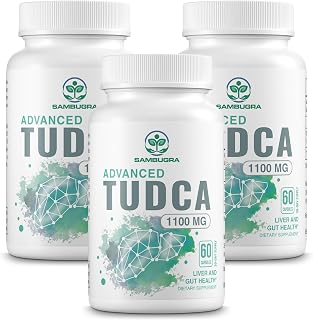
🛒 Where to Buy TUDCA
- BulkSupplements.com TUDCA CapsulesLab-tested / studied
capsules, 500 mg per capsule, 90 capsules — Third-party tested and made in a cGMP facility; one capsule per serving; higher per-capsule dose suits users targeting 500–1000 mg/day protocols - Nutricost TUDCA 250mg
capsules, 250 mg per capsule, 60 capsules — High-volume seller; non-GMO and gluten-free labeling; no third-party purity COA publicly posted, but consistent community reputation for accurate dosing - Double Wood Supplements TUDCA Bile Salts 500mg
capsules, 500 mg per capsule, 60 capsules — USA-manufactured; publishes basic COA on request; popular among biohacker community for reliable potency at accessible price point - Nutricost TUDCA Powder
powder, 25 g tub — Best cost-per-gram option for daily high-dose users; gluten-free, same material as their capsule line; requires a milligram-accurate scale for precise dosing
As an Amazon Associate we earn from qualifying purchases. TUDCA quality varies widely — always choose a product that publishes a third-party purity test (COA) confirming 98%+ tauroursodeoxycholic acid before buying.
A Note on the Evidence
All TUDCA evidence discussed here in the context of Huntington’s disease derives from animal studies; whether these findings apply to humans is unknown, and no clinical recommendation can be made on this basis. TUDCA is contraindicated in bile duct obstruction and requires medical supervision in patients with liver, gallbladder, or biliary disease — consult a physician before considering use for any neurological purpose.
Frequently Asked Questions
Has TUDCA actually been tested in Huntington's disease?
Yes, but only in animal models. TUDCA demonstrated neuroprotective effects in a transgenic mouse model expressing mutant huntingtin [1], and a related bile acid protected against motor and cognitive deficits in the 3-NP chemical model of HD [2]. No large-scale human clinical trials in HD were identified in the reviewed evidence.
What is the proposed mechanism by which TUDCA might protect HD neurons?
HD pathology involves mitochondrial dysfunction and apoptotic neuronal death, particularly in the striatum. TUDCA has been shown to partially prevent apoptosis through a mitochondrial pathway that operates independently of the permeability transition — a distinct point of intervention in the cell death cascade [3]. This may help buffer neurons against the energy deficits and pro-apoptotic signals driven by mutant huntingtin.
Is there a genetic animal model result, or only toxin-based evidence?
Both exist. One key study used transgenic mice expressing the mutant huntingtin gene, which mirrors the human genetic condition more closely than toxin models, and found TUDCA to be neuroprotective in that setting [1]. The earlier 3-NP toxin model work provided complementary evidence of bile acid neuroprotection and striatal preservation [2].
Does bile acid research in Parkinson's disease tell us anything about HD?
It provides mechanistic context rather than direct evidence. A 2025 review of UDCA in Parkinson’s disease identified overlapping neuroprotective pathways — mitochondrial stabilization, reactive oxygen species reduction, and neuroinflammation modulation — that are also relevant to HD biology [4]. However, PD and HD differ substantially in cause and pathology, so findings cannot be directly transferred between them.
Is TUDCA safe to use?
TUDCA has an acceptable safety profile in its approved cholestatic liver disease application and has been evaluated in ALS clinical trials. It is contraindicated in bile duct obstruction and requires caution in patients with gallbladder disease, cholangitis, severe hepatic impairment, or those on bile acid sequestrants, cyclosporine, or certain lipid-lowering medications. No supplementation decision should be made without consulting a physician.

Should a person with HD consider taking TUDCA based on this research?
The preclinical evidence is scientifically interesting and provides a rational mechanistic basis for further investigation, but it does not justify self-directed supplementation. Animal model results in HD have frequently failed to translate into human benefit in clinical trials, and no human HD trial data for TUDCA was identified in the reviewed evidence. Any consideration of TUDCA for a neurological condition should involve a qualified neurologist with access to the individual’s full clinical history.
References
- Keene CD et al. Tauroursodeoxycholic acid, a bile acid, is neuroprotective in a transgenic animal model of Huntington's disease. Proceedings of the National Academy of Sciences of the United States of America (2002). PMID 12149470
- Keene CD et al. A bile acid protects against motor and cognitive deficits and reduces striatal degeneration in the 3-nitropropionic acid model of Huntington's disease. Experimental neurology (2001). PMID 11573988
- Rodrigues CM et al. Tauroursodeoxycholic acid partially prevents apoptosis induced by 3-nitropropionic acid: evidence for a mitochondrial pathway independent of the permeability transition. Journal of neurochemistry (2000). PMID 11080188
- Razavi SM et al. The effects of ursodeoxycholic acid on Parkinson's disease, a mechanistic review of the recent evidence. Metabolic brain disease (2025). PMID 39891787
- Mendes MO et al. Neurotoxic effects of MPTP on mouse cerebral cortex: Modulation of neuroinflammation as a neuroprotective strategy. Molecular and cellular neurosciences (2019). PMID 30771505
These statements have not been evaluated by the Food and Drug Administration. This information is not intended to diagnose, treat, cure, or prevent any disease. Content is for informational purposes only and is not medical advice; consult a qualified healthcare provider before starting any supplement. As an Amazon Associate we earn from qualifying purchases.