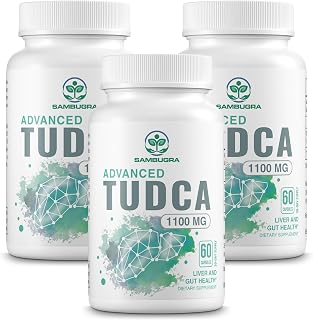
TUDCA — short for tauroursodeoxycholic acid — is a water-soluble bile acid that your body produces in small amounts when gut bacteria modify the bile acid UDCA, which is then conjugated with the amino acid taurine in the liver. Though it occurs naturally, the concentrations generated by normal digestion are modest, which is why concentrated supplemental forms have attracted scientific and consumer interest over the past two decades.
Interest in TUDCA has grown well beyond its established medical use in liver disease. Researchers are investigating its potential roles in protecting nerve cells, improving insulin sensitivity, and preserving retinal function. This article explains what TUDCA is, how it is proposed to work, where the evidence is strongest, and where it remains preliminary — so you can make an informed decision before considering it.
Key Takeaways
- TUDCA is a naturally occurring, water-soluble bile acid that your body produces in small amounts; supplements deliver higher concentrations than diet or gut bacteria alone can generate.
- Its primary proposed mechanisms are reducing endoplasmic reticulum stress by acting as a chemical chaperone and inhibiting the mitochondrial apoptosis pathway, both of which underlie its studied effects on liver, nerve, and retinal cells.
- The strongest clinical evidence exists for cholestatic liver conditions; research in ALS, retinal degeneration, and insulin resistance is genuinely interesting but remains early-stage or limited to small trials.
- TUDCA is contraindicated in bile duct obstruction and requires medical oversight in patients with existing gallbladder disease, cholangitis, or severe liver impairment.
- Robust long-term safety and efficacy data in healthy adults are limited; always discuss with a physician before supplementing, especially if you take cyclosporine, bile acid sequestrants, or other medications affecting bile acid metabolism.
TUDCA in Context: Bile Acids as More Than Digestive Agents
Bile acids were once considered purely digestive molecules — their job was to emulsify dietary fats so enzymes could break them down. That view has changed substantially. Bile acids are now understood to act as signaling molecules that interact with receptors throughout the body, influencing metabolism, immune function, and cell survival pathways.
TUDCA sits on the hydrophilic (water-friendly) end of the bile acid spectrum. Most bile acids are amphiphilic — they have both water-attracting and fat-attracting regions — and at high concentrations they can disrupt cell membranes. TUDCA’s comparatively high water solubility makes it far less membrane-damaging than more hydrophobic bile acids like lithocholic acid.[1] This property is central to why researchers believe it may protect rather than harm cells under certain conditions.
The compound is produced endogenously when intestinal microbes convert primary bile acids into UDCA (ursodeoxycholic acid), and the liver then attaches a taurine molecule to form TUDCA. Oral supplementation delivers concentrations substantially higher than those generated through this pathway alone.
Proposed Mechanisms: How TUDCA Is Thought to Work
TUDCA’s most studied mechanism involves the endoplasmic reticulum (ER). The ER is the cellular compartment responsible for folding proteins correctly. When misfolded proteins accumulate — due to toxins, metabolic stress, or disease — the cell triggers a response called ER stress. Sustained ER stress activates cell death pathways. TUDCA appears to act as a chemical chaperone, stabilizing protein folding and dampening this ER stress response.[2] This is considered a key mechanism behind its proposed hepatoprotective and neuroprotective effects.
A second major pathway involves mitochondria. Mitochondria can initiate apoptosis (programmed cell death) by releasing cytochrome c into the cytoplasm, which then activates a cascade leading to cell death. TUDCA has been shown in laboratory and animal studies to inhibit this mitochondrial apoptosis pathway, preventing the release of pro-death signals.[3] This action may be particularly relevant in neurons, which are highly dependent on mitochondrial health and are especially vulnerable to apoptotic signals.
TUDCA also has choleretic activity, meaning it stimulates bile flow. By promoting the secretion and flow of bile through the bile ducts, it may help clear potentially toxic bile acids that accumulate during cholestatic liver disease. This is the basis of its longest-established clinical application.

Liver Health and Cholestasis: The Most Established Research Area
The application with the most robust clinical evidence is cholestatic liver disease — conditions where bile flow is impaired and bile acids accumulate in the liver, causing damage. In this context, the related compound UDCA has been an approved pharmaceutical treatment for decades, and TUDCA’s superior water solubility has led to research suggesting it may be more potent or better tolerated in some cholestatic conditions.[4][5]
Conditions studied include primary biliary cholangitis, intrahepatic cholestasis of pregnancy, and drug-induced liver injury. The rationale is straightforward: by improving bile flow and reducing the cytotoxic effects of accumulated bile acids on liver cells, TUDCA may help preserve hepatocyte function and reduce liver enzyme elevations.
It is important to note that clinical use in established liver disease requires medical supervision and differs substantially from healthy individuals taking TUDCA as a supplement. Using it to ‘protect’ the liver during alcohol consumption or steroid use — a popular off-label rationale — has minimal direct clinical trial support in healthy humans, and such use carries its own considerations.
Neurological Research: ALS, Huntington's Disease, and Retinal Degeneration
One of the more striking areas of TUDCA research involves neurodegenerative disease. Because ER stress and mitochondrial apoptosis both play roles in the death of motor neurons in ALS (amyotrophic lateral sclerosis), TUDCA has been investigated as a potential neuroprotective agent. Animal studies showed promising reductions in motor neuron loss and slowed disease progression, leading to early human clinical trials.
A Phase II clinical trial in ALS patients investigated TUDCA as an add-on to standard riluzole therapy.[6] While this generated interest, it is critical to understand that early-phase trials are designed primarily to assess safety and tolerability, not to establish efficacy. Results in ALS have been exploratory, and TUDCA on its own is not an approved ALS treatment. A fixed combination of sodium phenylbutyrate and taurursodiol did reach the market, but the Phase III PHOENIX trial found no change in ALSFRS-R total score at 48 weeks and the sponsor subsequently withdrew the marketing authorization.[7]
In retinal biology, photoreceptor cell death involves apoptotic mechanisms similar to those TUDCA targets. Animal models of retinal degeneration — including forms of retinitis pigmentosa — have shown that TUDCA can reduce photoreceptor loss.[8][9] These are preclinical findings; human retinal trials remain in early stages, and no conclusions about vision preservation in people can currently be drawn.
Metabolic Health and Insulin Resistance
ER stress is increasingly recognized as a contributor to insulin resistance and type 2 diabetes. When the ER in metabolically active tissues like the liver and fat cells is under chronic stress, insulin signaling is disrupted. Because TUDCA is a chemical chaperone that reduces ER stress, researchers have explored whether it might improve insulin sensitivity.

A small human study found that oral TUDCA administration improved insulin sensitivity in obese individuals, measured using glucose clamp techniques.[10] This study is often cited in supplement discussions, but it was a short-term trial with a small sample size, and it was not designed to demonstrate long-term metabolic benefit or safety. It represents an interesting signal that warrants larger investigation, not a proven therapeutic outcome.
The broader picture on metabolic benefits in healthy individuals is unclear. The mechanisms are plausible, but the gap between a plausible mechanism and a clinically meaningful benefit in an otherwise healthy person is significant and often overlooked in supplement marketing.
Safety Profile, Contraindications, and Drug Interactions
TUDCA’s tolerability profile in published studies has generally been acceptable, with gastrointestinal side effects — loose stools, nausea, abdominal discomfort — being the most commonly reported. These tend to be dose-dependent. However, ‘generally well tolerated in clinical trials’ does not mean ‘universally safe for all users,’ and most trials have been conducted over relatively short periods.
There are clear contraindications. TUDCA stimulates bile flow, which means it is contraindicated in bile duct obstruction — if bile cannot drain, increasing its production worsens the condition. People with cholangitis (bile duct inflammation), acute cholecystitis, or severe hepatic impairment should not use TUDCA without direct medical supervision. The compound may also interact with bile acid sequestrants such as cholestyramine, which could bind TUDCA and reduce its absorption. Cyclosporine pharmacokinetics may be affected because both are substrates of similar hepatic transporters. Some lipid-lowering agents that affect bile acid metabolism may also interact.
Large-scale, long-duration randomized controlled trials in healthy adult populations are scarce. Most evidence comes from disease populations or animal models. Anyone considering TUDCA supplementation — particularly at the higher doses sometimes marketed (250–1500 mg/day range) — should discuss this with a physician, especially if taking prescription medications or managing an existing liver or gallbladder condition.
🛒 Where to Buy TUDCA
- BulkSupplements.com TUDCA CapsulesLab-tested / studied
capsules, 500 mg per capsule, 90 capsules — Third-party tested and made in a cGMP facility; one capsule per serving; higher per-capsule dose suits users targeting 500–1000 mg/day protocols - Nutricost TUDCA 250mg
capsules, 250 mg per capsule, 60 capsules — High-volume seller; non-GMO and gluten-free labeling; no third-party purity COA publicly posted, but consistent community reputation for accurate dosing - Double Wood Supplements TUDCA Bile Salts 500mg
capsules, 500 mg per capsule, 60 capsules — USA-manufactured; publishes basic COA on request; popular among biohacker community for reliable potency at accessible price point - Nutricost TUDCA Powder
powder, 25 g tub — Best cost-per-gram option for daily high-dose users; gluten-free, same material as their capsule line; requires a milligram-accurate scale for precise dosing
As an Amazon Associate we earn from qualifying purchases. TUDCA quality varies widely — always choose a product that publishes a third-party purity test (COA) confirming 98%+ tauroursodeoxycholic acid before buying.

A Note on the Evidence
The evidence base for TUDCA is most robust in cholestatic liver disease; applications in neuroprotection and metabolic health are scientifically interesting but currently supported mainly by small trials, animal models, or mechanistic data — not large-scale randomized controlled trials. This article is informational and does not constitute medical advice; anyone with liver disease, gallbladder conditions, or who takes prescription medications should consult a physician before using TUDCA.
Frequently Asked Questions
What does TUDCA stand for?
TUDCA stands for tauroursodeoxycholic acid. It is formed when the bile acid UDCA (ursodeoxycholic acid) is conjugated with the amino acid taurine in the liver. The taurine conjugation increases its water solubility compared to UDCA, which is thought to contribute to its reduced cellular toxicity.
Is TUDCA the same as UDCA?
No, they are closely related but distinct molecules. UDCA is ursodeoxycholic acid, an approved pharmaceutical for certain liver conditions. TUDCA is its taurine-conjugated form. TUDCA is more water-soluble and may have somewhat different potency and tissue distribution, though both share broadly similar mechanisms. UDCA has a longer track record in clinical medicine; TUDCA has attracted research interest for applications where its higher hydrophilicity may be advantageous.
Can TUDCA protect the liver from alcohol or steroid-related damage?
This is a popular off-label rationale, but direct clinical trial evidence in healthy humans using alcohol or anabolic steroids is minimal. The mechanistic rationale — reducing ER stress and apoptosis in hepatocytes — is plausible, but plausible mechanisms do not confirm clinical efficacy or safety in this specific context. Using TUDCA as ‘liver support’ during substance use is not a substitute for reducing harmful exposures, and this use should be discussed with a physician.
What is the research status of TUDCA for ALS?
TUDCA has been investigated in ALS (amyotrophic lateral sclerosis) because motor neuron death in ALS involves ER stress and mitochondrial apoptosis pathways that TUDCA targets in laboratory studies. A Phase II human trial explored it as an add-on to riluzole therapy. Phase II trials primarily assess safety and tolerability; they are not designed to confirm efficacy. TUDCA on its own is not an approved ALS treatment. A fixed combination of sodium phenylbutyrate and taurursodiol was approved and then withdrawn after the Phase III PHOENIX trial showed no change in ALSFRS-R total score at 48 weeks.[6][7]
Who should not take TUDCA?
TUDCA is contraindicated in people with bile duct obstruction because it promotes bile flow, which could worsen obstructed conditions. People with cholangitis, acute cholecystitis, or severe hepatic impairment should not use it without direct physician supervision. It may also interact with medications including cyclosporine, bile acid sequestrants like cholestyramine, and certain lipid-lowering drugs. Pregnant or breastfeeding individuals should avoid it unless specifically directed by a physician.
How much TUDCA do people typically take, and is that dose safe?
Published human studies have used doses ranging from roughly 500 mg to 2,000 mg per day, with the specific dose depending on the condition studied and study design. Gastrointestinal effects are the most common side effects reported in trials. However, ‘doses studied in trials’ are not the same as ‘doses proven safe for long-term use in healthy adults.’ The supplement market offers a range of doses with limited guidance on what is appropriate for general wellness use, making physician consultation important before starting.[4][10][6]

References
- Invernizzi et al. Differences in the metabolism and disposition of ursodeoxycholic acid and of its taurine-conjugated species in patients with primary biliary cirrhosis. Hepatology (Baltimore, Md.) (1999). PMID 9918905
- Ozcan et al. Chemical chaperones reduce ER stress and restore glucose homeostasis in a mouse model of type 2 diabetes. Science (New York, N.Y.) (2006). PMID 16931765
- Rodrigues et al. Tauroursodeoxycholic acid prevents Bax-induced membrane perturbation and cytochrome C release in isolated mitochondria. Biochemistry (2003). PMID 12627974
- Crosignani et al. Tauroursodeoxycholic acid for treatment of primary biliary cirrhosis. A dose-response study. Digestive diseases and sciences (1996). PMID 8674405
- Ma et al. A multicenter, randomized, double-blind trial comparing the efficacy and safety of TUDCA and UDCA in Chinese patients with primary biliary cholangitis. Medicine (2016). PMID 27893675
- Elia et al. Tauroursodeoxycholic acid in the treatment of patients with amyotrophic lateral sclerosis. European journal of neurology (2016). PMID 25664595
- Ketabforoush et al. Sodium Phenylbutyrate and Tauroursodeoxycholic Acid: A Story of Hope Turned to Disappointment in Amyotrophic Lateral Sclerosis Treatment. Clinical drug investigation (2024). PMID 38909349
- Phillips et al. Tauroursodeoxycholic acid preservation of photoreceptor structure and function in the rd10 mouse through postnatal day 30. Investigative ophthalmology & visual science (2008). PMID 18436848
- Drack et al. TUDCA slows retinal degeneration in two different mouse models of retinitis pigmentosa and prevents obesity in Bardet-Biedl syndrome type 1 mice. Investigative ophthalmology & visual science (2012). PMID 22110077
- Kars et al. Tauroursodeoxycholic Acid may improve liver and muscle but not adipose tissue insulin sensitivity in obese men and women. Diabetes (2010). PMID 20522594
These statements have not been evaluated by the Food and Drug Administration. This information is not intended to diagnose, treat, cure, or prevent any disease. Content is for informational purposes only and is not medical advice; consult a qualified healthcare provider before starting any supplement. As an Amazon Associate we earn from qualifying purchases.