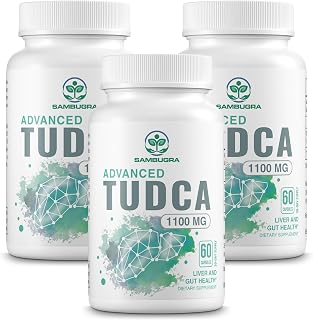
Tauroursodeoxycholic acid (TUDCA) is best known as a liver-protective bile acid, but research is increasingly examining its role further down the digestive tract. As a hydrophilic, taurine-conjugated bile acid, TUDCA participates in the broader bile acid–gut axis—a bidirectional communication system in which bile acid composition shapes the gut microbiome and, in turn, the microbiome determines which bile acids are produced, modified, and recycled. Understanding this relationship is central to evaluating TUDCA’s potential gut health effects.
This article reviews the available preclinical evidence on TUDCA and intestinal health, covering barrier function, microbial modulation, and findings from inflammatory bowel disease models. Most of this research comes from animal studies, and robust large-scale human trials on TUDCA for gut-specific indications remain limited. Nothing here constitutes medical advice.
Key Takeaways
- TUDCA is a bile acid that participates in the bidirectional gut microbiome–bile acid axis, giving it multiple biologically plausible points of influence in the intestinal environment.
- Preclinical studies in NAFLD and DSS-induced colitis mouse models show TUDCA can protect or restore intestinal barrier integrity and reduce intestinal inflammation [1][2][3].
- Gut microbiota normalization has been reported alongside barrier restoration in TUDCA-treated animal models, though whether microbiome changes are the cause or consequence of gut protection is not fully resolved [3][4].
- All available gut-specific TUDCA research is from animal models; human clinical trial data for intestinal barrier or microbiome indications does not yet exist.
- TUDCA has known contraindications and potential drug interactions that make medical supervision important before use, particularly for individuals with liver, biliary, or gastrointestinal conditions.
The Bile Acid–Gut Axis: Why TUDCA's Position Matters
Bile acids are synthesized in the liver from cholesterol, secreted into the small intestine to aid fat digestion, and then extensively reprocessed by intestinal bacteria through deconjugation, dehydroxylation, and other transformations. The gut microbiome therefore actively shapes the pool of secondary bile acids circulating through the body, while bile acids themselves exert selective pressure on which microbial species can survive in the intestinal environment. Research on Eucommia ulmoides leaf extract illustrated this coupling clearly: the gut microbiota–bile acids–TGR5 receptor axis was identified as a key mechanism through which colonic epithelial integrity is maintained [5].
Disruptions to bile acid homeostasis ripple through the entire system. Studies in cancer cachexia have shown that bile acid metabolism dysregulation is tightly associated with gut microbiome alterations [6], and in liver cirrhosis, a shifted gut microbiome correlates with a distinct bile acid profile and broader metabolomic changes [7]. Even cholecystectomy—surgical removal of the gallbladder—has been found to produce gut microbiota dysbiosis with downstream consequences for colorectal health [8]. TUDCA fits into this axis at multiple points: it is itself a bile acid that the gut microbiome can interact with, and emerging preclinical data suggest it is capable of reshaping that microbial environment in return.
TUDCA and Intestinal Barrier Integrity
One of the most studied aspects of TUDCA’s gut activity is its potential to protect or restore the intestinal barrier—the single-cell-thick epithelial lining that separates luminal contents from the bloodstream. When this barrier is compromised, bacterial products such as lipopolysaccharide can translocate into portal circulation, driving systemic and hepatic inflammation. In a mouse model of non-alcoholic fatty liver disease (NAFLD), TUDCA was found to inhibit intestinal inflammation and barrier disruption [1], suggesting the compound acts not only at the liver but also at the gut interface that feeds back into hepatic disease.

More recent work used a liposomal TUDCA formulation to address dextran sulfate sodium (DSS)-induced ulcerative colitis in mice. The liposomal preparation alleviated colitis in part by restoring intestinal barrier function alongside favorable shifts in the gut microbiota [2]. A separate study using conventional oral TUDCA in the same DSS colitis model reached consistent conclusions: TUDCA reversed colitis-associated intestinal barrier dysfunction while simultaneously correcting microbiome dysregulation [3]. These animal studies suggest that TUDCA’s effects on the gut barrier and microbial environment are intertwined rather than independent.

How TUDCA Influences Gut Microbiota Composition
Beyond barrier effects, several studies have examined whether TUDCA directly reshapes the microbial community. In an NAFLD mouse model, TUDCA supplementation improved liver pathology, and this improvement was mechanistically linked to regulation of gut microbiota composition alongside bile acid metabolism [4]. This is consistent with the broader literature showing that the gut microbiome helps determine the efficacy of bile acid–based interventions: a study of obeticholic acid in NAFLD found that microbiome composition at baseline predicted therapeutic response precisely because gut bacteria modulate bile acid metabolism [9], underscoring how tightly these elements are coupled.
In the DSS colitis reversal study, TUDCA’s correction of colonic inflammation was accompanied by normalization of microbiome dysregulation [3], and the liposomal TUDCA study also documented gut microbiota restoration as a parallel finding alongside barrier recovery [2]. The directionality of these effects is important to interpret carefully: current preclinical data cannot definitively establish whether TUDCA’s microbiome effects are a primary driver of gut protection or a secondary consequence of reduced inflammation and restored bile flow. Both mechanisms are biologically plausible and may operate simultaneously.
Evidence from Inflammatory Bowel Models
The DSS-induced colitis model is a standard preclinical tool for studying ulcerative colitis–like intestinal inflammation. Both available TUDCA studies in this model—one using conventional TUDCA [3] and one using a novel liposomal delivery system designed to improve intestinal residence time [2]—found meaningful reductions in inflammatory pathology, with consistent documentation of barrier restoration and microbiome normalization as parallel outcomes.
For context, other compounds studied in similar colitis models achieve their effects through overlapping mechanisms. A study of a ginseng-containing traditional formula found that ulcerative colitis amelioration depended on simultaneously orchestrating gut microbiota modulation and maintaining intestinal barrier integrity [10], reinforcing that these two parameters tend to deteriorate and recover together in inflammatory gut conditions. Whether TUDCA would translate from rodent models to therapeutic benefit in human inflammatory bowel disease remains an open question requiring controlled clinical trials to answer.
The Gut-Liver Axis and Metabolic Context
TUDCA’s gut effects cannot be cleanly separated from its hepatic effects; the gut-liver axis is the appropriate framework. Bile produced in the liver reaches the gut, is chemically transformed by bacteria, and returns to the liver via enterohepatic circulation—and TUDCA participates in this cycle at every stage. In the NAFLD setting, gut microbiome changes that alter bile acid profiles contribute to hepatic fat accumulation and inflammation, so TUDCA’s ability to simultaneously improve liver pathology and gut microbiota in animal models [4] may reflect its capacity to interrupt a self-reinforcing cycle of gut dysbiosis and liver injury rather than acting on one organ alone.

Research on intermittent fasting in a diabetes model found that metabolic benefits were mediated in part through gut microbiota changes [11], illustrating the broader principle that microbial shifts connect diverse metabolic interventions to distant organ outcomes. Studies on oral-gut connections have similarly shown that dysbiosis originating outside the intestine can reshape metabolite profiles and accelerate systemic disease [12]. TUDCA, by modifying the bile acid environment of the gut, may therefore have effects that extend beyond the intestinal wall itself—though the human clinical significance of this remains to be established.
Honest Assessment: What the Evidence Can and Cannot Tell Us
Every study demonstrating TUDCA’s gut effects was conducted in animal models using induced disease states such as NAFLD or chemically provoked colitis. Animal models are valuable for identifying mechanisms and generating hypotheses, but they frequently do not replicate precisely in human biology. Dose translation between species is complex, and the specific microbial shifts observed in murine gut compartments may not mirror what would occur in the human intestine under real-world supplementation conditions.
There are no large, well-controlled randomized clinical trials examining TUDCA specifically for gut barrier function, microbiome composition, or inflammatory bowel conditions in humans. TUDCA’s established clinical use centers on cholestatic liver conditions, where the evidence base is more mature. For gut health specifically, the compound is at an early investigational stage, and the preclinical signal, while mechanistically coherent, should not be interpreted as confirmed human benefit.
🛒 Where to Buy TUDCA
- BulkSupplements.com TUDCA CapsulesLab-tested / studied
capsules, 500 mg per capsule, 90 capsules — Third-party tested and made in a cGMP facility; one capsule per serving; higher per-capsule dose suits users targeting 500–1000 mg/day protocols - Nutricost TUDCA 250mg
capsules, 250 mg per capsule, 60 capsules — High-volume seller; non-GMO and gluten-free labeling; no third-party purity COA publicly posted, but consistent community reputation for accurate dosing - Double Wood Supplements TUDCA Bile Salts 500mg
capsules, 500 mg per capsule, 60 capsules — USA-manufactured; publishes basic COA on request; popular among biohacker community for reliable potency at accessible price point - Nutricost TUDCA Powder
powder, 25 g tub — Best cost-per-gram option for daily high-dose users; gluten-free, same material as their capsule line; requires a milligram-accurate scale for precise dosing
As an Amazon Associate we earn from qualifying purchases. TUDCA quality varies widely — always choose a product that publishes a third-party purity test (COA) confirming 98%+ tauroursodeoxycholic acid before buying.
A Note on the Evidence
The gut health research on TUDCA is currently limited to animal models, and no large-scale human randomized controlled trials have evaluated TUDCA for intestinal barrier or microbiome indications; findings from rodent studies may not translate directly to human outcomes. TUDCA is contraindicated in bile duct obstruction and requires medical supervision for individuals with gallbladder disease, cholangitis, hepatic impairment, or those taking interacting medications such as cyclosporine or bile acid sequestrants—consult a qualified healthcare provider before use.
Frequently Asked Questions
How does TUDCA affect the gut barrier?
Preclinical studies suggest TUDCA can reduce intestinal barrier disruption in disease models. In an NAFLD mouse study, TUDCA inhibited both intestinal inflammation and barrier compromise [1], and in DSS colitis models, it was associated with restoration of barrier proteins alongside microbiome normalization [3]. Human clinical evidence for this effect has not yet been established.
Does TUDCA change gut bacteria?
Animal research indicates that TUDCA can modulate gut microbiota composition, particularly in the context of metabolic or inflammatory disease states. One NAFLD model study found that TUDCA improved disease markers through regulation of both gut microbiota composition and bile acid metabolism [4]. Because bile acids and gut bacteria are deeply coupled, shifts in one routinely accompany shifts in the other, though the primary direction of causality remains under investigation.
Has TUDCA been studied in ulcerative colitis?
Two preclinical studies used the DSS-induced colitis mouse model. Both found TUDCA-related attenuation of colitis pathology—one using a novel liposomal TUDCA formulation [2] and another using conventional TUDCA [3]. Neither study was conducted in humans; controlled clinical trials in ulcerative colitis patients would be required before any therapeutic conclusions could be drawn for people.
Why does bile acid composition affect the gut microbiome?
Bile acids exert selective antimicrobial pressure in the intestinal lumen, favoring species that can tolerate or metabolize them while suppressing others. In turn, gut bacteria transform primary bile acids into secondary bile acids, altering the functional bile acid pool that reaches the liver. Research has shown that gut microbiota composition shapes the therapeutic effects of bile acid–based interventions by determining how those acids are metabolized [9], and that bile acid dysregulation closely associates with microbiome changes in conditions such as cancer cachexia [6].
Is there a connection between TUDCA's liver effects and its gut effects?
Yes—the gut-liver axis is the central framework. Bile acids are synthesized in the liver, chemically modified by gut bacteria, and returned to the liver via enterohepatic circulation. In NAFLD, gut microbiome changes that alter the bile acid pool contribute to liver injury, so TUDCA’s documented effects on both liver pathology and gut microbiota in animal models [4] suggest it may interrupt this self-reinforcing cycle at multiple points rather than acting on one organ in isolation.
Who should be cautious with TUDCA?
TUDCA is contraindicated in individuals with bile duct obstruction. Medical supervision is warranted for people with gallbladder disease, cholangitis, or severe hepatic impairment. It may interact with bile acid sequestrants, cyclosporine, and certain lipid-lowering medications. Anyone with existing liver, biliary tract, or gastrointestinal conditions should consult a qualified healthcare provider before considering TUDCA supplementation.
References
- Wang W et al. Tauroursodeoxycholic acid inhibits intestinal inflammation and barrier disruption in mice with non-alcoholic fatty liver disease. British journal of pharmacology (2018). PMID 29139555
- Zhao J et al. Tauroursodeoxycholic acid liposome alleviates DSS-induced ulcerative colitis through restoring intestinal barrier and gut microbiota. Colloids and surfaces. B, Biointerfaces (2024). PMID 38377705
- Luo L et al. Tauroursodeoxycholic Acid Reverses Dextran Sulfate Sodium-Induced Colitis in Mice via Modulation of Intestinal Barrier Dysfunction and Microbiome Dysregulation. The Journal of pharmacology and experimental therapeutics (2024). PMID 38816229
- Wang H et al. Tauroursodeoxycholic Acid Improves Nonalcoholic Fatty Liver Disease by Regulating Gut Microbiota and Bile Acid Metabolism. Journal of agricultural and food chemistry (2024). PMID 39193771
- Zhai Z et al. The Gut Microbiota-Bile Acids-TGR5 Axis Mediates Eucommia ulmoides Leaf Extract Alleviation of Injury to Colonic Epithelium Integrity. Frontiers in microbiology (2021). PMID 34489916
- Feng L et al. Bile acid metabolism dysregulation associates with cancer cachexia: roles of liver and gut microbiome. Journal of cachexia, sarcopenia and muscle (2021). PMID 34585527
- Aliwa B et al. Altered gut microbiome, bile acid composition and metabolome in sarcopenia in liver cirrhosis. Journal of cachexia, sarcopenia and muscle (2023). PMID 37767786
- Tang B et al. Cholecystectomy-related gut microbiota dysbiosis exacerbates colorectal tumorigenesis. Nature communications (2025). PMID 40819131
- Liu J et al. Gut microbiome determines therapeutic effects of OCA on NAFLD by modulating bile acid metabolism. NPJ biofilms and microbiomes (2023). PMID 37258543
- Wu Y et al. Ginseng-Containing Sijunzi Decoction Ameliorates Ulcerative Colitis by Orchestrating Gut Homeostasis in Microbial Modulation and Intestinal Barrier Integrity. The American journal of Chinese medicine (2023). PMID 36883990
- Liu Z et al. Gut microbiota mediates intermittent-fasting alleviation of diabetes-induced cognitive impairment. Nature communications (2020). PMID 32071312
- Gan G et al. Unveiling the oral-gut connection: chronic apical periodontitis accelerates atherosclerosis via gut microbiota dysbiosis and altered metabolites in apoE(-/-) Mice on a high-fat diet. International journal of oral science (2024). PMID 38740741
These statements have not been evaluated by the Food and Drug Administration. This information is not intended to diagnose, treat, cure, or prevent any disease. Content is for informational purposes only and is not medical advice; consult a qualified healthcare provider before starting any supplement. As an Amazon Associate we earn from qualifying purchases.