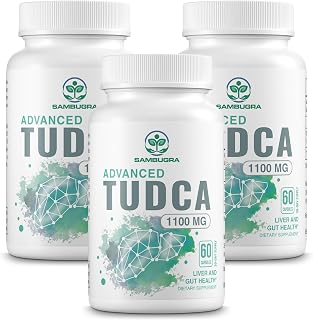
TUDCA (tauroursodeoxycholic acid) is a bile acid conjugate that has attracted serious scientific attention for its role in reducing endoplasmic reticulum stress, supporting mitochondrial function, and promoting healthy bile flow.[1][2] As consumer demand has grown, so has the number of brands selling TUDCA capsules and powders—many with little transparency about how their raw material was sourced, synthesized, or tested.
Unlike a vitamin or a simple mineral salt, TUDCA is a complex molecule that must be manufactured through multi-step chemical or enzymatic synthesis. That complexity creates real opportunities for impurities, substitutions, and mislabeling. Understanding what third-party testing means, what a Certificate of Analysis (COA) should contain, and why these documents matter is not a formality—it is the most practical way to evaluate whether the supplement you are considering is actually what the label claims.
Key Takeaways
- TUDCA is a complex synthesized molecule; meaningful purity variation is possible across suppliers, making independent testing genuinely important rather than a marketing checkbox.
- A trustworthy COA comes from a named, independently accredited laboratory (ISO 17025 or equivalent), references a specific batch number, and includes an HPLC or LC-MS assay result.
- Purity of 98% or higher is the realistic standard for high-quality TUDCA raw material; products that cannot substantiate this figure with third-party data should be treated with skepticism.
- Finished-product testing matters separately from raw material testing—capsule fill accuracy, heavy metals, and microbial contamination must be evaluated in the product you actually consume.
- No third-party program or COA eliminates the need to consult a qualified healthcare provider before using TUDCA, particularly if you have liver disease, gallbladder conditions, or take medications that interact with bile acid pathways.
What TUDCA Is and Why Manufacturing Complexity Matters
TUDCA is a taurine-conjugated form of ursodeoxycholic acid (UDCA), a secondary bile acid. Producing pharmaceutical-grade TUDCA requires either chemical conjugation of UDCA with taurine or biotransformation using microbial or enzymatic processes. Each pathway introduces potential residual solvents, unreacted starting materials, or byproduct isomers that can persist in the final powder if purification is inadequate.
The distinction matters because structurally similar bile acid isomers—such as unconjugated UDCA or the more hydrophobic bile acid CDCA—have different biological profiles. A product that tests as 70% TUDCA may still technically contain the stated ingredient while delivering a meaningfully different effect than a 99% pure preparation. Without a verified purity figure from an independent laboratory, there is no way to know what percentage of what you are swallowing is actually TUDCA.
Raw material sourcing adds another layer of variability. TUDCA raw material is produced primarily in China, India, and Europe. Batch quality is not uniform across suppliers, and a domestic brand may reformulate its supply chain with no visible label change. This is precisely the gap that third-party testing is designed to close.
What Third-Party Testing Actually Means
Third-party testing means an independent laboratory—one that has no financial relationship with the manufacturer or seller—analyzes a sample of the finished product or raw material and issues a report. The phrase is often used loosely in supplement marketing, so it is worth understanding what a credible testing arrangement looks like versus a superficial one.
Credible third-party testing involves accredited laboratories, typically ISO/IEC 17025-accredited or cGMP-certified facilities, that use validated analytical methods such as high-performance liquid chromatography (HPLC) or liquid chromatography-mass spectrometry (LC-MS). These methods can identify and quantify TUDCA specifically, distinguish it from closely related bile acid compounds, and detect residual solvents or heavy metals. A lab report from an unaccredited facility using non-validated methods offers far weaker assurance.

It is also worth noting when the testing occurs. Some brands test raw material from their supplier before manufacturing but do not test the finished capsule or powder. Others test finished product. The strongest assurance comes from testing the exact product in its final packaging, because encapsulation, excipients, and storage conditions can all influence what ends up in a capsule.
Reading a TUDCA Certificate of Analysis: Key Fields to Evaluate
A Certificate of Analysis (COA) is a formal document issued by the testing laboratory—not by the brand—that records the results of analytical testing on a specific batch. When a company provides a COA, you should be able to trace it to a named external laboratory, a specific lot or batch number, and a dated test result. A COA that lacks a laboratory name, contact information, or batch number is not independently verifiable.
For TUDCA, the most important field on a COA is identity and assay: identity confirms the molecule is TUDCA (not simply UDCA or another bile acid), and assay provides the purity percentage. A well-manufactured TUDCA intended for supplement use should assay at 98% or higher; anything below 95% warrants scrutiny unless the manufacturer provides a clear explanation. The COA should also specify the analytical method used—HPLC or LC-MS are the current standard methods for this compound.
Additional fields to review include heavy metals (lead, arsenic, cadmium, mercury), microbial limits (total aerobic count, yeast, mold, absence of specified pathogens), and residual solvents if the manufacturing process uses organic solvents during synthesis or purification. These fields matter because TUDCA is often taken over extended periods, and chronic exposure to even low levels of heavy metal contamination is a legitimate concern. USP or EU pharmacopoeial limits are a reasonable benchmark for what acceptable levels look like.
Red Flags and Green Flags When Evaluating TUDCA Products
Several patterns should raise concern. A brand that claims its product is ‘third-party tested’ but will not share the actual COA—or shares only an internal certificate issued by its own quality department—is not providing independent verification. Similarly, a COA with no lot number makes it impossible to confirm the document applies to the batch you are purchasing rather than a historical test performed under different conditions.
Another red flag is a purity claim that seems implausibly high without supporting data. Seeing ‘100% pure TUDCA’ on a label without an assay figure from an accredited lab means nothing analytically. Conversely, a brand that publishes batch-specific COAs on its website, links them to scannable QR codes on packaging, or provides a way to request the COA for the specific lot you purchased is demonstrating a level of transparency consistent with responsible supplement manufacturing.

Green flags include visible ISO 17025 laboratory accreditation numbers on the COA, named testing facilities you can independently look up, and assay results that fall within the realistic range of high-grade TUDCA (typically 98-99.5%). Brands that voluntarily list testing for residual solvents and heavy metals—even when not legally required—are signaling that they take the full contamination picture seriously, not just the headline purity figure.

Dose Accuracy and Why Label Claims Can Mislead
Even when a TUDCA raw material tests at high purity, label accuracy in the finished product is a separate question. Capsule filling equipment has fill-weight tolerances, and if a brand is not conducting finished-product testing, individual capsules can vary meaningfully from the stated dose. For a compound like TUDCA where users are often taking 250–500 mg doses based on research-informed protocols[3], a 20% underfill could be the difference between a therapeutically relevant dose and a sub-threshold one.
Finished-product COAs that test label claim accuracy—sometimes called content uniformity or label claim verification—are the appropriate check for this issue. Look for a COA that tests the finished capsule, not just the raw material, and confirms that the measured dose falls within an acceptable range of the stated label claim, typically within ±10%.
The Broader Context: Supplement Regulation and What It Means for TUDCA Buyers
In the United States, dietary supplements including TUDCA are regulated under DSHEA (Dietary Supplement Health and Education Act), which places the burden of safety and accuracy on manufacturers rather than requiring pre-market approval by the FDA. This means a TUDCA product can legally reach market without independent verification of its purity or potency. The FDA can take action after the fact if a product is found to be adulterated or mislabeled, but pre-market independent testing is not mandatory.

This regulatory gap is the fundamental reason third-party COAs matter. In the absence of a required pre-market review, independent testing performed by an accredited laboratory is the consumer’s primary mechanism for verifying that a product is what it claims to be. Some brands voluntarily seek NSF International, Informed Sport, or USP verification—programs that involve facility audits in addition to product testing—which represents a higher standard than a one-time COA from an independent lab.
Internationally, standards vary. Products sourced from manufacturers that hold ISO 9001 or GMP certifications from recognized bodies (EU GMP, US FDA cGMP) start from a higher quality baseline than those that do not, though certification alone is not a substitute for batch-specific testing. Consumers purchasing TUDCA from international suppliers through online marketplaces face the greatest uncertainty, as verification chains are often completely absent.
🛒 Where to Buy TUDCA
- BulkSupplements.com TUDCA CapsulesLab-tested / studied
capsules, 500 mg per capsule, 90 capsules — Third-party tested and made in a cGMP facility; one capsule per serving; higher per-capsule dose suits users targeting 500–1000 mg/day protocols - Nutricost TUDCA 250mg
capsules, 250 mg per capsule, 60 capsules — High-volume seller; non-GMO and gluten-free labeling; no third-party purity COA publicly posted, but consistent community reputation for accurate dosing - Double Wood Supplements TUDCA Bile Salts 500mg
capsules, 500 mg per capsule, 60 capsules — USA-manufactured; publishes basic COA on request; popular among biohacker community for reliable potency at accessible price point - Nutricost TUDCA Powder
powder, 25 g tub — Best cost-per-gram option for daily high-dose users; gluten-free, same material as their capsule line; requires a milligram-accurate scale for precise dosing
As an Amazon Associate we earn from qualifying purchases. TUDCA quality varies widely — always choose a product that publishes a third-party purity test (COA) confirming 98%+ tauroursodeoxycholic acid before buying.
A Note on the Evidence
The research on TUDCA in healthy humans remains limited outside established cholestasis indications, and robust large-scale randomized controlled trial data are not yet available for many of the applications discussed in supplement contexts. Third-party testing verifies what is in a product but does not establish that the product is appropriate or safe for your individual health situation—consult a qualified healthcare provider before starting TUDCA, particularly if you have any liver, gallbladder, or bile duct condition or take prescription medications.
Frequently Asked Questions
What is a COA and why should I ask for one before buying TUDCA?
A Certificate of Analysis is a formal document from an independent laboratory confirming the identity, purity, and safety parameters of a specific batch of a product. You should request one because TUDCA’s manufacturing complexity means purity can vary substantially between suppliers, and only batch-specific laboratory data—not label claims—can confirm what is actually in the product.
What purity level should I look for in a TUDCA supplement?
High-quality TUDCA raw material typically assays at 98% or above by HPLC or LC-MS analysis. Products that state purity on their label but cannot provide a third-party COA to support that figure offer no verified assurance, regardless of the number printed.
Is there a difference between TUDCA and UDCA, and can a COA tell them apart?
Yes. TUDCA is the taurine conjugate of UDCA; the two have overlapping but distinct biological profiles. HPLC and LC-MS methods can distinguish them, so a properly conducted assay will specify TUDCA content rather than total bile acid content. A COA that lists only ‘bile acid’ or ‘UDCA equivalent’ without specifying TUDCA purity is insufficient.
What contaminants are most relevant to test for in TUDCA?
The most important categories are heavy metals (lead, arsenic, cadmium, mercury), residual solvents from the synthesis or purification process, and microbial contamination (total aerobic count, absence of specified pathogens). Reputable brands provide COA data across all these categories, not just purity percentage.
Does third-party certification like NSF or USP mean more than a standard COA?
Generally yes. Programs such as NSF International, Informed Sport, and USP Verified involve periodic facility audits and ongoing batch surveillance in addition to product testing, whereas a one-time COA verifies only a single batch. Certification programs also add accountability because they can revoke certification, creating ongoing incentive for manufacturers to maintain standards.
Who should be especially cautious about TUDCA regardless of product purity?
People with bile duct obstruction should not use TUDCA. Those with existing gallbladder disease, cholangitis, or severe hepatic impairment require medical supervision. TUDCA may also interact with bile acid sequestrants, cyclosporine, and certain lipid-lowering agents, so anyone on these medications should consult a physician before use.

References
- A novel role for ursodeoxycholic acid in inhibiting apoptosis by modulating mitochondrial membrane perturbation. J Clin Invest (1998). Isolated hepatocytes and cell lines; UDCA reduced the mitochondrial membrane permeability transition by more than 40-50%. Preclinical, and conducted with UDCA rather than TUDCA.
- Taurine conjugate of ursodeoxycholate plays a major role in the hepatoprotective effect against cholestasis induced by taurochenodeoxycholate in rats. Liver (1993). Rat infusion model in which the taurine conjugate (TUDC) was more hepatoprotective than unconjugated UDC. Animal study.
- A multicenter, randomized, double-blind trial comparing the efficacy and safety of TUDCA and UDCA in Chinese patients with primary biliary cholangitis. Medicine (Baltimore) (2016). n=199, 250 mg three times daily for 24 weeks. TUDCA was as effective as UDCA, not superior (76.0% vs 80.9% achieving a greater than 25% ALP reduction, p=0.45), with less pruritus.
These statements have not been evaluated by the Food and Drug Administration. This information is not intended to diagnose, treat, cure, or prevent any disease. Content is for informational purposes only and is not medical advice; consult a qualified healthcare provider before starting any supplement. As an Amazon Associate we earn from qualifying purchases.