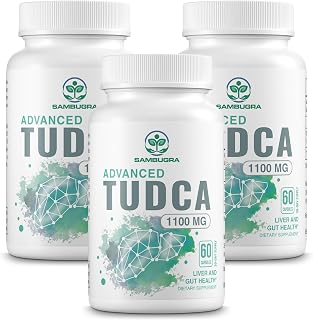
Tauroursodeoxycholic acid — TUDCA — is a naturally occurring bile acid produced in small amounts by intestinal bacteria and found in higher concentrations in bear bile, a staple of traditional Chinese medicine for centuries. Unlike most bile acids, TUDCA is highly hydrophilic, a property that underlies much of its proposed liver-protective activity. It is now synthesized pharmaceutically and sold as a supplement, though it also has a decades-long history as an approved drug for cholestatic liver disease in several countries.
Interest in TUDCA has grown considerably as researchers have identified multiple molecular mechanisms through which it may shield liver cells from damage — including reducing endoplasmic reticulum stress, interrupting the mitochondrial apoptosis pathway, and promoting healthier bile flow. This article examines what peer-reviewed research actually demonstrates, and where the evidence remains preliminary, confined to animal models, or otherwise insufficient to draw firm clinical conclusions.
Key Takeaways
- TUDCA reduces liver cell death through multiple mechanisms including mitochondrial membrane stabilization, ER stress reduction, and inhibition of Bax-mediated apoptosis [1] [2].
- Animal studies show hepatoprotective effects across several injury models — hormone-induced cholestasis, steatohepatitis, alcohol-associated liver injury, and ischemia-reperfusion — but large human RCT data outside established cholestasis indications remain limited.
- TUDCA appears more potent than its parent compound UDCA in certain hepatoprotective contexts, likely due to its taurine conjugation [3].
- Research is expanding into neuroinflammation and oncology, but liver health remains the best-studied application by a considerable margin.
- TUDCA is contraindicated in bile duct obstruction and requires medical supervision in patients with gallbladder disease, cholangitis, or severe hepatic impairment.
How TUDCA Works: Core Mechanisms
TUDCA exerts liver-protective effects through several overlapping pathways. A 2017 review catalogued the key mechanisms, including stabilization of the mitochondrial membrane, activation of cell survival signaling (notably the PI3K/Akt pathway), reduction of endoplasmic reticulum (ER) stress responses, and modulation of bile composition [1]. Because these are fundamental cellular stress pathways rather than disease-specific targets, researchers have proposed TUDCA may be relevant across multiple types of liver injury.
One critical action involves apoptosis — programmed cell death. When hepatocytes face toxic bile acid concentrations, they can undergo apoptosis via the mitochondrial pathway. A key step in that cascade is the protein Bax translocating from the cytosol to the mitochondrial membrane. Research in a rat transplantation model showed that TUDCA modulated Bax translocation, significantly reducing liver injury caused by warm ischemia-reperfusion [2]. This antiapoptotic effect recurs across multiple laboratory settings and is central to the hepatoprotection observed in animal studies.
ER stress represents another lever. The endoplasmic reticulum is the cell’s protein-folding apparatus; when it is overwhelmed by misfolded proteins or toxins, it can trigger inflammatory cascades and cell death. Research on mycotoxin-induced liver injury found that ER stress amplifies hepatotoxicity and worsens chronic liver damage [4] — illustrating why compounds capable of dampening ER stress, such as TUDCA, attract hepatological interest.

Protecting Hepatocytes from Bile Acid Toxicity
High concentrations of hydrophobic bile acids are directly toxic to liver cells, causing both apoptosis and cytolysis (outright cell rupture). Early in vitro work using rat hepatocytes demonstrated that TUDCA significantly reduced both forms of bile acid-induced cell death [5]. A companion study comparing TUDCA with S-adenosylmethionine (SAMe) found that both compounds reduced apoptosis and cytolysis, providing early evidence of TUDCA’s cytoprotective profile in a mechanistically relevant model [6].
These findings matter in clinical contexts where bile acid levels rise pathologically — such as intrahepatic cholestasis, certain drug-induced liver injuries, and end-stage cholestatic disease. While rat hepatocyte experiments do not automatically translate to humans, they established the mechanistic foundation for subsequent animal and human investigations.
TUDCA and Hormone-Induced Liver Stress
Synthetic estrogens, including ethinylestradiol used in many oral contraceptives, can cause cholestatic liver injury in susceptible individuals. A 1995 animal study compared TUDCA and its unconjugated parent compound UDCA in ethinylestradiol-treated rats and found that TUDCA — but not UDCA — provided measurable hepatoprotection [3]. This distinction is pharmacologically meaningful: the taurine conjugation that differentiates TUDCA from UDCA appears to enhance its protective effect, at least in this model.
No large human trials have established that TUDCA prevents or reverses oral-contraceptive-related cholestasis in people. However, this result contributed to understanding why the taurine-conjugated form may have advantages over UDCA in certain hepatic stress conditions and helped lay the groundwork for later research.
Non-Alcoholic Fatty Liver Disease and Steatohepatitis
Non-alcoholic steatohepatitis (NASH) — the inflammatory form of fatty liver disease — involves ER stress, lipotoxicity, and mitochondrial dysfunction, all pathways that TUDCA theoretically addresses. A mouse study using the methionine-choline-deficient diet model (a standard method for inducing steatohepatitis) found that TUDCA supplementation attenuated liver inflammation, reduced hepatocyte ballooning, and blunted fibrosis progression compared with controls [7].
These are encouraging findings in an established animal model, but methionine-choline-deficient steatohepatitis does not perfectly replicate human NASH, and large randomized controlled trials in humans remain limited. TUDCA is not an approved NASH treatment. The mouse data provide biological plausibility for the mechanism, not clinical proof of efficacy in people.
Alcohol-Associated Liver Injury
Alcohol-related liver disease is among the leading causes of liver-related mortality globally. Recent research using TUDCA derived from blue fox bile in a mouse model of acute alcohol-associated liver injury found that TUDCA reduced liver damage markers, with effects attributed to its antiapoptotic and anti-inflammatory properties [8]. The study provided mechanistic insight into how TUDCA may counteract ethanol-induced hepatotoxicity at the cellular level.

As with the NASH data, translating these findings to humans requires caution. Acute alcohol challenge in mice is an imperfect model for chronic human alcohol use disorder, and no human clinical trial has established TUDCA as a treatment for alcoholic liver disease. The findings add to the mechanistic picture but should not be read as clinical guidance.
Transplantation, Bile Transport, and Emerging Research Directions
Liver transplantation introduces significant ischemia-reperfusion injury and can cause ischemic-type biliary lesions, particularly when organs come from non-heart-beating donors. A 2016 hypothesis paper proposed a multidrug cocktail approach — including TUDCA — to reduce these lesions, drawing on TUDCA’s known cytoprotective and bile acid-modulating properties [9]. While this remains a hypothesis rather than an established clinical protocol, it reflects growing interest in TUDCA within transplant medicine. Separately, canalicular bile transport research has highlighted how disruption of bile export pumps (such as the ABCB11 transporter) causes hepatic bile acid accumulation and serious toxicity [10], underscoring why compounds that modulate bile acid composition and export are hepatologically relevant.
Beyond liver-specific applications, TUDCA is under active investigation for neuroinflammation — a 2025 study reported modulation of the STING/NF-κB inflammatory pathway after traumatic brain injury [11] — and oncology, where a 2025 review characterized its pleiotropic cellular effects [12]. These are emerging research areas and should not be interpreted as established therapeutic indications.
🛒 Where to Buy TUDCA
- BulkSupplements.com TUDCA CapsulesLab-tested / studied
capsules, 500 mg per capsule, 90 capsules — Third-party tested and made in a cGMP facility; one capsule per serving; higher per-capsule dose suits users targeting 500–1000 mg/day protocols - Nutricost TUDCA 250mg
capsules, 250 mg per capsule, 60 capsules — High-volume seller; non-GMO and gluten-free labeling; no third-party purity COA publicly posted, but consistent community reputation for accurate dosing - Double Wood Supplements TUDCA Bile Salts 500mg
capsules, 500 mg per capsule, 60 capsules — USA-manufactured; publishes basic COA on request; popular among biohacker community for reliable potency at accessible price point - Nutricost TUDCA Powder
powder, 25 g tub — Best cost-per-gram option for daily high-dose users; gluten-free, same material as their capsule line; requires a milligram-accurate scale for precise dosing
As an Amazon Associate we earn from qualifying purchases. TUDCA quality varies widely — always choose a product that publishes a third-party purity test (COA) confirming 98%+ tauroursodeoxycholic acid before buying.
A Note on the Evidence
The majority of TUDCA liver research comes from animal models and mechanistic studies; large-scale, placebo-controlled human trials confirming clinical benefit for conditions like NASH, alcoholic liver disease, or general hepatoprotection in healthy individuals remain limited. Anyone with existing liver disease, gallbladder conditions, bile duct issues, or who takes medications affecting bile acid metabolism or immunosuppression should consult a qualified healthcare provider before using TUDCA. This article is informational only and does not constitute medical advice.
Frequently Asked Questions
What makes TUDCA different from UDCA?
TUDCA is the taurine-conjugated form of ursodeoxycholic acid (UDCA). Taurine conjugation makes it more hydrophilic and alters how it is absorbed, transported, and metabolized. A 1995 rat study found TUDCA provided hepatoprotection against ethinylestradiol-induced liver injury while UDCA did not, suggesting the conjugated form may have distinct advantages in certain stress contexts [3].

How does TUDCA protect liver cells at the molecular level?
TUDCA works through several overlapping mechanisms: it inhibits the mitochondrial apoptosis pathway by reducing Bax translocation to the mitochondrial membrane [2], reduces ER stress, activates cell survival signaling, and modulates bile acid composition and flow. A 2017 review summarized these mechanisms systematically [1].
Has TUDCA been studied for fatty liver disease?
Yes, in animal models. A mouse study using the methionine-choline-deficient diet — a standard steatohepatitis model — found TUDCA attenuated inflammation, hepatocyte injury, and fibrosis progression [7]. Human randomized controlled trial data for NASH specifically are limited, and TUDCA is not an approved therapy for fatty liver disease.
Can TUDCA help with alcohol-related liver damage?
Animal research suggests it may. A mouse study on acute alcohol-associated liver injury found TUDCA reduced hepatic damage markers through antiapoptotic and anti-inflammatory mechanisms [8]. Whether this translates meaningfully to humans with chronic alcohol use disorder has not been confirmed by large clinical trials.
Is TUDCA safe to use as a supplement?
TUDCA has an established pharmaceutical safety profile in approved cholestasis treatment. As a supplement at commonly used doses, it is generally considered low-risk for healthy adults without liver disease. It is contraindicated in bile duct obstruction and should be used under medical supervision by anyone with gallbladder disease, cholangitis, or significant hepatic impairment. Potential interactions with bile acid sequestrants, cyclosporine, and certain lipid-lowering agents should also be discussed with a healthcare provider.
Is TUDCA being studied for anything beyond the liver?
Yes. A 2025 study reported that TUDCA modulated the STING/NF-κB neuroinflammatory pathway after traumatic brain injury [11], and a 2025 review examined its potential across oncological applications [12]. These are early-stage research directions, not established clinical indications, and they do not substitute for the liver-focused evidence base.
References
- Häussinger D et al. Mechanisms of Tauroursodeoxycholate-Mediated Hepatoprotection. Digestive diseases (Basel, Switzerland) (2017). PMID 28249278
- Ishigami F et al. Bile salt tauroursodeoxycholic acid modulation of Bax translocation to mitochondria protects the liver from warm ischemia-reperfusion injury in the rat. Transplantation (2001). PMID 11740392
- Azer SA et al. Hepatoprotection in ethinylestradiol-treated rats is provided by tauroursodeoxycholic acid, but not by ursodeoxycholic acid. Journal of gastroenterology and hepatology (1995). PMID 7548801
- Yu S et al. Mycotoxin Alternariol Exposure Promotes Endoplasmic Reticulum Stress-induced Hepatotoxicity to Exacerbate Chronic Liver Injury. Environmental pollution (Barking, Essex : 1987) (2025). PMID 41061884
- Benz C et al. Effect of tauroursodeoxycholic acid on bile-acid-induced apoptosis and cytolysis in rat hepatocytes. Journal of hepatology (1998). PMID 9537871
- Benz C et al. Effect of S-adenosylmethionine versus tauroursodeoxycholic acid on bile acid-induced apoptosis and cytolysis in rat hepatocytes. European journal of clinical investigation (1998). PMID 9726039
- Cho EJ et al. Tauroursodeoxycholic acid attenuates progression of steatohepatitis in mice fed a methionine-choline-deficient diet. Digestive diseases and sciences (2014). PMID 24865256
- Zhou B et al. Effect and Mechanism of Tauroursodeoxycholic Acid in Blue Fox Bile on Acute Alcohol-Associated Liver Injury in Mice. Journal of visualized experiments : JoVE (2025). PMID 41182912
- Deng Y et al. A multidrug cocktail approach attenuates ischemic-type biliary lesions in liver transplantation from non-heart-beating donors. Medical hypotheses (2016). PMID 27142143
- Wang R et al. Defective canalicular transport and toxicity of dietary ursodeoxycholic acid in the abcb11-/- mouse: transport and gene expression studies. American journal of physiology. Gastrointestinal and liver physiology (2013). PMID 23764895
- Xu J et al. Tauroursodeoxycholic acid modulates neuroinflammation via STING/NF-κB inhibition after traumatic brain injury. International immunopharmacology (2025). PMID 40915187
- Vavrušáková B et al. From traditional Chinese medicine to molecular oncology – pleiotropic effects of tauroursodeoxycholic acid. Klinicka onkologie : casopis Ceske a Slovenske onkologicke spolecnosti (2025). PMID 40962506
These statements have not been evaluated by the Food and Drug Administration. This information is not intended to diagnose, treat, cure, or prevent any disease. Content is for informational purposes only and is not medical advice; consult a qualified healthcare provider before starting any supplement. As an Amazon Associate we earn from qualifying purchases.