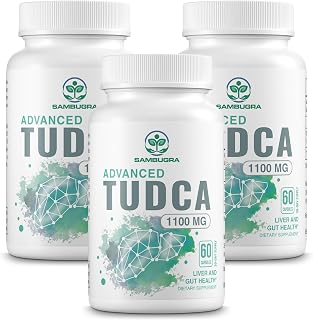
TUDCA (tauroursodeoxycholic acid) is a hydrophilic bile acid increasingly taken as a supplement for liver support, neuroprotection, and metabolic health. Because it participates directly in bile acid metabolism and enterohepatic circulation, TUDCA is not pharmacologically inert — it can alter how the body absorbs, transports, or clears certain medications, and some drugs can in turn affect TUDCA’s own activity or hepatobiliary effects.
This article reviews the current evidence on TUDCA drug interactions, identifies the categories of medications that warrant extra caution, and explains the biological mechanisms involved. It is informational only and does not substitute for advice from a pharmacist or physician who knows your complete medication list.
Key Takeaways
- TUDCA’s direct involvement in bile acid cycling means it can affect the absorption and metabolism of medications that share the same intestinal and hepatic compartments.
- Animal research shows TUDCA (as tauroursodeoxycholate) can alter cyclosporine bioavailability, requiring caution in transplant recipients given cyclosporine’s narrow therapeutic window [1].
- Bile acid sequestrants like cholestyramine will likely bind and inactivate TUDCA in the gut; separate doses by several hours if both must be used [2].
- Thyroid hormone replacement and antacids are absorption-sensitive medications that may be affected by TUDCA’s choleretic action or by the timing of co-administration [3][4].
- TUDCA has not been validated as a protectant against drug-induced liver injury and should not substitute for appropriate medical monitoring when taking hepatotoxic medications.
How TUDCA Behaves in the Body
TUDCA is the taurine conjugate of ursodeoxycholic acid (UDCA), a naturally occurring secondary bile acid. After oral dosing, it is absorbed in the small intestine, taken up by the liver via sodium-dependent bile acid transporters, and secreted into bile. This enterohepatic cycling means TUDCA spends significant time in the same anatomical compartments — hepatocytes, bile canaliculi, the intestinal lumen — where many drugs are absorbed or metabolized.
Its primary pharmacological actions include reducing endoplasmic reticulum (ER) stress, inhibiting the mitochondrial apoptosis pathway, and promoting choleretic bile flow (increased bile secretion and output). Each of these mechanisms has downstream implications for drug interactions: increased bile flow can alter the dissolution and absorption of co-administered lipophilic compounds, while changes in hepatocellular stress pathways may influence how certain drugs are processed by the liver. Understanding these mechanisms helps identify which medication classes deserve the closest attention.
Cyclosporine and Immunosuppressant Drugs
The most directly documented interaction in the scientific literature involves cyclosporine, an immunosuppressant widely used after organ transplantation. Research found that tauroursodeoxycholate solutions altered the bioavailability of cyclosporin A in rats [1]. The proposed mechanism relates to bile acids’ ability to modulate intestinal membrane fluidity and the activity of P-glycoprotein, an efflux transporter that limits cyclosporine absorption across the gut wall.
Cyclosporine has a narrow therapeutic index, meaning small changes in blood levels can tip toward either rejection of a transplanted organ or dose-dependent toxicity, including nephrotoxicity, hypertension, and neurological effects. Anyone taking cyclosporine or related calcineurin inhibitors such as tacrolimus should discuss TUDCA use with their transplant team before starting supplementation. It is important to note that [1] is a rat study, and direct extrapolation to human pharmacokinetics requires caution; well-controlled human data on this specific interaction are not yet available.

Bile Acid Sequestrants
Bile acid sequestrants — cholestyramine, colestipol, and colesevelam — are resins prescribed to lower LDL cholesterol and, in some cases, to manage bile acid diarrhea. They work by binding bile acids in the intestinal lumen and preventing their reabsorption into enterohepatic circulation. Because TUDCA is itself a bile acid, co-administration with a sequestrant is highly likely to result in direct physical binding of TUDCA, sharply reducing how much reaches systemic circulation.

Research on cholestyramine in the context of bile acid and lipid metabolism confirms the drug’s broad effects on bile acid pools and associated risks such as gallstone formation [2]. Taking TUDCA within a few hours of cholestyramine or a related resin would likely neutralize the supplement, as the resin would bind TUDCA in the gut before absorption. If both are medically necessary, spacing doses by at least four to six hours — and taking TUDCA well before the sequestrant — is the approach used with other bile acid-related compounds, though this timing strategy has not been studied specifically for TUDCA.
Lipid-Lowering Agents, Particularly Fibrates
Fibrates such as clofibrate and fenofibrate lower triglycerides partly by increasing cholesterol excretion into bile, which can raise bile cholesterol saturation and in some individuals predispose to gallstone formation. Clinical evidence has documented an increased incidence of gallstones during treatment with clofibrate and cholestyramine [2], highlighting that manipulating bile acid and cholesterol pathways simultaneously carries measurable hepatobiliary risks.
TUDCA promotes choleretic bile flow and shifts bile toward a more hydrophilic, less lithogenic composition, which could theoretically interact with the gallstone-promoting tendency of some fibrates. However, simultaneous use of TUDCA with fibrates remains unstudied in controlled human trials, and both compounds act on overlapping hepatic and biliary pathways. Anyone taking a fibrate for dyslipidemia should consult a clinician before adding TUDCA, particularly if they have existing gallbladder disease or a personal history of gallstones.
Thyroid Hormone Replacements
Levothyroxine (T4) is one of the most widely prescribed medications, and its absorption is exceptionally sensitive to co-administered substances. A thorough clinical review documented multiple drug and supplement categories — including compounds that alter gastrointestinal transit, luminal pH, or bile acid composition — as potential sources of clinically meaningful interference with thyroxine absorption [3].
Although TUDCA is not specifically named in that literature, its choleretic action and its effects on intestinal mucosal function mean it could plausibly influence the environment in which levothyroxine is absorbed in the proximal small intestine. Thyroid hormone levels are monitored via TSH blood tests; if you start or stop TUDCA while taking levothyroxine, inform your prescribing physician so they can verify that TSH remains within your established target range.
Antacids and Agents That Alter Gastric pH
Antacids — including aluminum hydroxide, magnesium hydroxide, and calcium carbonate formulations — are among the most commonly used over-the-counter medications and are well-documented to interfere with the absorption of numerous drugs through pH elevation, adsorption onto the resin surface, and altered gastric emptying rate [4]. Proton pump inhibitors and H2 blockers produce more sustained pH elevation with similar potential for downstream absorption interactions.


TUDCA itself is relatively stable across physiological pH ranges because its taurine-conjugated bile acid structure resists gastric acid degradation. However, antacids taken simultaneously may adsorb TUDCA in the gut lumen, reducing effective absorption. More practically, if you take TUDCA alongside any medication whose absorption is already pH-sensitive — common antibiotics, antifungals, thyroid hormones, or iron supplements — the antacid creates a compounded interaction scenario that is difficult to predict without therapeutic drug monitoring. Spacing antacid doses at least two hours away from other medications and supplements remains the standard pharmacist recommendation [4].
Hepatotoxic Drugs: A Specific Caution
TUDCA is under clinical investigation for hepatoprotective properties, which raises an important question: does taking TUDCA alongside a hepatotoxic drug make that drug safer? The short answer from available evidence is that we do not know. While TUDCA reduces certain markers of cellular stress in laboratory and limited clinical settings, it has not been validated as a preventive agent against drug-induced liver injury (DILI) in well-powered human trials.
Drugs with known hepatotoxic potential — including high-dose acetaminophen, certain antibiotics such as amoxicillin-clavulanate, azole antifungals, and statins in susceptible individuals — should never be assumed to be safer simply because TUDCA is being co-administered. Liver enzyme monitoring remains the appropriate standard of care when using such medications. Adding TUDCA does not replace that monitoring and may, in some theoretical scenarios, mask early enzyme elevations or interact with hepatic drug metabolism pathways in ways that are not yet characterized.
🛒 Where to Buy TUDCA
- BulkSupplements.com TUDCA CapsulesLab-tested / studied
capsules, 500 mg per capsule, 90 capsules — Third-party tested and made in a cGMP facility; one capsule per serving; higher per-capsule dose suits users targeting 500–1000 mg/day protocols - Nutricost TUDCA 250mg
capsules, 250 mg per capsule, 60 capsules — High-volume seller; non-GMO and gluten-free labeling; no third-party purity COA publicly posted, but consistent community reputation for accurate dosing - Double Wood Supplements TUDCA Bile Salts 500mg
capsules, 500 mg per capsule, 60 capsules — USA-manufactured; publishes basic COA on request; popular among biohacker community for reliable potency at accessible price point - Nutricost TUDCA Powder
powder, 25 g tub — Best cost-per-gram option for daily high-dose users; gluten-free, same material as their capsule line; requires a milligram-accurate scale for precise dosing
As an Amazon Associate we earn from qualifying purchases. TUDCA quality varies widely — always choose a product that publishes a third-party purity test (COA) confirming 98%+ tauroursodeoxycholic acid before buying.
A Note on the Evidence
The interaction evidence cited here includes an animal study and older clinical literature on related bile acid pharmacology; well-powered, head-to-head human trials examining TUDCA drug interactions specifically are limited, and all findings should be interpreted accordingly. TUDCA is contraindicated in bile duct obstruction and requires medical supervision in patients with gallbladder disease, cholangitis, or severe hepatic impairment — always review your complete medication and supplement list with a licensed pharmacist or physician before starting TUDCA.

Frequently Asked Questions
Can I take TUDCA with cholesterol-lowering statins?
There is no specific clinical evidence of a dangerous direct interaction between TUDCA and statins at this time. However, some statins carry a low but real risk of liver enzyme elevation, and both statins and TUDCA act on hepatic pathways. Anyone taking a statin should inform their physician before adding TUDCA and continue any liver enzyme monitoring their doctor has recommended.
Does TUDCA interact with cyclosporine?
Yes — at least in animal data. Tauroursodeoxycholate solutions were found to alter cyclosporin A bioavailability in rats [1], likely through effects on intestinal P-glycoprotein and membrane transport. Because cyclosporine has a narrow therapeutic index, even modest changes in blood levels carry clinical consequences. Transplant patients on cyclosporine or tacrolimus should not add TUDCA without explicit approval from their transplant team.
Will bile acid sequestrants cancel out TUDCA?
Almost certainly if taken simultaneously. Bile acid sequestrants such as cholestyramine bind bile acids in the intestinal lumen to prevent their reabsorption [2]. Since TUDCA is itself a bile acid, the sequestrant would bind it before it reaches the bloodstream. If both are necessary, spacing them by at least four to six hours — with TUDCA taken first — is the practical workaround, though this has not been studied specifically for TUDCA in controlled trials.
Can TUDCA interfere with my thyroid medication?
Potentially. Levothyroxine absorption is sensitive to a range of co-administered compounds and gastrointestinal conditions [3]. TUDCA stimulates bile secretion and may alter intestinal conditions in the proximal small intestine where T4 is primarily absorbed. It is prudent to take levothyroxine on an empty stomach at a clearly separate time from TUDCA, and to inform your endocrinologist so TSH can be rechecked after starting or stopping TUDCA supplementation.
Should I be concerned about taking antacids and TUDCA together?
Antacids are well-documented to interfere with the absorption of many drugs and supplements through pH alteration and physical adsorption [4]. While TUDCA’s own bile acid structure is relatively resistant to gastric acid, regular antacid use could reduce effective TUDCA absorption and complicate the absorption of any other pH-sensitive medication taken concurrently. Separating antacid doses from TUDCA by at least two hours is a reasonable precaution.
Is TUDCA contraindicated for anyone?
TUDCA is contraindicated in bile duct obstruction, because promoting bile flow into a blocked duct can worsen injury. It also requires medical supervision in patients with active cholangitis, significant gallbladder disease, or severe hepatic impairment. Additionally, robust large-scale human trial data on TUDCA remain limited outside cholestasis indications, so the full safety profile in healthy individuals taking multiple medications is not yet well characterized.
References
- Balandraud-Pieri N et al. Effects of tauroursodeoxycholate solutions on cyclosporin A bioavailability in rats. Drug metabolism and disposition: the biological fate of chemicals (1997). PMID 9280397
- Palmer RH et al. Prevalence of gallstones in hyperlipidemia and incidence during treatment with clofibrate and/or cholestyramine. Transactions of the Association of American Physicians (1978). PMID 754401
- Liwanpo L et al. Conditions and drugs interfering with thyroxine absorption. Best practice & research. Clinical endocrinology & metabolism (2009). PMID 19942153
- Maton PN et al. Antacids revisited: a review of their clinical pharmacology and recommended therapeutic use. Drugs (1999). PMID 10400401
These statements have not been evaluated by the Food and Drug Administration. This information is not intended to diagnose, treat, cure, or prevent any disease. Content is for informational purposes only and is not medical advice; consult a qualified healthcare provider before starting any supplement. As an Amazon Associate we earn from qualifying purchases.