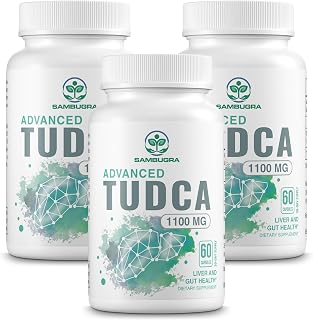
Tauroursodeoxycholic acid (TUDCA) is a naturally occurring bile acid — the taurine-conjugate of ursodeoxycholic acid (UDCA) — that has attracted growing interest for its ability to reduce endoplasmic reticulum stress, inhibit mitochondrial apoptosis pathways, and support healthy bile flow. It has been studied clinically in conditions ranging from cholestatic liver disease to neurodegenerative conditions, and it now appears in supplements marketed for liver support, metabolic health, and cellular resilience.
Despite that interest, pinning down the right TUDCA dose is genuinely complicated. Most robust clinical data comes from patients with specific liver diseases, not healthy adults. Many studies also use UDCA rather than TUDCA itself, and the two compounds — while closely related — are not identical in absorption or potency. This guide walks through what the evidence actually shows about dosing, where the research is strong, and where it remains thin.
Key Takeaways
- Most reliable human dosing data for TUDCA comes from cholestatic liver disease studies; doses in healthy adults are largely extrapolated from that context.
- Dose-response relationships are real — more is not simply better, and high-dose bile acid therapy has been associated with harm at very high doses [1].
- Common supplement doses range from 250 mg to 1000 mg daily, typically taken with meals; no large RCT has established an optimal dose for healthy adults.
- TUDCA is contraindicated in bile duct obstruction and may interact with bile acid sequestrants, cyclosporine, and hepatically metabolized drugs.
- Emerging research in neurodegenerative and metabolic conditions is promising but not yet sufficient to support specific supplemental dosing guidelines.
How TUDCA Works: Why Dose Matters
TUDCA acts through several overlapping mechanisms that are at least partially dose-dependent. It promotes choleretic bile secretion — stimulating the liver to produce and release bile — and alters the composition of bile in ways that may protect liver cells from damage caused by more toxic, hydrophobic bile acids. Research on biliary lipid composition confirmed a dose-dependent relationship between TUDCA intake and changes in bile chemistry [2].
At the cellular level, TUDCA stabilizes the endoplasmic reticulum and reduces the unfolded protein response, which is implicated in a wide range of conditions from liver injury to neurodegeneration. In vitro work showed that both TUDCA and UDCA can reduce ethanol-induced cell death in human HepG2 liver cells [3], though translating cell-culture concentrations to human doses is always an imprecise exercise. The practical implication is that getting the dose right matters: too little may produce no meaningful effect, while very high doses carry their own risks, a pattern confirmed in high-dose UDCA trials [1].
Clinical Doses Used in Research
The most reliable human dose data for TUDCA comes from studies in cholestatic liver disease. A dose-response study in primary biliary cirrhosis found that therapeutic effects on liver enzyme markers and biliary parameters varied across doses, supporting the existence of an optimal dosing window rather than a simple ‘more is better’ relationship [4]. Gallbladder motility studies comparing TUDCA and UDCA in both gallstone patients and healthy subjects provide additional context on how the compound behaves at pharmacological doses in human subjects [5].
For the closely related compound UDCA, a safety and tolerability study in amyotrophic lateral sclerosis used 1000 mg per day and found the drug to be generally well tolerated, with measurable cerebrospinal fluid penetration — a finding relevant to any discussion of neurological applications [6]. Meanwhile, high-dose UDCA (28–30 mg/kg per day, roughly 2000–2100 mg for a 70 kg adult) in primary sclerosing cholangitis was associated with worse outcomes compared to lower doses [1], underscoring that escalating dose beyond the therapeutic window is not benign.

A Cochrane review of bile acids for viral hepatitis found insufficient evidence to support routine use, further illustrating that clinical context determines whether any dose is appropriate [7].
Common Supplement Doses and How They Compare
Outside of clinical liver disease settings, TUDCA supplements are typically sold in capsule sizes ranging from 250 mg to 500 mg, with common daily totals falling between 250 mg and 1500 mg. These ranges are broadly extrapolated from the clinical liver disease literature and from UDCA trials; there are no large, well-controlled randomized trials in healthy adults that have established an optimal supplement dose for general liver support or wellness purposes.
A low starting dose — often cited as 250 mg once daily with meals — is commonly recommended in the supplement community as a conservative entry point. Doses of 500 mg to 1000 mg daily, split across one or two servings, are frequently referenced for more sustained liver support goals. These figures are pragmatic extrapolations, not evidence-derived targets for healthy populations, and should be understood as such.
Timing: When to Take TUDCA
Because TUDCA is a bile acid, it is most logically taken around mealtimes, when bile secretion is naturally stimulated and gastrointestinal absorption of fat-soluble compounds is highest. Taking it with a meal containing some dietary fat may improve absorption and reduce the mild gastrointestinal discomfort that some users report on an empty stomach.
For those taking TUDCA across multiple doses in a day, spacing doses with meals — for example, once in the morning with breakfast and once in the evening with dinner — mirrors the approach used in clinical bile acid research and aligns with the natural pulsatile pattern of bile secretion. There is no strong evidence that time-of-day matters independently of meal timing.
Condition-Specific Considerations
If TUDCA is being considered for liver support — including during alcohol use, hepatotoxic medication cycles, or in the context of bariatric surgery — the clinical literature offers the most relevant framing. UDCA has been studied for gallstone prevention in bariatric patients, with a systematic review and meta-analysis finding it effective for reducing gallstone formation risk during rapid weight loss [8]. TUDCA, as the more hydrophilic taurine conjugate, is generally considered to have at least comparable hepatoprotective properties, though direct head-to-head comparisons in bariatric populations are limited.
For neurological interests — such as MS or ALS — the evidence base is still emerging. A clinical investigation found that bile acid metabolism is altered in multiple sclerosis and that supplementation reduced neuroinflammatory markers in preclinical models [9], and safety data from the ALS UDCA trial [6] is encouraging, but these are not yet sufficient bases for specific supplement dosing recommendations outside clinical trial settings.

For gastrointestinal applications, animal research has shown bile acid supplementation can reduce NSAID-induced intestinal injury [10], and biliary secretion studies in rodent models have elucidated dose-response relationships at the bile acid transport level [11]. These mechanistic findings help explain interest in TUDCA for gut health, but human dosing extrapolations from animal studies require significant caution.
Safety, Contraindications, and Drug Interactions
TUDCA is contraindicated in bile duct obstruction. Because it promotes bile flow, using it when that flow is mechanically blocked can worsen outcomes. Patients with active cholangitis, significant gallbladder disease, or severe hepatic impairment should not use TUDCA without direct medical supervision. High doses of bile acid compounds have demonstrated dose-dependent risks, as shown in the high-dose UDCA trial for primary sclerosing cholangitis, where mortality and transplantation rates were higher in the high-dose arm [1].
TUDCA may interact with bile acid sequestrants (such as cholestyramine or colestipol), which can bind bile acids in the gut and prevent their absorption, effectively negating the intended effect. Cyclosporine metabolism may also be affected, and caution is warranted with certain lipid-lowering agents. Anyone taking prescription medications — particularly immunosuppressants, statins, or medications processed by the liver — should consult a physician before adding TUDCA.
🛒 Where to Buy TUDCA
- BulkSupplements.com TUDCA CapsulesLab-tested / studied
capsules, 500 mg per capsule, 90 capsules — Third-party tested and made in a cGMP facility; one capsule per serving; higher per-capsule dose suits users targeting 500–1000 mg/day protocols - Nutricost TUDCA 250mg
capsules, 250 mg per capsule, 60 capsules — High-volume seller; non-GMO and gluten-free labeling; no third-party purity COA publicly posted, but consistent community reputation for accurate dosing - Double Wood Supplements TUDCA Bile Salts 500mg
capsules, 500 mg per capsule, 60 capsules — USA-manufactured; publishes basic COA on request; popular among biohacker community for reliable potency at accessible price point - Nutricost TUDCA Powder
powder, 25 g tub — Best cost-per-gram option for daily high-dose users; gluten-free, same material as their capsule line; requires a milligram-accurate scale for precise dosing
As an Amazon Associate we earn from qualifying purchases. TUDCA quality varies widely — always choose a product that publishes a third-party purity test (COA) confirming 98%+ tauroursodeoxycholic acid before buying.
A Note on the Evidence
The evidence base for TUDCA dosing in healthy adults remains limited; most clinical data derives from specific liver disease populations or from the closely related but non-identical compound UDCA. This article is informational only and does not constitute medical advice — always consult a qualified healthcare provider before starting TUDCA, particularly if you have liver disease, gallbladder issues, bile duct pathology, or are taking prescription medications.

Frequently Asked Questions
What is the most commonly used TUDCA dose?
In clinical liver disease research, TUDCA has been studied in dose-response designs to identify how bile chemistry and liver markers change across doses [4][2]. In the supplement context, 250 mg to 1000 mg daily — divided across meals — is most frequently referenced, though this range is extrapolated from clinical data rather than validated in healthy-population trials.
Should I take TUDCA with food?
Taking TUDCA with meals, particularly those containing some fat, is generally recommended. As a bile acid, it participates in fat digestion and bile secretion pathways that are naturally activated during eating; taking it with food may improve absorption and reduce gastrointestinal discomfort.
Is TUDCA safe for long-term use?
Safety data in humans is most robust in liver disease populations studied over defined trial periods. A safety and tolerability study of the related compound UDCA in ALS patients at 1000 mg/day found it generally well tolerated [6], but long-term safety data in healthy individuals using TUDCA as a supplement is limited. Anyone considering extended use should do so with medical oversight.

Can you take too much TUDCA?
Yes. The dose-response studies make clear that bile acid effects are not uniformly linear, and high-dose UDCA — at approximately 28–30 mg/kg per day — was associated with worse clinical outcomes compared to moderate doses in a multicenter randomized controlled trial for primary sclerosing cholangitis [1]. Excessive dosing is not advisable.
Is TUDCA the same as UDCA, and does that affect dosing?
TUDCA is the taurine conjugate of UDCA. It is more hydrophilic and may have somewhat different absorption and distribution characteristics. Much of the clinical dosing data cited in discussions of TUDCA actually comes from UDCA studies — including gallbladder motility research [5] and neurological safety studies [6] — so the two should not be treated as fully interchangeable when interpreting dose guidance.
Who should avoid TUDCA?
TUDCA is contraindicated in bile duct obstruction. People with active gallbladder disease, cholangitis, or severe hepatic impairment should not use it without physician guidance. It may also interact with bile acid sequestrants, cyclosporine, and certain lipid-lowering medications, so anyone on these drugs should consult a healthcare provider before use.
References
- Olsson R et al. High-dose ursodeoxycholic acid in primary sclerosing cholangitis: a 5-year multicenter, randomized, controlled study. Gastroenterology (2005). PMID 16285948
- Muraca M et al. Effect of tauroursodeoxycholic acid on biliary lipid composition. A dose-response study. International journal of clinical pharmacology and therapeutics (1995). PMID 7582394
- Neuman MG et al. Effect of tauroursodeoxycholic and ursodeoxycholic acid on ethanol-induced cell injuries in the human Hep G2 cell line. Gastroenterology (1995). PMID 7615206
- Crosignani A et al. Tauroursodeoxycholic acid for treatment of primary biliary cirrhosis. A dose-response study. Digestive diseases and sciences (1996). PMID 8674405
- Portincasa P et al. Tauroursodeoxycholic acid, ursodeoxycholic acid and gallbladder motility in gallstone patients and healthy subjects. The Italian journal of gastroenterology (1996). PMID 8782006
- Parry GJ et al. Safety, tolerability, and cerebrospinal fluid penetration of ursodeoxycholic Acid in patients with amyotrophic lateral sclerosis. Clinical neuropharmacology (2010). PMID 19935406
- Chen W et al. Bile acids for viral hepatitis. The Cochrane database of systematic reviews (2003). PMID 12804455
- Sharma A et al. Role of Ursodeoxycholic Acid in the Prevention of Gallstones Formation in Bariatric Patients-a Systematic Review and Meta-Analysis of Randomised Trials. Obesity surgery (2023). PMID 37872257
- Bhargava P et al. Bile acid metabolism is altered in multiple sclerosis and supplementation ameliorates neuroinflammation. The Journal of clinical investigation (2020). PMID 32182223
- Lloyd-Still JD et al. Ursodeoxycholic acid ameliorates ibuprofen-induced enteropathy in the rat. Journal of pediatric gastroenterology and nutrition (2001). PMID 11345174
- Roda A et al. 23-Methyl-3 alpha,7 beta-dihydroxy-5 beta-cholan-24-oic acid: dose-response study of biliary secretion in rat. Hepatology (Baltimore, Md.) (1988). PMID 3192170
These statements have not been evaluated by the Food and Drug Administration. This information is not intended to diagnose, treat, cure, or prevent any disease. Content is for informational purposes only and is not medical advice; consult a qualified healthcare provider before starting any supplement. As an Amazon Associate we earn from qualifying purchases.