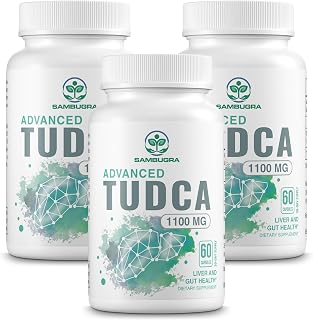
TUDCA (tauroursodeoxycholic acid) has attracted growing interest for liver support, neuroprotection, and metabolic health. Before any compound can produce effects in the body, it must first be absorbed adequately — and for TUDCA, that question is more nuanced than supplement labels typically suggest.
This article examines what is known and, importantly, what is still uncertain about TUDCA bioavailability. Because the evidence base in healthy humans remains limited, the goal here is clarity over enthusiasm: explaining the biology honestly so you can make an informed decision in conversation with a qualified clinician.
Key Takeaways
- TUDCA is absorbed primarily via active sodium-dependent transporters in the ileum, not passive diffusion, making gut health and transporter function relevant to how much is absorbed.
- Enterohepatic recycling means absorbed TUDCA concentrates in the liver first, which may be advantageous for hepatic applications but results in more modest systemic blood levels.
- Clinical trials using oral TUDCA have observed biological effects, indicating oral absorption is functionally sufficient, though precise bioavailability percentages in healthy humans are not well-established.
- Conditions affecting ileal integrity (Crohn’s disease, resection, SIBO) may significantly reduce absorption; individual transporter genetics may also contribute to variability.
- No large-scale human pharmacokinetic study has defined a definitive oral bioavailability figure for TUDCA as a supplement, so any specific percentage claims should be viewed with skepticism.
What Bioavailability Means for a Bile Acid Like TUDCA
Bioavailability refers to the fraction of an ingested substance that reaches systemic circulation in an active form. For small-molecule drugs and nutrients, this depends on absorption across the gut lining, first-pass metabolism in the liver, and distribution to target tissues. TUDCA is a hydrophilic, taurine-conjugated bile acid, and its absorption pathway reflects that chemistry in specific ways.
Unlike fat-soluble compounds that rely on micelle formation or lymphatic transport, TUDCA is water-soluble and relies primarily on active transporter proteins in the ileum — the final section of the small intestine. This is the same region responsible for reabsorbing most of the body’s own bile acids through a mechanism called enterohepatic circulation. The practical implication is that TUDCA absorption is not simply a matter of dissolving in the gut; it depends on transporter capacity and competition with endogenous bile acids.
The Enterohepatic Circuit: Where TUDCA Actually Goes
When you take oral TUDCA, it travels through the stomach largely intact — bile acids are relatively resistant to gastric acid — and reaches the small intestine. In the ileum, apical sodium-dependent bile acid transporter proteins (ASBT, also called SLC10A2) actively shuttle TUDCA across the intestinal epithelium and into portal circulation, which carries blood directly to the liver.
The liver is the primary destination. Hepatocytes extract a substantial proportion of absorbed TUDCA on this first pass, incorporate it into the bile acid pool, and secrete it back into bile. From there it re-enters the intestine, is reabsorbed, and cycles again. This enterohepatic recycling means that a single dose of TUDCA may circulate multiple times over several hours, which is pharmacologically relevant: the liver — often the intended target — is exposed to high concentrations, while systemic exposure (what reaches the bloodstream beyond the liver) is more modest.
This pattern distinguishes TUDCA from many conventional supplements. It does not simply flood the bloodstream; it concentrates in the hepatic portal system first. Whether that is advantageous or limiting depends on the intended therapeutic goal.

Oral Absorption: What Studies in Humans and Animals Suggest
Formal pharmacokinetic studies of oral TUDCA in healthy humans are limited, but they are not absent. A randomised crossover study in patients with primary biliary cirrhosis measured absorption directly by GC-MS and found tauroursodeoxycholate was better absorbed than unconjugated ursodeoxycholate, giving higher biliary enrichment (32.6% versus 29.2%) and undergoing less biotransformation into more hydrophobic metabolites[1]. Work in 24 healthy volunteers has separately established that TUDCA is actively absorbed specifically in the ileum — a property reliable enough that its appearance in oral fluid is used to time oro-ileal transit[2]. What the broader bile acid literature establishes is that taurine-conjugated bile acids are generally well-absorbed via active ileal transporters under normal gut conditions, and that TUDCA’s hydrophilicity does not impede this process — it may actually favor mucosal tolerability compared to more hydrophobic bile acids.
Animal studies have shown measurable increases in hepatic TUDCA concentrations after oral administration, supporting that the compound does reach the liver in pharmacologically relevant amounts. Translating those findings directly to humans requires caution, however, because transporter expression, bile acid pool composition, and gut transit time differ between species.
Some clinical trials investigating TUDCA for conditions such as ALS and cholestatic liver disease have used oral dosing regimens, typically ranging from 500 mg to 2,000 mg per day in divided doses, and observed biological effects — suggesting that oral bioavailability is sufficient to produce measurable outcomes, at least in those populations. Whether the same holds for healthy individuals seeking general support is a separate and less-studied question.
Factors That Can Influence How Well TUDCA Absorbs
Several physiological and practical variables affect TUDCA absorption. Gut transit time matters: rapid transit reduces contact with ileal transporters and lowers reabsorption. Conditions associated with ileal damage — such as Crohn’s disease, prior ileal resection, or small intestinal bacterial overgrowth — can significantly impair bile acid reabsorption and would likely reduce TUDCA uptake similarly.
The presence of food may modestly influence absorption by slowing gastric emptying and prolonging contact with absorptive surfaces, though TUDCA’s active transport mechanism makes it less dependent on fed-state conditions than fat-soluble nutrients. Competing endogenous bile acids in the pool could theoretically compete for transporter binding sites, though the clinical magnitude of this competition after supplemental doses has not been well characterized in humans.
Individual differences in transporter gene expression (SLC10A2 polymorphisms exist in the human population) may also contribute to variability in absorbed fraction. This is an area where personalized pharmacology could eventually matter, but population-level data specific to TUDCA are not yet available.
TUDCA vs. UDCA: Does Conjugation Change Bioavailability?
UDCA (ursodeoxycholic acid) is the unconjugated parent compound of TUDCA and is an established pharmaceutical for primary biliary cholangitis and cholesterol gallstones. Comparing their bioavailability is relevant because many published clinical studies used UDCA, and supplement buyers sometimes encounter both.

After oral UDCA is absorbed, the liver conjugates a portion of it to either taurine (forming TUDCA) or glycine (forming GUDCA). Taking TUDCA directly bypasses this conjugation step, delivering the taurine-conjugated form immediately. Whether pre-conjugated TUDCA produces meaningfully different systemic or hepatic exposure compared to a UDCA dose that is subsequently conjugated remains an area without large comparative human pharmacokinetic data.
In theory, TUDCA’s greater hydrophilicity relative to unconjugated UDCA should make it less likely to be passively absorbed in the proximal gut (where hydrophobic molecules can diffuse across membranes) and more dependent on active ileal transport. This could be either a feature or a limitation depending on whether ileal transporter capacity is the rate-limiting step.
Practical Considerations and What Remains Unknown
The honest summary of TUDCA bioavailability science is that absorption via enterohepatic transport is well-established as a mechanism, that the liver receives meaningful exposure after oral dosing, and that observable clinical effects have been documented in trials using oral administration — but precise bioavailability percentages in healthy adult populations, optimal timing relative to meals, and the clinical significance of inter-individual transport variability have not been firmly established in large-scale human studies.
Supplement formulations vary. Capsule fill weight, excipients, and whether a product contains pure TUDCA or a blend can all affect dissolution rate, though for a water-soluble compound with active transport, these factors are likely less critical than for fat-soluble nutrients. Third-party tested products from manufacturers who provide certificates of analysis are preferable given that bile acid supplements are not subject to pharmaceutical-grade quality requirements.
Dosing conventions in clinical research have generally used divided daily doses rather than single large boluses, which aligns with the recycling nature of enterohepatic circulation. Spreading doses may sustain hepatic portal exposure more evenly through the day, though this has not been rigorously tested in supplemental contexts.
🛒 Where to Buy TUDCA
- BulkSupplements.com TUDCA CapsulesLab-tested / studied
capsules, 500 mg per capsule, 90 capsules — Third-party tested and made in a cGMP facility; one capsule per serving; higher per-capsule dose suits users targeting 500–1000 mg/day protocols - Nutricost TUDCA 250mg
capsules, 250 mg per capsule, 60 capsules — High-volume seller; non-GMO and gluten-free labeling; no third-party purity COA publicly posted, but consistent community reputation for accurate dosing - Double Wood Supplements TUDCA Bile Salts 500mg
capsules, 500 mg per capsule, 60 capsules — USA-manufactured; publishes basic COA on request; popular among biohacker community for reliable potency at accessible price point - Nutricost TUDCA Powder
powder, 25 g tub — Best cost-per-gram option for daily high-dose users; gluten-free, same material as their capsule line; requires a milligram-accurate scale for precise dosing
As an Amazon Associate we earn from qualifying purchases. TUDCA quality varies widely — always choose a product that publishes a third-party purity test (COA) confirming 98%+ tauroursodeoxycholic acid before buying.

A Note on the Evidence
TUDCA is contraindicated in bile duct obstruction and requires medical supervision in people with gallbladder disease, cholangitis, or significant liver impairment; it may interact with bile acid sequestrants, cyclosporine, and certain lipid-lowering drugs. Large-scale randomized controlled trial data in healthy humans remain limited, and this article is informational only — consult a qualified healthcare provider before using TUDCA, especially if you take other medications or have any hepatic or gastrointestinal condition.
Frequently Asked Questions
Is TUDCA absorbed well when taken orally?
Based on its mechanism — active transport by ileal bile acid transporters — oral TUDCA does reach the liver in measurable quantities, and clinical trials administering it orally have observed effects. However, robust human pharmacokinetic data specifying an exact absorption percentage in healthy individuals are not yet available, so ‘well-absorbed’ is contextually accurate but imprecise.
Should I take TUDCA with food or on an empty stomach?
Because TUDCA relies on active transport rather than fat-assisted passive absorption, taking it with or without food is less critical than for fat-soluble compounds. Some clinicians suggest splitting doses and taking them with meals to match the body’s natural bile acid secretion rhythm, but direct comparative data for this timing strategy in healthy humans are lacking.
Does TUDCA reach the brain or other organs, or just the liver?
TUDCA is primarily captured by the liver during first-pass processing via enterohepatic circulation, but some fraction enters systemic circulation and has been detected in cerebrospinal fluid and other tissues in animal studies. The extent of CNS penetration in humans at typical supplemental doses is not precisely characterized, though research interest in neuroprotective applications is ongoing.
How does TUDCA compare to UDCA for absorption?
Both compounds use ileal active transport, but TUDCA arrives pre-conjugated while oral UDCA is partly conjugated to taurine or glycine after absorption. Large comparative human pharmacokinetic studies directly contrasting the two are limited. TUDCA’s greater hydrophilicity means less passive absorption proximally and more dependence on distal ileal transporters.
Can gut problems affect how much TUDCA I absorb?
Yes. Conditions that damage or remove the ileum — including Crohn’s disease, surgical resection, or significant bacterial overgrowth — can impair the active bile acid transporters TUDCA depends on. Anyone with known gastrointestinal disease should discuss TUDCA use with a gastroenterologist before supplementing.
What dose is typically used in research, and does it relate to bioavailability?
Clinical studies have generally used 500 mg to 2,000 mg of oral TUDCA daily in divided doses. These ranges appear to produce measurable effects in the studied populations, implying sufficient absorption for biological activity, but optimal dosing for general wellness in healthy people has not been established and should not be extrapolated directly from disease-population trials.
References
- Invernizzi P et al. Differences in the metabolism and disposition of ursodeoxycholic acid and of its taurine-conjugated species in patients with primary biliary cirrhosis. Hepatology (1999). PMID 9918905
- Simoni P et al. A new point-of-care portable immunosensor for non-invasive assessment of oro-ileal transit time by oral fluid tauroursodeoxycholate measurement after its oral load. Journal of pharmaceutical and biomedical analysis (2013). PMID 23587552
These statements have not been evaluated by the Food and Drug Administration. This information is not intended to diagnose, treat, cure, or prevent any disease. Content is for informational purposes only and is not medical advice; consult a qualified healthcare provider before starting any supplement. As an Amazon Associate we earn from qualifying purchases.