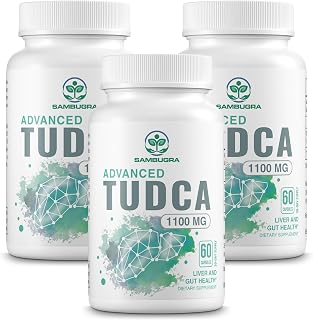
TUDCA (tauroursodeoxycholic acid) is a hydrophilic bile acid that has attracted serious scientific attention for its ability to reduce endoplasmic reticulum (ER) stress, blunt mitochondrial apoptosis signaling, and promote bile flow. Unlike many liver supplements, TUDCA has a defined pharmacological mechanism and an established clinical record in cholestatic liver disease. That foundation has led practitioners and researchers to explore whether pairing TUDCA with other hepatoprotective agents might offer additive or complementary benefits.
This article examines the compounds most frequently combined with TUDCA in a liver support stack, explains the proposed rationale for each pairing, and is honest about where evidence in healthy humans remains thin. Where a specific claim rests on a published study, it is cited inline and listed under References — for TUDCA itself that means a randomised trial of 1,750 mg daily in obese adults[1] and preclinical work in animal livers showing reduced ER stress and cytochrome c release[2]. Where no controlled trial exists for a given pairing, that gap is noted plainly rather than filled with inference; no combination of TUDCA with NAC, silymarin, phosphatidylcholine or alpha-lipoic acid has been tested against either component alone, and the Phase 3 PHOENIX result shows how far a mechanistic rationale can be from a clinical one[3]. Nothing here constitutes medical advice, and anyone with liver disease, gallbladder conditions, or a complex medication list should discuss TUDCA use with a qualified clinician before starting.
Key Takeaways
- TUDCA works through ER stress reduction and mitochondrial pathway inhibition — mechanisms distinct from antioxidants, which is the primary rationale for combining it with glutathione precursors or membrane-stabilizing compounds.
- NAC, silymarin, phosphatidylcholine, and alpha-lipoic acid are the most mechanistically coherent additions to a TUDCA liver support stack, each addressing a different aspect of hepatocyte vulnerability.
- No large-scale RCT has validated any specific TUDCA combination stack in healthy adults; evidence for each individual component is generally stronger than evidence for the combination.
- TUDCA is contraindicated in bile duct obstruction and requires medical supervision in patients with gallbladder disease, cholangitis, or significant liver impairment.
- Introduce stack components one at a time and disclose all supplements to your physician, especially if you take cyclosporine, bile acid sequestrants, or medications with significant hepatic metabolism.
How TUDCA Works: A Brief Mechanism Overview
TUDCA is the taurine conjugate of ursodeoxycholic acid (UDCA), a naturally occurring secondary bile acid found in small amounts in human bile. Its hydrophilic character distinguishes it from more cytotoxic hydrophobic bile acids. In the liver, TUDCA appears to act through several pathways: it reduces ER stress by stabilizing the unfolded protein response, it attenuates the mitochondrial permeability transition pore that triggers cell death signals, and it acts as a choleretic agent promoting bile secretion and flow.
These mechanisms matter for stack design. Because TUDCA addresses ER stress and mitochondrial integrity rather than acting purely as an antioxidant, it occupies a different mechanistic lane from glutathione precursors or polyphenol antioxidants. This is the theoretical basis for combining it with agents that cover complementary ground — for example, compounds that boost glutathione availability or directly scavenge reactive oxygen species.
N-Acetylcysteine (NAC): Glutathione Replenishment
NAC is one of the most studied and rationally motivated additions to a TUDCA stack. It serves as the primary rate-limiting precursor to glutathione, the liver’s principal endogenous antioxidant. Oxidative stress and ER stress are closely intertwined; when the ER is overwhelmed and the unfolded protein response is activated, reactive oxygen species accumulate and glutathione stores can be depleted.
The proposed logic is mechanistically coherent: TUDCA addresses ER stress at the signaling level, while NAC replenishes the glutathione pool that absorbs oxidative burden downstream. NAC has its own robust clinical record in acute liver toxicity contexts. In a stack, typical doses discussed in the literature and clinical settings range from 600 mg to 1,800 mg daily in divided doses, though no large randomized trial has specifically evaluated the TUDCA-plus-NAC combination in healthy adults. Evidence for each agent individually is more developed than evidence for the combination.

Milk Thistle (Silymarin): Membrane Stabilization and Antioxidant Activity
Silymarin, the standardized extract from Silybum marianum, is among the most researched botanical compounds for liver support. Its proposed mechanisms include stabilization of hepatocyte cell membranes, inhibition of lipid peroxidation, and mild anti-inflammatory activity. Silymarin also appears to influence bile acid metabolism, though the direction and magnitude of this effect in humans are context-dependent.

In the context of a TUDCA stack, silymarin is thought to provide membrane-level protection that is distinct from TUDCA’s ER and mitochondrial focus. The practical consideration is that silymarin has poor oral bioavailability in its standard form; phospholipid-bound versions (silybin-phosphatidylcholine complexes) have been developed to address this. If including silymarin in a stack, bioavailability-enhanced formulations are generally preferred. As with NAC, evidence for silymarin as a standalone is considerably more developed than evidence for its combination with TUDCA specifically.
Phosphatidylcholine: Bile Composition and Membrane Integrity
Phosphatidylcholine (PC) is a phospholipid that plays a structural role in hepatocyte cell membranes and is an important component of bile, where it helps solubilize cholesterol and reduce the cytotoxic potential of hydrophobic bile acids. Low biliary PC concentrations have been associated with increased bile toxicity to the bile duct epithelium.
From a mechanistic standpoint, pairing PC with TUDCA makes conceptual sense: TUDCA promotes bile flow and reduces bile acid cytotoxicity through its own hydrophilic character, while PC supports the phospholipid fraction of bile that keeps the overall mixture less injurious to ductal tissue. PC is also used therapeutically in non-alcoholic fatty liver contexts under the premise of supporting membrane repair. However, most of the clinical data for PC in liver disease involves specific patient populations rather than healthy adults using it prophylactically alongside TUDCA.
Alpha-Lipoic Acid: Mitochondrial Antioxidant Support
Alpha-lipoic acid (ALA) is a cofactor in mitochondrial energy metabolism and functions as both a direct antioxidant and a recycler of other antioxidants including vitamins C and E and glutathione. Its activity inside mitochondria positions it as a potential complement to TUDCA’s mitochondrial anti-apoptotic effects.
The proposed rationale for including ALA in a TUDCA stack is that TUDCA stabilizes the mitochondrial membrane against apoptotic signaling while ALA maintains the antioxidant environment within the mitochondrial matrix itself. ALA exists in R and S enantiomers; the R-form is the biologically active configuration and is more efficiently utilized. As with other stack components, the combination has not been specifically validated in controlled trials in healthy humans, and the theoretical synergy, while plausible, remains investigational.
Practical Stack Considerations: Dosing, Timing, and Contraindications
TUDCA is typically used at doses ranging from 250 mg to 1,000 mg daily in the research literature, with higher doses studied in specific disease states such as ALS and cholestasis. For general liver support in healthy adults, 250 mg to 500 mg daily is the most commonly referenced range, though this is not derived from large RCT evidence in healthy populations. TUDCA is generally taken with meals to align with bile acid secretion patterns.

Stack interactions deserve direct attention. TUDCA is a bile acid and can theoretically interact with bile acid sequestrants (such as cholestyramine or colestipol) by reducing their absorption or altering their effect. Cyclosporine metabolism may also be affected. Patients on lipid-lowering medications, particularly those in the statin class with known hepatic metabolism, should disclose TUDCA use to their prescribing physician. TUDCA is contraindicated in bile duct obstruction; in that setting, promoting bile flow against a blocked duct is harmful. Gallbladder disease and cholangitis require medical evaluation before TUDCA is considered.
From a practical standpoint, anyone building a liver support stack should resist the temptation to add every plausible agent simultaneously. Stacking introduces complexity: more interaction surfaces, more cost, and more variables if something goes wrong. A reasonable approach is to start with TUDCA alone, assess tolerability, and add one companion compound at a time with enough time between additions to attribute any change to the right source.
🛒 Where to Buy TUDCA
- BulkSupplements.com TUDCA CapsulesLab-tested / studied
capsules, 500 mg per capsule, 90 capsules — Third-party tested and made in a cGMP facility; one capsule per serving; higher per-capsule dose suits users targeting 500–1000 mg/day protocols - Nutricost TUDCA 250mg
capsules, 250 mg per capsule, 60 capsules — High-volume seller; non-GMO and gluten-free labeling; no third-party purity COA publicly posted, but consistent community reputation for accurate dosing - Double Wood Supplements TUDCA Bile Salts 500mg
capsules, 500 mg per capsule, 60 capsules — USA-manufactured; publishes basic COA on request; popular among biohacker community for reliable potency at accessible price point - Nutricost TUDCA Powder
powder, 25 g tub — Best cost-per-gram option for daily high-dose users; gluten-free, same material as their capsule line; requires a milligram-accurate scale for precise dosing
As an Amazon Associate we earn from qualifying purchases. TUDCA quality varies widely — always choose a product that publishes a third-party purity test (COA) confirming 98%+ tauroursodeoxycholic acid before buying.
A Note on the Evidence
Evidence for TUDCA combination stacks in healthy humans is limited; most clinical data comes from disease-state studies in cholestasis, ALS, and retinal degeneration, and large-scale RCTs evaluating TUDCA alongside NAC, silymarin, or phosphatidylcholine have not been conducted in healthy adults. TUDCA is pharmacologically active and contraindicated in bile duct obstruction; anyone with liver disease, gallbladder conditions, or a complex medication list should consult a qualified clinician before use.
Does TUDCA Interact With Medications?
Because TUDCA participates in bile acid signaling and enterohepatic circulation, it has plausible interaction potential with other medications processed through similar pathways, though dedicated human interaction studies are limited. See the Contraindications article and the stack-specific guidance above, and check with a doctor or pharmacist before combining TUDCA with prescription medications.
Frequently Asked Questions
What is the main reason people add NAC to a TUDCA stack?
NAC supplies cysteine, the rate-limiting precursor to glutathione, the liver’s principal endogenous antioxidant. TUDCA addresses ER stress and mitochondrial apoptosis signaling, while NAC replenishes the glutathione pool that handles downstream oxidative burden — the two agents are proposed to cover different but related ground. The specific combination has not been evaluated in large trials in healthy humans.
Can you take TUDCA with milk thistle (silymarin)?
Yes, this combination is commonly used and is mechanistically plausible. Silymarin is proposed to stabilize hepatocyte membranes and inhibit lipid peroxidation, while TUDCA acts at the ER and mitochondrial level. The two agents have different primary mechanisms, which is the basis for thinking they may complement rather than duplicate each other, though no dedicated combination trial exists in healthy adults.
Does TUDCA interact with any medications?
TUDCA can potentially interact with bile acid sequestrants such as cholestyramine by altering absorption dynamics. It may also affect cyclosporine levels. Patients on lipid-lowering medications or any drug with significant hepatic processing should inform their physician before starting TUDCA. Anyone on multiple medications should treat TUDCA as a pharmacologically active compound, not a passive supplement.
Who should not take TUDCA?
TUDCA is contraindicated in bile duct obstruction because promoting bile flow against a blocked duct increases pressure and can worsen injury. It also requires medical evaluation and supervision in people with active gallbladder disease, cholangitis, or severe hepatic impairment. Pregnant and breastfeeding individuals should avoid TUDCA due to insufficient safety data.
What dose of TUDCA is typically used for liver support?
Research in disease states such as cholestasis and ALS has used a wide range of doses. For general liver support in healthy adults, 250 mg to 500 mg daily is the most commonly referenced starting range. This is not derived from large randomized controlled trial evidence in healthy populations; doses in clinical studies for specific conditions can be considerably higher. Appropriate dosing should be discussed with a healthcare provider.
Is phosphatidylcholine a useful addition to a TUDCA stack?
Phosphatidylcholine is a structural component of hepatocyte membranes and a key phospholipid in bile that helps solubilize cholesterol and reduce the cytotoxic potential of hydrophobic bile acids. Pairing it with TUDCA is mechanistically logical — TUDCA supports bile flow and hydrophilicity while PC supports the phospholipid composition of bile. However, evidence for this specific combination in healthy adults is limited, and most PC liver data comes from specific patient populations rather than preventive use.
References
- Kars M et al. Tauroursodeoxycholic Acid may improve liver and muscle but not adipose tissue insulin sensitivity in obese men and women. Diabetes (2010). PMID 20522594
- Ben Mosbah I et al. Endoplasmic reticulum stress inhibition protects steatotic and non-steatotic livers in partial hepatectomy under ischemia-reperfusion. Cell death & disease (2011). PMID 21364657
- Ketabforoush A et al. Sodium Phenylbutyrate and Tauroursodeoxycholic Acid: A Story of Hope Turned to Disappointment in Amyotrophic Lateral Sclerosis Treatment. Clinical drug investigation (2024). PMID 38909349
These statements have not been evaluated by the Food and Drug Administration. This information is not intended to diagnose, treat, cure, or prevent any disease. Content is for informational purposes only and is not medical advice; consult a qualified healthcare provider before starting any supplement. As an Amazon Associate we earn from qualifying purchases.