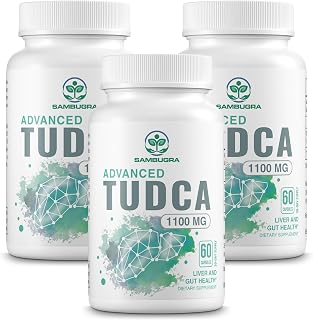
TUDCA (tauroursodeoxycholic acid) is a naturally occurring bile acid conjugate that has attracted interest for its roles in reducing endoplasmic reticulum stress, supporting bile flow, and protecting cells from mitochondrial apoptosis pathways.[1] It is sold in two primary supplemental forms: pre-measured capsules and loose powder. Choosing between them is largely a practical decision, but the differences in handling, solubility, and dosing precision are worth understanding before purchasing.
Neither capsules nor powder changes the underlying chemistry of TUDCA itself. Once the capsule shell dissolves or the powder is swallowed, the active compound reaches the small intestine and is absorbed via bile acid transporters. The real distinctions come down to convenience, taste tolerance, dosing flexibility, and cost — each of which matters depending on why and how you are taking it.
Key Takeaways
- Capsules and powder contain the same active compound; the form does not fundamentally change TUDCA’s mechanism or bioavailability.
- Capsules offer dosing consistency and mask the compound’s bitter taste, making them the more practical choice for most users.
- Powder is typically less expensive per gram and allows flexible custom dosing, useful when standard capsule sizes do not match a prescribed amount.
- Product purity and third-party testing matter more to actual efficacy than the capsule-versus-powder distinction.
- Contraindications and drug interactions apply equally regardless of form; medical supervision is appropriate for anyone with liver, gallbladder, or bile duct conditions.
What TUDCA Is and Why Form Matters
TUDCA is a hydrophilic, taurine-conjugated bile acid. Unlike more hydrophobic bile acids, its water-soluble character means it disperses reasonably well in aqueous environments, which has implications for how powder behaves when mixed into liquids. It is found in small quantities in human bile and is produced endogenously from ursodeoxycholic acid (UDCA) by intestinal bacteria, though dietary supplementation delivers far higher concentrations than the body produces naturally.
Because TUDCA is a bile acid rather than a large protein or lipid-based compound, its absorption is relatively consistent regardless of whether it arrives as a dissolved powder or a capsule that disintegrates in the stomach. The formulation choice does not fundamentally alter the pharmacokinetics of the molecule, but it does affect practical factors: how precisely you can measure your dose, whether you can taste the compound (it is notably bitter), and how you integrate it into a daily routine.
TUDCA Capsules: Convenience and Dosing Consistency
Capsules are the most common form sold for supplemental TUDCA. Each capsule contains a pre-measured quantity — typically 250 mg to 500 mg — inside a gelatin or vegetarian (HPMC) shell. The shell delays dissolution slightly, meaning the powder inside does not encounter stomach acid immediately, but for a small hydrophilic molecule like TUDCA this delay is unlikely to meaningfully affect total absorption compared to powder taken directly.
The primary advantage of capsules is dosing consistency. Because each unit is pre-weighed by the manufacturer, there is no reliance on measuring spoons or milligram-accurate scales. This matters when following a specific protocol — for example, the dose ranges used in clinical investigations for cholestasis or liver conditions have generally fallen between 500 mg and 1750 mg per day in divided doses[2][3], and hitting those ranges reliably is easier with fixed-dose capsules.

Capsules also entirely mask the bitter, slightly sulfurous taste of TUDCA powder, which many users find unpleasant. For anyone sensitive to bitter flavors or taking TUDCA long-term, this is a real quality-of-life benefit that can support adherence.
TUDCA Powder: Flexibility and Cost Efficiency
Bulk TUDCA powder is typically less expensive per gram than the capsule equivalent, because you are not paying for encapsulation labor, capsule shells, or the packaging that supports individual-dose convenience. For someone taking higher doses or using TUDCA over extended periods, this cost difference can become significant.
Powder also allows for more flexible dosing. If a practitioner recommends a dose that does not correspond to a standard capsule size — say, 375 mg rather than 250 mg or 500 mg — powder with a calibrated milligram scale allows you to dial in that amount precisely. This is especially relevant in clinical or research-adjacent contexts where doses are tailored to body weight or specific biochemical targets.
The main barrier to powder is taste. TUDCA has a distinctly bitter flavor that is difficult to mask in plain water. Some users mix it into juice, protein shakes, or other flavored liquids, but this adds a step and may affect daily compliance. There is no evidence that mixing TUDCA with food or drink changes its absorption in clinically meaningful ways, but you should avoid pairing it with bile acid sequestrants (such as cholestyramine or colestipol), which can bind bile acids in the gut and reduce their absorption.
Bioavailability: Does the Form Change How Well It Works?
For most well-formulated TUDCA supplements, the difference in bioavailability between capsules and powder is expected to be negligible. TUDCA is absorbed primarily in the small intestine via sodium-dependent bile acid transporters (SBATTs), and this transport system does not distinguish between TUDCA that arrived dissolved in liquid versus TUDCA released from a capsule shell. The rate of absorption may differ slightly — powder dissolved in water reaches the transporter surface a few minutes faster than a capsule that must first disintegrate — but peak plasma levels and total systemic exposure are unlikely to differ materially.
Where bioavailability differences could arise is in product quality rather than form. TUDCA purity varies between suppliers. Poorly manufactured powder or capsules may contain impurities or sub-labeled amounts of active compound. Third-party testing certificates of analysis (COAs) are more meaningful than the capsule-versus-powder distinction when evaluating a specific product.
Practical Considerations: Who Should Choose Which Form
Capsules suit most people. If you are taking a standard supplemental dose, do not need custom titration, and want to avoid the taste issue, capsules are the practical default. They fit easily into a daily supplement routine, travel well, and eliminate any measurement error.

Powder makes more sense if cost over time is a significant concern, if your target dose does not match available capsule sizes, or if you are already mixing supplements into a shake where the taste can be diluted. Some users also prefer powder when they want to dissolve TUDCA in warm water as part of a morning routine, though there is no therapeutic reason to prefer dissolved delivery over a capsule.
A third option worth noting is that some users open TUDCA capsules and dissolve the contents when they want liquid delivery but also want the convenience of pre-measured doses. This is functionally identical to buying powder, with the added cost of the capsule shell — but it can be a practical middle ground if powder is unavailable from a trusted supplier.

Safety, Contraindications, and Interaction Reminders
Regardless of form, TUDCA carries the same safety profile and the same contraindications. It is contraindicated in bile duct obstruction, where promoting bile flow could worsen outcomes. Patients with existing gallbladder disease, cholangitis, or severe hepatic impairment should use it only under medical supervision. Neither capsules nor powder changes these restrictions.
TUDCA may interact with cyclosporine (which shares bile acid transport pathways), bile acid sequestrants (which can reduce absorption), and certain lipid-lowering agents. These interactions apply equally to both forms. Large-scale randomized controlled trial data supporting TUDCA use in healthy populations outside of established cholestasis indications remain limited, and users should approach supplementation with appropriate caution and, where relevant, in consultation with a physician.
🛒 Where to Buy TUDCA
- BulkSupplements.com TUDCA CapsulesLab-tested / studied
capsules, 500 mg per capsule, 90 capsules — Third-party tested and made in a cGMP facility; one capsule per serving; higher per-capsule dose suits users targeting 500–1000 mg/day protocols - Nutricost TUDCA 250mg
capsules, 250 mg per capsule, 60 capsules — High-volume seller; non-GMO and gluten-free labeling; no third-party purity COA publicly posted, but consistent community reputation for accurate dosing - Double Wood Supplements TUDCA Bile Salts 500mg
capsules, 500 mg per capsule, 60 capsules — USA-manufactured; publishes basic COA on request; popular among biohacker community for reliable potency at accessible price point - Nutricost TUDCA Powder
powder, 25 g tub — Best cost-per-gram option for daily high-dose users; gluten-free, same material as their capsule line; requires a milligram-accurate scale for precise dosing
As an Amazon Associate we earn from qualifying purchases. TUDCA quality varies widely — always choose a product that publishes a third-party purity test (COA) confirming 98%+ tauroursodeoxycholic acid before buying.
A Note on the Evidence
TUDCA research outside of cholestasis indications is still early-stage, and robust large-scale randomized controlled trials in healthy adults are limited; the practical differences between capsule and powder forms are primarily logistical rather than therapeutic. Anyone with liver disease, bile duct conditions, gallbladder issues, or who takes medications affecting bile acid metabolism should consult a qualified healthcare provider before use. This article is informational only and does not constitute medical advice.
Frequently Asked Questions
Does TUDCA absorb better in powder or capsule form?
For most well-formulated products, the difference in absorption is negligible. TUDCA is taken up in the small intestine via bile acid transporters that process the compound regardless of how it was delivered. Powder may reach the transporter slightly faster since it does not require capsule disintegration, but total systemic exposure is not expected to differ meaningfully between the two forms.

Why does TUDCA powder taste so bitter?
TUDCA is a bile acid conjugate, and bile acids as a class have a pronounced bitter, slightly astringent flavor. This is an inherent chemical property of the molecule and cannot be bred out or processed away without altering the compound itself. Mixing powder into juice or flavored shakes is the most common workaround; capsules eliminate the issue entirely.
Can I open a TUDCA capsule and dissolve it in water?
Yes. Opening a capsule and dissolving the contents is functionally the same as using powder. There is no chemical reason to keep TUDCA inside the capsule shell before swallowing. If you prefer liquid delivery but want pre-measured doses, this is a practical option, though you will pay the cost premium associated with capsule packaging.
Is powder TUDCA cheaper than capsules?
Generally, yes. Bulk powder eliminates the cost of encapsulation, capsule materials, and some packaging. The per-gram cost of powder is typically lower, and the savings become more significant at higher daily doses or over longer supplementation periods. However, powder requires an accurate milligram-level scale for dosing, which adds a small upfront cost.
Should I take TUDCA with food?
There is no strong evidence that food significantly alters TUDCA absorption, but taking it with a small meal may reduce any gastrointestinal discomfort that some users report. Avoid pairing TUDCA with bile acid sequestrants (cholestyramine, colestipol) in the same dose window, as these agents can bind bile acids in the gut and reduce absorption.
Who should not take TUDCA regardless of form?
TUDCA is contraindicated in bile duct obstruction. People with gallbladder disease, cholangitis, or severe hepatic impairment should use it only under medical supervision. Users taking cyclosporine or certain lipid-lowering agents should discuss potential interactions with a physician before starting supplementation, as shared transport pathways may affect drug levels.
References
- A novel role for ursodeoxycholic acid in inhibiting apoptosis by modulating mitochondrial membrane perturbation. J Clin Invest (1998). Isolated hepatocytes and cell lines; UDCA reduced the mitochondrial membrane permeability transition by more than 40-50%. Preclinical, and conducted with UDCA rather than TUDCA.
- Tauroursodeoxycholic Acid may improve liver and muscle but not adipose tissue insulin sensitivity in obese men and women. Diabetes (2010). Randomised placebo-controlled trial, n=20, TUDCA 1,750 mg/day for 4 weeks; hepatic and muscle insulin sensitivity rose about 30%, adipose tissue sensitivity did not improve and markers of ER stress in muscle and adipose tissue did not change.
- A multicenter, randomized, double-blind trial comparing the efficacy and safety of TUDCA and UDCA in Chinese patients with primary biliary cholangitis. Medicine (Baltimore) (2016). n=199, 250 mg three times daily for 24 weeks. TUDCA was as effective as UDCA, not superior (76.0% vs 80.9% achieving a greater than 25% ALP reduction, p=0.45), with less pruritus.
These statements have not been evaluated by the Food and Drug Administration. This information is not intended to diagnose, treat, cure, or prevent any disease. Content is for informational purposes only and is not medical advice; consult a qualified healthcare provider before starting any supplement. As an Amazon Associate we earn from qualifying purchases.