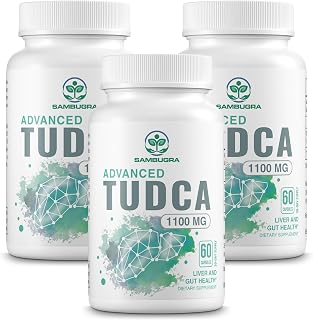
Two supplements appear repeatedly in serious conversations about liver health: TUDCA (tauroursodeoxycholic acid) and milk thistle, whose active compounds are collectively called silymarin. Both are marketed for liver support, yet they act through entirely different biological pathways, carry different safety considerations, and have been studied in different clinical populations. Understanding what each actually does — and where the science is strong versus preliminary — matters before adding either to a daily routine.
This comparison lays out what is currently understood about each compound in plain terms, without overstating the evidence. Neither TUDCA nor silymarin is a cure for liver disease, and neither replaces qualified medical care. What they are is the subject of legitimate ongoing research, and separating established findings from marketing claims is the goal here.
Key Takeaways
- TUDCA and silymarin work through different mechanisms — TUDCA primarily through ER stress reduction, mitochondrial apoptosis inhibition, and bile acid physiology; silymarin primarily through antioxidant and anti-inflammatory pathways.
- TUDCA has its strongest clinical evidence base in cholestatic liver conditions and regulatory approval for this use in some countries; silymarin has been studied more broadly but with variable human trial results.
- Animal research, including a pig model study, supports silymarin’s hepatoprotective effects [1], but animal findings do not guarantee equivalent outcomes in humans.
- TUDCA carries more significant safety considerations and drug interaction risks — particularly for those on bile acid sequestrants, cyclosporine, or medications affecting hepatic metabolism — than milk thistle at typical doses.
- Neither compound has robust large-scale RCT data supporting general preventive use in healthy adults, and neither is approved as a liver disease treatment in most jurisdictions.
What Is TUDCA and How Does It Work?
TUDCA is a naturally occurring bile acid produced in small amounts in the human body when gut bacteria conjugate ursodeoxycholic acid (UDCA) with taurine. Bile acids are primarily involved in fat digestion, but TUDCA has drawn scientific attention for activities that extend beyond digestion. It is classified as hydrophilic — more water-soluble than many other bile acids — a property associated with lower cellular toxicity.
At the cellular level, TUDCA is proposed to work through at least two mechanisms relevant to liver health. First, it appears to reduce endoplasmic reticulum (ER) stress, a cellular state in which protein-folding capacity is overwhelmed, triggering downstream inflammatory and apoptotic cascades. Second, TUDCA inhibits the mitochondrial apoptosis pathway, helping to prevent programmed cell death in stressed hepatocytes. These actions are thought to underlie the hepatoprotective effects observed in research settings. TUDCA also promotes choleretic bile flow, meaning it encourages bile secretion, which has direct clinical relevance in cholestatic liver diseases where bile fails to drain properly.
TUDCA has regulatory approval in some countries for certain cholestatic conditions, giving it a more established clinical footprint in that narrow indication than most liver supplements. Its use in healthy individuals, or in conditions such as ALS, retinal degeneration, and insulin resistance — all areas of active investigation — remains exploratory, and large-scale randomized controlled trials in healthy human populations are limited.
What Is Milk Thistle (Silymarin) and How Does It Work?
Milk thistle (Silybum marianum) is a flowering plant used medicinally for centuries, particularly in European herbal traditions. The seeds contain a complex of flavonolignans collectively called silymarin, the most studied of which is silybin (also written silibinin). Commercial milk thistle supplements are typically standardized to 70–80% silymarin content.


Silymarin is primarily understood as an antioxidant and anti-inflammatory agent in the context of the liver. Its proposed mechanisms include scavenging reactive oxygen species, modulating inflammatory cytokine signaling, and supporting hepatocyte membrane stability. Some research also suggests silymarin may influence cell regeneration pathways. Animal research supports a hepatoprotective role — one pig model study found that silymarin supplementation helped prevent liver dysfunction [1] — providing biological plausibility for the effects commonly attributed to it. Animal findings do not automatically translate to identical outcomes in humans, and this distinction matters when evaluating supplement claims.
Unlike TUDCA, silymarin has a long and widely documented history of popular use and has been studied across a broad range of conditions, including alcoholic liver disease, non-alcoholic fatty liver disease, viral hepatitis, and toxic liver injury. However, the quality and consistency of human clinical trial evidence varies considerably, and no regulatory body has approved silymarin as a treatment for any liver disease.
Comparing the Evidence Base
TUDCA’s evidence base in humans is strongest for cholestatic liver disease, where it has been used clinically in some European countries and studied in conditions including primary biliary cholangitis and intrahepatic cholestasis of pregnancy. Outside of cholestatic indications, human trial data is considerably thinner. Research in ALS has produced mixed results, and most hepatoprotection data in non-cholestatic settings comes from preclinical or small-scale studies.
Silymarin’s evidence base is broader in terms of conditions studied, but not necessarily more definitive. The animal research — including the pig hepatoprotection model [1] — consistently points to meaningful hepatoprotective activity. Human trials have been more variable, partly because bioavailability of silymarin in standard oral forms is relatively poor. Different formulations (phospholipid complexes, nanoparticles) produce meaningfully different absorption profiles, complicating comparisons across studies. Reviews of silymarin trials in liver disease have found mixed but generally positive signals on liver enzyme markers, without establishing it as a proven treatment.
In summary: TUDCA has a clearer mechanistic story and stronger regulatory grounding in one specific indication — cholestasis — while silymarin has a longer track record of use across multiple liver conditions with a more extensive but more variable research base. Neither compound has robust large-scale RCT data supporting general use in healthy adults.
Safety Profiles and Drug Interactions
TUDCA is generally well-tolerated in the doses studied, but it carries important contraindications. It should not be used in bile duct obstruction, as promoting bile flow in that setting could worsen outcomes. Caution is warranted in patients with existing gallbladder disease, cholangitis, or severe hepatic impairment. Drug interaction considerations are meaningful: TUDCA may potentiate or interfere with bile acid sequestrants (such as cholestyramine), cyclosporine, and certain lipid-lowering agents. Anyone on prescription medications — particularly those affecting bile acid metabolism or immunosuppression — should discuss TUDCA use with a clinician before starting it.
Milk thistle and silymarin carry a long safety record and are generally well-tolerated at typical supplement doses. Side effects, when they occur, tend to be mild gastrointestinal complaints. Allergic reactions are possible, particularly in individuals sensitive to plants in the Asteraceae family (which includes ragweed and daisies). Silymarin has some evidence of influencing cytochrome P450 enzyme activity, meaning it could theoretically alter the metabolism of certain prescription medications, though clinically significant interactions appear uncommon at typical doses. As with TUDCA, people taking hepatotoxic medications or medications metabolized by the liver should seek medical advice before using silymarin regularly.

Practical Differences: Cost, Access, and Use Context
One practical distinction is the context in which each is most commonly encountered. TUDCA is more often discussed in performance and biohacking communities as a liver-protective agent when the liver is under unusual stress. Its bile acid physiology and ER stress-reduction mechanisms make this a biologically plausible rationale, though it is not a validated use in healthy people. Silymarin is more often used as general-purpose liver support or as a complementary measure alongside conventional treatments for diagnosed liver disease, reflecting its longer traditional and clinical history.
Cost and accessibility also differ. TUDCA supplements are more expensive and less widely available than milk thistle, which has been sold as a mainstream supplement for decades at modest cost. Milk thistle standardized to 70–80% silymarin is among the most accessible liver-focused supplements available. Dosing in studies varies: TUDCA is typically used at 250–1,750 mg per day depending on the indication, while silymarin is commonly studied at 140–420 mg per day. These ranges reflect clinical study protocols and are not dosing recommendations.
These are not interchangeable compounds. They act on different cellular pathways, have different risk profiles, and have been studied in different clinical populations. Framing the choice as a direct competition misses the point. For specific cholestatic liver conditions under medical supervision, TUDCA has stronger clinical precedent. For general antioxidant liver support with the longest safety record and the most accessible price point, silymarin has the track record.
Who Might Consider Each and Important Caveats
TUDCA may be of interest to individuals with diagnosed cholestatic conditions working with a physician, those taking medications with known hepatic burden who are doing so under clinical guidance, or practitioners tracking the emerging evidence in neurodegeneration and metabolic health. It is not a supplement to start casually or without understanding its pharmacological profile and interaction risks.
Silymarin may be of interest to individuals seeking general liver support with an accessible, well-studied compound, those with elevated liver enzymes being monitored by a physician, or those supporting recovery from hepatic stressors. The hepatoprotective activity demonstrated in animal research [1] and its long history of human use give it a reasonable rationale for general supportive use, though clinical outcomes in healthy adults remain incompletely characterized. Neither supplement is appropriate as a substitute for medical treatment of liver disease, and both should be disclosed to any prescribing clinician.
🛒 Where to Buy TUDCA
- BulkSupplements.com TUDCA CapsulesLab-tested / studied
capsules, 500 mg per capsule, 90 capsules — Third-party tested and made in a cGMP facility; one capsule per serving; higher per-capsule dose suits users targeting 500–1000 mg/day protocols - Nutricost TUDCA 250mg
capsules, 250 mg per capsule, 60 capsules — High-volume seller; non-GMO and gluten-free labeling; no third-party purity COA publicly posted, but consistent community reputation for accurate dosing - Double Wood Supplements TUDCA Bile Salts 500mg
capsules, 500 mg per capsule, 60 capsules — USA-manufactured; publishes basic COA on request; popular among biohacker community for reliable potency at accessible price point - Nutricost TUDCA Powder
powder, 25 g tub — Best cost-per-gram option for daily high-dose users; gluten-free, same material as their capsule line; requires a milligram-accurate scale for precise dosing
As an Amazon Associate we earn from qualifying purchases. TUDCA quality varies widely — always choose a product that publishes a third-party purity test (COA) confirming 98%+ tauroursodeoxycholic acid before buying.
A Note on the Evidence
The evidence supporting both TUDCA and silymarin in healthy adults without liver disease remains limited; the most compelling human data comes from specific disease states rather than general prevention in well individuals. Anyone with a known liver condition, persistently elevated liver enzymes, or a prescription medication regimen — especially immunosuppressants, bile acid sequestrants, or hepatically metabolized drugs — should consult a qualified healthcare provider before using either supplement. This article is informational only and does not constitute medical advice.

Frequently Asked Questions
Can I take TUDCA and milk thistle together?
There is no established pharmacological contraindication between TUDCA and silymarin, and some people use both. However, TUDCA has meaningful drug interaction potential that makes combining supplements without clinical guidance inadvisable, particularly for those on prescription medications. A healthcare provider familiar with your full medication list is best positioned to advise on combination use.
Is TUDCA better than milk thistle for liver health?
Neither is universally better — they work through different mechanisms and have been studied in different contexts. TUDCA has stronger evidence in cholestatic conditions; silymarin has a broader, if more variable, research history across multiple liver diseases. The right consideration depends on the specific reason for use, individual health status, and input from a clinician.
Does milk thistle actually protect the liver?
Animal research consistently supports hepatoprotective activity for silymarin — one pig model study found it helped prevent liver dysfunction [1]. Human evidence is more mixed, with positive signals on liver enzyme markers in some trials but variable results overall depending on formulation, dose, and the underlying condition studied. Silymarin is not an approved liver disease treatment.
What are the main risks of TUDCA supplementation?
TUDCA is contraindicated in bile duct obstruction and should be used with caution in gallbladder disease, cholangitis, and severe hepatic impairment. It may interact with bile acid sequestrants, cyclosporine, and certain lipid-lowering drugs. These considerations make medical supervision important for anyone with a pre-existing condition or prescription medication regimen.
How long does it take for milk thistle to work?
There is no well-established timeline for silymarin’s effects in healthy individuals. In liver disease studies, changes in enzyme markers have been observed over weeks to months, but results vary considerably by formulation, bioavailability, dose, and the underlying condition. No reliable timeframe can be predicted for general supportive use.
Is silymarin safe to take long-term?
Milk thistle and silymarin have a long history of use without widespread reports of serious adverse effects, and mild gastrointestinal symptoms are the most commonly noted issues. Individuals with allergies to the Asteraceae plant family or those taking medications with narrow therapeutic windows metabolized by the liver should discuss long-term silymarin use with a healthcare provider before starting.
References
- Sharma P et al. Hepatoprotective Effect of Silymarin Herb in Prevention of Liver Dysfunction Using Pig as Animal Model. Nutrients (2025). PMID 41156530
These statements have not been evaluated by the Food and Drug Administration. This information is not intended to diagnose, treat, cure, or prevent any disease. Content is for informational purposes only and is not medical advice; consult a qualified healthcare provider before starting any supplement. As an Amazon Associate we earn from qualifying purchases.