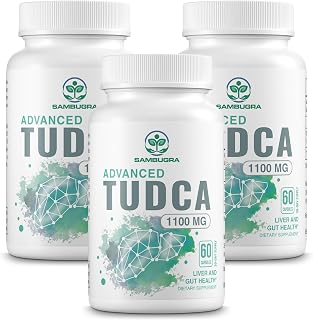
TUDCA (tauroursodeoxycholic acid) is a taurine-conjugated bile acid that occurs naturally in human bile in small amounts and has attracted serious research interest for its effects on endoplasmic reticulum stress, mitochondrial apoptosis pathways, and bile flow. As a supplement, it is sold primarily for liver support and general cellular stress reduction, and it has been studied in clinical contexts ranging from cholestasis to neurodegenerative disease. Because of that clinical pedigree, it has attracted both legitimate manufacturers and a wave of lower-quality products riding the category’s momentum.
If you are considering buying TUDCA, the quality differences between products are meaningful. Unlike many supplement categories where variation is mostly marketing, TUDCA purity, form, and manufacturing process can affect both safety and whether you are getting an active compound at all. This guide walks through what actually matters when evaluating a product, what labels and certificates to request, and what warning signs should prompt you to look elsewhere.
Key Takeaways
- Always request or verify a third-party Certificate of Analysis (COA) with batch-specific purity data before purchasing TUDCA.
- Look for products specifying TUDCA sodium at 98%+ purity, manufactured in a cGMP-compliant facility with disclosed raw material sourcing.
- Dose transparency matters: confirm the per-capsule amount is clearly stated and aligns with the daily amount you intend to use.
- Unusually low prices and unsupported disease claims are the two most reliable red flags for lower-quality or mislabeled products.
- TUDCA has meaningful contraindications and drug interactions; verify suitability with a physician before use, especially with liver disease, gallbladder conditions, or concurrent medications.
Understanding the Compound: What TUDCA Actually Is
TUDCA is formed by conjugating ursodeoxycholic acid (UDCA) with the amino acid taurine. UDCA itself is an established pharmaceutical used to treat primary biliary cholangitis and to dissolve certain gallstones; TUDCA is its more hydrophilic, taurine-bound form and is thought to be more stable and less cytotoxic to hepatocytes than more hydrophobic bile acids. The taurine conjugation changes its solubility and how it interacts with bile acid transporters in the intestine and liver.
Most TUDCA sold as a dietary supplement is synthesized from pharmaceutical-grade UDCA rather than extracted from animal sources (bear bile was the historical source in traditional medicine). This is relevant when evaluating a product: reputable manufacturers will be able to document that their TUDCA starts from a defined pharmaceutical-grade precursor and that the conjugation reaction is verified by purity testing. Products that cannot trace their raw material sourcing are a meaningful step down in quality assurance.
The honest position is that while TUDCA has a robust mechanistic literature and promising early clinical data in specific patient populations, large-scale randomized controlled trials in healthy humans remain limited. Buyers should hold supplement-category marketing claims to a higher standard of skepticism than the underlying science alone might warrant.
Purity Standards and Third-Party Testing
The single most important quality marker for any isolated compound like TUDCA is verified chemical purity. You are looking for products that provide a Certificate of Analysis (COA) from an independent third-party laboratory — not just an in-house quality certificate. A credible COA will identify the testing lab by name, include a batch or lot number that matches the product you are buying, state purity as a percentage (look for 98% or higher by HPLC or equivalent method), and list any detected heavy metals, solvent residues, or microbial contamination.


Third-party testing organizations that specialize in supplement verification include NSF International, Informed Sport, and USP, among others. A product bearing one of these seals has been tested for label accuracy and basic contaminants. Not all high-quality TUDCA products carry these seals — some smaller manufacturers test through ISO-accredited labs without pursuing the full certification — but the absence of any verifiable third-party testing is a meaningful red flag. If a company’s website does not post COAs or refuses to provide one on request, treat that as a reason to look elsewhere.
Purity matters particularly with TUDCA because impure synthesis can leave behind related bile acid compounds or residual solvents. These are not necessarily acutely dangerous at small amounts, but they undermine the premise that you are taking a defined dose of a specific compound.
Form and Formulation: What the Label Should Tell You
Commercial TUDCA is most commonly sold as the sodium salt (TUDCA sodium), which is the stable, water-soluble form used in most research. Some products are labeled simply as ‘TUDCA’ without specifying the salt form; this is not necessarily a problem, but a manufacturer that cannot clarify this on request is not communicating well about their product. Free-acid TUDCA is less stable and less commonly used in quality supplements.
Capsule vs. powder is largely a practical choice. Powder is typically less expensive per gram and allows flexible dosing, but TUDCA has a mildly bitter taste and can be hygroscopic (it absorbs moisture), so capsules are more convenient for most people. If buying powder, look for products packaged with desiccant and stored away from humidity. Capsule products should specify the capsule material (gelatin or vegetarian HPMC) and list all excipients — ideally the inactive ingredient list is short.
Avoid products that combine TUDCA with long lists of other compounds without clear rationale. While there is no evidence that common excipients like rice flour or magnesium stearate interact with TUDCA, a cluttered formulation makes it harder to attribute any response to TUDCA specifically, and it is often a sign that the manufacturer is padding a low-dose product with filler ingredients to justify a higher price.
Dosage: What Research Contexts Used and What Labels Typically Offer
Clinical studies have used a wide range of TUDCA doses depending on the condition being studied. Cholestasis-related research has used doses in the 500–1000 mg per day range. Neurological research has gone higher: the double-blind ALS trial by Elia and colleagues gave 1 g twice daily, or 2000 mg per day, for 54 weeks. A separate four-week metabolic study in obese adults used 1750 mg per day. General liver support protocols in the supplement context typically recommend 250–500 mg per day, often taken with food to align with bile acid secretion patterns. Anyone using TUDCA for a clinical purpose should establish dosing with a physician rather than from a label.
What matters from a buying standpoint is that the per-capsule dose is clearly stated in milligrams and that the total daily dose achievable from the product matches the purpose you have in mind. A product with 100 mg per capsule is not inherently inferior, but if the research context you are referencing used 500 mg per day, be sure the product makes that dose practical without requiring ten capsules. Some products inflate apparent value by using small doses per capsule while keeping the per-bottle price high.

Manufacturing Standards: GMP and Facility Credentials
In the United States, dietary supplement manufacturers are required to follow Current Good Manufacturing Practices (cGMP) as defined by the FDA. cGMP compliance means the facility has documented quality control procedures, maintains batch records, tests incoming raw materials, and has procedures for handling out-of-specification results. Look for explicit statements of cGMP compliance on a product’s website or label, and ideally the name of the manufacturing facility, which you can cross-reference with the FDA’s list of inspected facilities.
Products manufactured outside of FDA-registered, cGMP-compliant facilities carry more risk — not because non-US manufacturing is categorically worse, but because the verification pathway is less transparent. European supplements may be manufactured under EU GMP standards, which are comparable to FDA cGMP; documentation should still be available on request. Products with no manufacturing location disclosed and no facility credentials should be avoided.
Reputable TUDCA manufacturers will generally be willing to answer direct questions about their facility, raw material sourcing, and testing protocols. A customer service interaction where these questions are deflected or met with vague reassurances is informative in itself.

Red Flags and Signs of Lower-Quality Products
Several patterns are reliable warning signs when evaluating TUDCA products. First, unsupported therapeutic claims: TUDCA is not approved to treat, cure, or prevent any disease as a dietary supplement, and products making strong disease claims are either operating outside regulatory boundaries or are making claims the evidence does not support. Second, no accessible COA: any company selling an isolated compound at supplement prices should be able to produce batch-specific third-party testing documentation. Third, implausibly low prices: pharmaceutical-grade UDCA (the starting material) is not cheap, and the synthesis and purification process for high-purity TUDCA has a real cost floor. Products priced dramatically below the market average for comparable doses warrant scrutiny about raw material quality or actual TUDCA content.
Other red flags include proprietary blends that obscure how much TUDCA is present per serving, exaggerated before-and-after testimonials in place of technical documentation, and labels that misspell or incorrectly describe the compound (occasional signs of a label assembled without chemical expertise). The supplement market for TUDCA is still maturing, and the gap between the best and worst products on the market is wider than in more established categories.

🛒 Where to Buy TUDCA
- BulkSupplements.com TUDCA CapsulesLab-tested / studied
capsules, 500 mg per capsule, 90 capsules — Third-party tested and made in a cGMP facility; one capsule per serving; higher per-capsule dose suits users targeting 500–1000 mg/day protocols - Nutricost TUDCA 250mg
capsules, 250 mg per capsule, 60 capsules — High-volume seller; non-GMO and gluten-free labeling; no third-party purity COA publicly posted, but consistent community reputation for accurate dosing - Double Wood Supplements TUDCA Bile Salts 500mg
capsules, 500 mg per capsule, 60 capsules — USA-manufactured; publishes basic COA on request; popular among biohacker community for reliable potency at accessible price point - Nutricost TUDCA Powder
powder, 25 g tub — Best cost-per-gram option for daily high-dose users; gluten-free, same material as their capsule line; requires a milligram-accurate scale for precise dosing
As an Amazon Associate we earn from qualifying purchases. TUDCA quality varies widely — always choose a product that publishes a third-party purity test (COA) confirming 98%+ tauroursodeoxycholic acid before buying.
A Note on the Evidence
The human clinical record for TUDCA is concentrated in cholestatic liver disease, where a randomised dose-response study in primary biliary cirrhosis tested 500, 1,000 and 1,500 mg daily and found liver enzymes fell significantly at all three doses, with no significant difference between them[1]. Outside that setting the record is much thinner: a randomised trial in 20 obese adults tested 1,750 mg daily for four weeks and improved hepatic and muscle — but not adipose — insulin sensitivity[2]. Claims that reach beyond those settings are mechanistic rather than clinically established, and the Phase 3 PHOENIX trial is a reminder that mechanism does not guarantee outcome[3]. TUDCA has real contraindications and drug interaction potential; it is not appropriate for self-managed use in the context of liver disease, bile duct pathology, or concurrent prescription medication use without physician oversight, and this article does not constitute medical advice.
Frequently Asked Questions
Is TUDCA available as a pharmaceutical or only as a supplement?
In some countries, TUDCA is available as a licensed pharmaceutical for specific indications such as cholestatic liver disease. In the United States, it is currently sold as a dietary supplement without an approved drug indication. The regulatory pathway affects quality assurance expectations: pharmaceutical-grade product is subject to stricter testing than supplement-grade, so buyers in the supplement channel need to do more due diligence themselves.
What purity level should I look for in a TUDCA supplement?
A purity of 98% or higher by HPLC (high-performance liquid chromatography) is a reasonable standard for a research-quality or high-quality commercial product. Lower purity does not automatically mean the product is unsafe, but it means a larger fraction of what you are taking is something other than TUDCA, and the identity of those impurities matters. Always ask for the COA rather than relying on label claims alone.
Should TUDCA be taken with food?
Bile acids, including TUDCA, are secreted in response to fat ingestion as part of normal digestive physiology. Taking TUDCA with a meal that contains some fat may support its absorption and align with the body’s natural bile acid handling. This is a practical recommendation rather than a firmly established dosing protocol; specific timing guidance should come from a healthcare provider familiar with your situation.
Can TUDCA interact with medications?
Yes. TUDCA may interact with bile acid sequestrants (such as cholestyramine or colesevelam), which can bind and reduce absorption of bile acids. It may also interact with cyclosporine, as both involve hepatic bile acid transporters. There are theoretical interactions with lipid-lowering agents and other compounds handled by the same hepatic transport proteins. Anyone taking prescription medications should review potential interactions with a pharmacist or physician before adding TUDCA.
Who should not take TUDCA?
TUDCA is contraindicated in bile duct obstruction, where increasing bile flow could worsen the condition. It should be used with caution and medical supervision in people with active gallbladder disease, cholangitis, or severe hepatic impairment. Pregnant and breastfeeding individuals should avoid it due to insufficient safety data. The supplement is not appropriate as a self-managed intervention for anyone with known liver or bile system pathology.

How do I verify that a TUDCA product actually contains what it claims?
Request the batch-specific COA from the manufacturer and verify it comes from a named third-party ISO-accredited or supplement-certification laboratory. The lot number on the COA should match the lot number on your product. If the company cannot or will not provide this documentation, that is a meaningful quality signal. Some independent testing services (such as Labdoor or ConsumerLab) also periodically test commercially available supplements and publish results, which can serve as an additional reference point.
References
- Crosignani A et al. Tauroursodeoxycholic acid for treatment of primary biliary cirrhosis. A dose-response study. Digestive diseases and sciences (1996). PMID 8674405
- Kars M et al. Tauroursodeoxycholic Acid may improve liver and muscle but not adipose tissue insulin sensitivity in obese men and women. Diabetes (2010). PMID 20522594
- Ketabforoush A et al. Sodium Phenylbutyrate and Tauroursodeoxycholic Acid: A Story of Hope Turned to Disappointment in Amyotrophic Lateral Sclerosis Treatment. Clinical drug investigation (2024). PMID 38909349
These statements have not been evaluated by the Food and Drug Administration. This information is not intended to diagnose, treat, cure, or prevent any disease. Content is for informational purposes only and is not medical advice; consult a qualified healthcare provider before starting any supplement. As an Amazon Associate we earn from qualifying purchases.